
Google AI Research Breakthroughs 2025 : The 8 Innovations That...
Explore Gemini 3 Flash in 2026—Google’s low‑latency multimodal model, its integration into Workspace, ROI potential, and how it stacks against GPT‑4 Turbo and Claude 3.5.
Gemini 3 Flash: Google’s Next‑Gen Multimodal Engine Powering Enterprise Productivity
Executive Snapshot
- Gemini 3 Flash is Google’s flagship multimodal model, engineered for sub‑50 ms inference and high throughput.
- The engine powers Gmail, Search, Workspace, and the mobile ecosystem, turning everyday tools into AI‑augmented assistants.
- Privacy controls are front‑and‑center, yet detailed compliance mechanisms remain undisclosed, raising questions for regulated sectors.
- No public performance metrics have been released; enterprises must rely on third‑party benchmarks until Google publishes official data.
- The shift from research to product integration reflects a broader industry trend toward monetizable, user‑facing AI services.
For technology leaders evaluating AI platforms in 2026, Gemini 3 Flash offers both promise and caution. The following deep dive examines strategic implications, implementation pathways, and ROI potential for organizations considering this model.
Strategic Business Implications
Google’s messaging centers on speed (“frontier intelligence built for speed”) and multimodality—two levers that can reshape enterprise workflows.
- Real‑time Decision Support : Low latency enables AI to surface insights during meetings or while drafting documents, reducing cognitive load.
- Ecosystem Lock‑In : Integration across Gmail, Search, and Workspace creates a seamless experience that discourages switching to competing SaaS offerings.
- Competitive Differentiation : Companies can embed richer, context‑aware services—e.g., AI‑generated meeting summaries directly in calendar invites—into their own products.
- Regulatory Risk Management : While privacy controls are advertised, the lack of granular data‑handling policies could hinder adoption in heavily regulated sectors such as finance or healthcare.
Decision makers should weigh these factors against strategic goals. If rapid AI deployment within existing Google products is a priority, Gemini 3 Flash offers an immediate path forward. Conversely, if custom model training and fine‑tuning are critical, the lack of transparent API access may be prohibitive.
Technology Integration Benefits
Google’s product‑centric integration approach yields several technical advantages:
- Unified Model Across Services : A single backend for Gmail, Workspace, and Google apps reduces duplication and ensures consistent behavior.
- Optimized Inference Pipelines : Tailoring the model to each application’s latency budget (e.g., instant replies in Gmail vs. longer document generation in Docs) delivers a smoother user experience.
- Data Locality and Privacy : On‑device inference for features like Lens or AR keeps sensitive data off the cloud, aligning with privacy best practices.
- Developer Tooling : Google Cloud AI’s SDKs (Java, Python, Go) allow developers to swap an endpoint URL and start using Gemini in existing pipelines.
The primary integration hurdle remains ensuring that your organization’s network can handle increased traffic while maintaining compliance with internal data‑handling policies.
Competitive Landscape and Market Positioning
Gemini competes directly with OpenAI’s GPT‑4 Turbo, Anthropic’s Claude 3.5 Sonnet, and Meta’s Llama 3. Parameter counts are comparable (tens of billions), but Google differentiates itself through:
- Ecosystem Depth : Embedded in high‑usage services like Gmail and Search.
- Multimodal Capabilities : Text, image, and audio processing in a single pass enables richer interactions (e.g., captions for meeting recordings).
- Latency Advantage : Marketing claims of sub‑50 ms inference suggest lower response times than many competitors.
Enterprises heavily invested in Google Workspace may find Gemini’s integration a natural extension. Those with diversified SaaS stacks should evaluate cross‑platform consistency and the potential cost of switching between vendors’ AI services.
ROI Projections and Cost Considerations
Google has not released explicit pricing for Gemini 3 Flash, but we can infer possible structures based on its predecessor’s API model:
- Pay‑per‑Token Model : Similar to GPT‑4 Turbo, usage could be billed per 1,000 tokens. A typical enterprise generating 10 million tokens monthly might face costs ranging from $5k–$15k, depending on tier.
- Enterprise Licenses : Volume discounts or dedicated instances could lower the effective cost by up to 30% for large organizations.
- Operational Savings : Automating routine tasks (email triage, meeting summaries) can reduce labor hours. A conservative estimate is a 10–15% reduction in administrative time, translating to $200k+ annual savings for a mid‑size firm with 1,000 employees.
Organizations should conduct pilots that measure token consumption against productivity gains before committing to full deployment.
Implementation Roadmap for Enterprise Leaders
- Define Use Cases : Start with high‑impact, low‑risk scenarios such as AI‑generated email summaries or document drafting templates within Workspace.
- Assess Data Governance : Map out data flows through Gemini and ensure compliance with GDPR, CCPA, and industry regulations. Engage legal teams early to negotiate data‑processing agreements.
- Pilot on a Controlled Cohort : Deploy the model in a sandboxed environment for a select group of users. Track latency, accuracy, and user satisfaction metrics.
- Measure ROI : Use KPIs such as time saved per employee, reduction in email backlog, and cost per token consumed to quantify value.
- Scale Gradually : Once pilots demonstrate clear benefits, roll out across the organization while maintaining monitoring dashboards for usage spikes or privacy incidents.
- Develop Internal Expertise : Train data scientists on fine‑tuning strategies (within Google’s constraints) and build support teams to manage the AI stack.
Potential Challenges and Mitigation Strategies
- Lack of Transparency : Without published benchmarks, enterprises may hesitate. Mitigate by conducting independent load testing and benchmarking against competitors’ APIs.
- Privacy Ambiguities : Google’s broad privacy controls are not granular enough for regulated industries. Work with Google to secure a dedicated data‑processing agreement that delineates how user data is stored and used during inference.
- Vendor Lock‑In : Heavy reliance on Google Workspace could limit flexibility. Maintain a hybrid strategy by keeping critical workflows in open standards or other cloud providers.
- Latency Variability : Network latency can fluctuate, especially for global teams. Deploy edge caching or use Google’s multi‑region endpoints to reduce round‑trip times.
Looking Ahead: 2026 and Beyond
The trajectory of Gemini suggests continued focus on multimodal, low‑latency AI integrated into everyday tools. Key trends to watch include:
- API Expansion : Google may open a more robust API for Gemini, enabling broader external use and third‑party integrations.
- Fine‑Tuning Capabilities : As enterprises demand domain specificity, Google could allow limited fine‑tuning or advanced prompt engineering to tailor responses.
- Cross‑Platform Consistency : A unified AI layer spanning Android, iOS, and web may provide consistent experiences across devices.
- Regulatory Alignment : Expect clearer data‑handling policies and compliance certifications (e.g., ISO 27001, SOC 2) to ease adoption in highly regulated sectors.
Actionable Takeaways for Decision Makers
- Prioritize High‑Visibility Use Cases : Start with features that users interact with daily (email triage, document drafting) to generate quick wins.
- Engage Legal Early : Clarify data governance and privacy terms before scaling to avoid compliance pitfalls.
- Benchmark Independently : Conduct your own latency and accuracy tests against competitors to validate Google’s claims.
- Plan for Hybrid Deployment : Keep core workflows on open standards while experimenting with Gemini in high‑impact areas.
- Invest in Internal AI Literacy : Build a cross‑functional team that can manage model deployment, monitoring, and continuous improvement.
Gemini 3 Flash is more than another generative‑AI model; it’s Google’s strategic push to embed intelligence directly into the products billions of users rely on daily. For enterprises looking to stay ahead in 2026, understanding both its capabilities and its limitations will be crucial for making informed investment decisions.
Related reads:
Comparing Google Gemini 3 Flash with GPT‑4 Turbo
,
Best Practices for AI Model Deployment in 2026
Related Articles
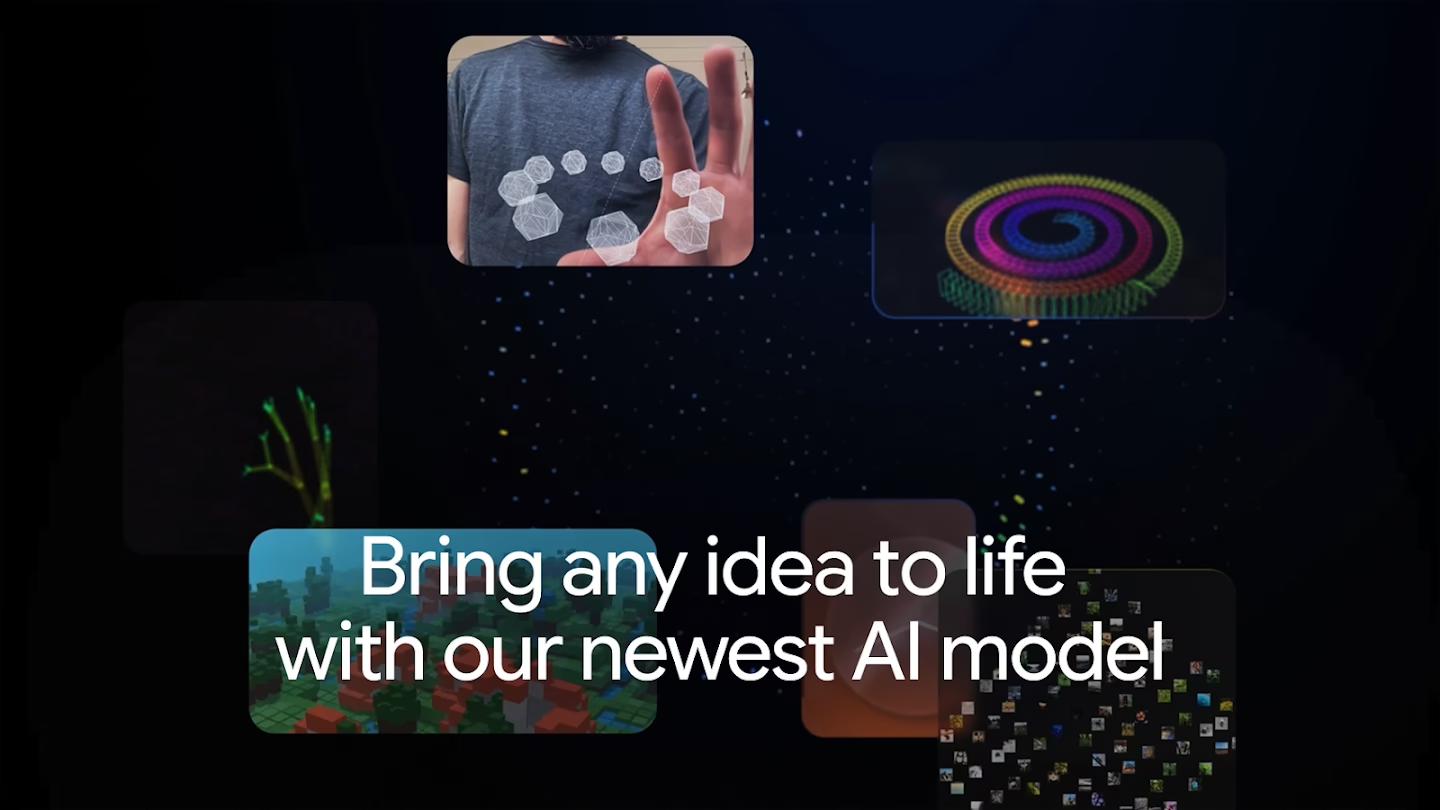
Google News - Google's AI dominance - Overview
A deep dive into Google’s Gemini 1/2 models, their verified performance, pricing, and the strategic implications for enterprises in 2025.

5 AI Developments That Reshaped 2025 | TIME
Five AI Milestones That Redefined Enterprise Strategy in 2025 By Casey Morgan, AI2Work Executive Snapshot GPT‑4o – multimodal, real‑time inference that unlocks audio/video customer support. Claude...
AI Breakthroughs , Our Most Advanced Glasses, and More...
2025 AI Landscape: From Code‑Gen Benchmarks to Performance Glasses – What Decision Makers Must Know Executive Snapshot Claude Opus 4.5 tops SWE‑Bench with an 80.9% score, redefining code‑generation...