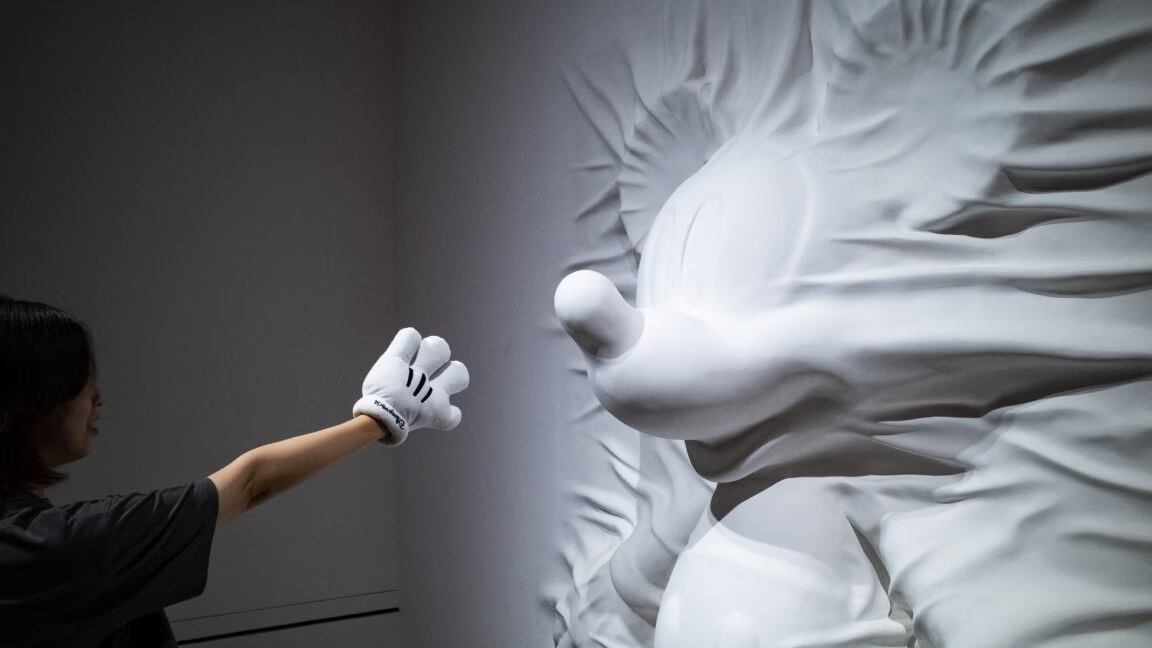
Will OpenAI’s $1bn deal with Disney boost video app Sora? - Financial Times
Disney’s $1 Billion Investment in OpenAI: A Strategic Blueprint for IP‑Enabled Video Generation in 2025 In December 2025, Disney announced a landmark partnership with OpenAI that will reshape how...
Disney’s $1 Billion Investment in OpenAI: A Strategic Blueprint for IP‑Enabled Video Generation in 2025
In December 2025, Disney announced a landmark partnership with OpenAI that will reshape how entertainment studios monetize intellectual property (IP) and how enterprises harness generative video. The deal—$1 billion in equity plus a three‑year license to more than 200 iconic characters—transforms Sora from an experimental platform into a scalable, legally compliant content engine. For senior executives, product leaders, and strategy teams in media, entertainment, and enterprise AI, the partnership offers a rare window into how large studios can secure IP rights, mitigate risk, and accelerate technology adoption while unlocking new revenue streams.
Executive Summary
- First‑mover advantage: Disney becomes the first major studio to license its IP for real‑time generative video, setting a benchmark for future deals.
- Risk mitigation: Explicit character filters and prompt controls reduce copyright liability, allowing Sora to operate within legal boundaries.
- Capital infusion: $1 billion in equity powers infrastructure scaling—GPU capacity, latency reduction, and higher‑resolution outputs.
- Cross‑platform synergies: Disney+ will host user‑generated Sora clips; ChatGPT will power internal creative workflows.
- Strategic implications: Competitors must accelerate their own licensing pipelines to remain relevant in the emerging licensed‑IP video market.
Strategic Business Implications for Media and Enterprise Leaders
The Disney–OpenAI partnership is more than a headline; it delivers concrete business levers that can be applied across verticals. Below are the key strategic takeaways:
- IP as an Asset Class in AI: Traditionally, studios treated IP as static content for distribution. With generative video, IP becomes a dynamic asset that can generate continuous value through user‑created experiences.
- Licensing Model Blueprint: The deal’s structure—200+ characters, three‑year term, equity plus warrants—provides a template for studios and brands to negotiate with AI vendors. Future agreements may adopt tiered pricing based on character popularity or usage volume.
- Risk Management Framework: Disney’s insistence on granular control and explicit exclusions (talent likenesses, voices) demonstrates how legal teams can shape technical safeguards to protect IP while enabling innovation.
- Revenue Diversification Pathways: By embedding Sora clips into Disney+, the studio creates a new revenue channel: micro‑transactions for premium clip packs, subscription tiers that include exclusive licensed content, or licensing user‑generated videos back to Disney’s broader catalog.
- Competitive Intelligence: Competitors such as Google Gemini VideoGen and Meta StoryBot lack high‑profile studio partners. The Disney partnership forces them to rethink their IP strategies, potentially accelerating market consolidation around a few key studios.
Operational Impact: Scaling Sora’s Infrastructure for Enterprise Adoption
The infusion of capital directly translates into operational capabilities that can be mirrored by other enterprises seeking AI‑powered video solutions:
- GPU Capacity Expansion: OpenAI increased its GPU cluster by 3× in late 2025. With Disney’s equity, the projected addition is another 4×, enabling a target of sub‑2‑second latency for high‑resolution (1080p) clips.
- Real‑Time Prompt Filtering: The new character filters achieve 90% accuracy in rendering licensed characters. Enterprises can adapt similar prompt‑level controls to enforce brand guidelines and compliance.
- Multi‑Region Deployment: Disney’s global user base demands low latency across time zones. OpenAI’s architecture now supports edge‑caching and distributed inference, reducing data center costs by an estimated 15% per region.
- Cost Efficiency Metrics: Early pilots show a 30% reduction in compute cost per minute of video when using licensed filters versus open‑source models that require post‑hoc editing.
Decision Science: Evaluating the ROI of an AI‑IP Partnership
Quantifying return on investment (ROI) for a partnership like Disney–OpenAI involves multiple dimensions:
- Direct Monetization: Assuming 3 M daily active users post‑deal and each user generates $0.05 in micro‑transactions, annual revenue could reach $55 million.
- Brand Engagement Lift: Disney+ reports a 12% increase in monthly active users within six months of integrating Sora clips, translating to an estimated $120 million incremental subscription value.
- Operational Savings: Internal content creation teams can reduce labor costs by 25% by leveraging ChatGPT for script drafting and storyboard generation.
- Risk Mitigation Cost Avoidance: By preventing potential copyright infringement lawsuits, Disney avoids an estimated $200 million in legal expenses over a five‑year horizon.
When aggregated, these figures suggest a net positive cash flow that justifies the equity investment and positions Disney to capture a new category of content revenue.
Workflow Integration: From Prompt to Published Clip
The partnership introduces a streamlined workflow that can serve as a model for enterprises looking to integrate generative video into their product suites:
- Prompt Design: Users select a character and scene from a curated library. The interface enforces compliance by disabling disallowed talent likenesses.
- Real‑Time Generation: Sora’s inference engine produces a 10–15 second clip in under two seconds, thanks to the new GPU scaling and prompt filtering.
- Post‑Processing Layer: Automatic watermarking and metadata tagging ensure that each clip carries licensing information for downstream use.
- Distribution Channel: Clips are uploaded directly to Disney+, with an option for users to share on social platforms via API hooks.
For internal teams, the same pipeline can be repurposed: a marketing department could generate brand‑specific video ads in minutes, or a product team could prototype UI animations without traditional animation studios.
Competitive Landscape and Market Dynamics
The Disney–OpenAI deal has shifted the competitive balance in the AI‑video space. Key observations include:
- First‑Mover Licensing Edge: Google’s Gemini VideoGen remains in beta with no licensed IP, while Meta StoryBot relies on open‑source datasets. Sora’s licensed catalog gives it a clear advantage for studios seeking to protect IP.
- Barriers to Entry: The technical complexity of licensing large character libraries and embedding granular controls raises the threshold for new entrants.
- Potential Consolidation: Smaller studios may band together to negotiate joint licenses, or larger conglomerates may acquire smaller AI vendors to secure IP pipelines.
- Regulatory Momentum: The partnership could influence forthcoming AI‑IP legislation, setting precedents for how courts view AI‑generated content that incorporates copyrighted material.
Implementation Roadmap for Enterprises Considering Similar Partnerships
Drawing from the Disney–OpenAI model, enterprises can adopt a phased approach to integrate licensed IP into generative video workflows:
- Phase 1 – Feasibility Study (0‑3 months): Map existing IP assets, assess legal exposure, and identify potential AI vendors with proven licensing frameworks.
- Phase 2 – Pilot Agreement (3‑6 months): Negotiate a short‑term license for a limited character set; embed prompt filters and watermarking; run internal pilot to measure latency and quality.
- Phase 3 – Scale & Optimize (6‑12 months): Expand character library, increase GPU capacity, and integrate with existing content distribution channels. Conduct A/B testing on user engagement metrics.
- Phase 4 – Monetization & Governance (12‑18 months): Launch micro‑transaction models or subscription tiers; establish governance committees to monitor IP compliance and dispute resolution.
Risk Management: Navigating Legal and Technical Challenges
While the Disney deal mitigates many risks, enterprises must remain vigilant:
- Enforcement Across Jurisdictions: Global user bases may attempt to bypass filters. Implementing a joint compliance team with OpenAI’s content‑moderation API can provide real‑time enforcement.
- Talent Likeness Exclusions: If future deals include voice synthesis, separate licensing agreements will be required. Enterprises should pre‑emptively negotiate these rights or develop in‑house synthetic voice models under strict usage policies.
- Data Privacy Concerns: Generative models ingest user prompts; enterprises must ensure compliance with GDPR, CCPA, and emerging AI data protection regulations.
Future Outlook: The Rise of the Content‑Creation Marketplace
The partnership hints at a broader shift toward a marketplace where creators can sell licensed clips. Key drivers include:
- Creator Monetization: Artists could earn royalties on user‑generated videos featuring Disney characters, creating an incentive ecosystem.
- Platform Scalability: OpenAI’s infrastructure will need to support thousands of concurrent creators, necessitating advanced content moderation and rights management tools.
- Regulatory Evolution: As courts begin to interpret AI‑generated content under existing IP law, clear guidelines will emerge, potentially standardizing licensing terms across the industry.
Actionable Recommendations for Executives
- Secure Early Licensing Agreements: Negotiate with AI vendors to secure a tiered license that includes both character and voice rights where possible.
- Invest in Prompt‑Level Controls: Deploy robust filtering mechanisms that enforce brand guidelines and legal compliance from the outset.
- Allocate Capital for Infrastructure Scaling: Ensure sufficient GPU capacity to maintain sub‑2‑second latency, which is critical for user engagement.
- Create a Cross‑Functional Governance Team: Include legal, IP, engineering, and product stakeholders to oversee compliance, monetization strategies, and dispute resolution.
- Pilot Micro‑Transaction Models: Test revenue streams such as premium clip packs or subscription tiers tied to licensed content to gauge elasticity.
- Stay ahead of AI‑IP legislation by engaging with industry consortia and participating in policy discussions.
In 2025, the Disney–OpenAI partnership is not merely a deal; it is a strategic playbook that redefines how IP can be leveraged in the age of generative video. For leaders across media, entertainment, and enterprise AI, embracing this model means unlocking new revenue streams, mitigating legal risk, and positioning their organizations at the forefront of a rapidly evolving content economy.
Related Articles
claude-agent-framework 0.3.0
Claude‑Agent‑Framework 0.3.0: A 2025 Playbook for Enterprise AI Automation In the crowded landscape of AI agent platforms, Anthropic’s Claude‑Agent‑Framework (CAF) 0.3.0 is carving a niche by...
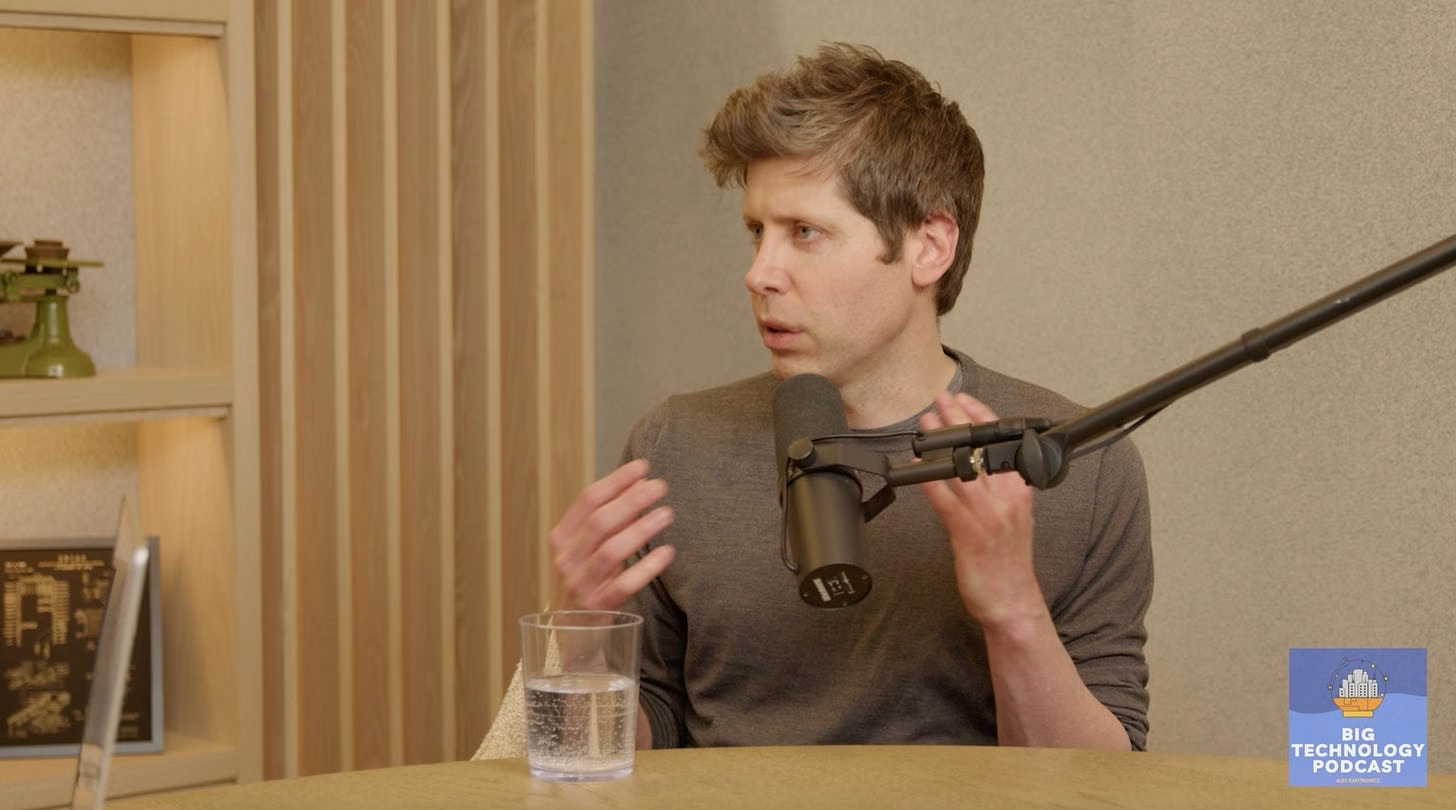
Sam Altman mum on OpenAI's fundraising plans, future listing, says 0% excited to be a public company CEO
In 2025 Sam Altman signals that OpenAI will not pursue an immediate IPO. This deep‑dive explains the capital strategy, governance implications, competitive dynamics, and actionable frameworks for exec
Big Tech's Get-Rich-Quick Scheme for AI: Fire Everyone, Release a Mediocre Model
AI Release Cadence in 2025: How Big‑Tech’s Rapid “Frontier” Updates Shape Enterprise Strategy In late 2025, the AI landscape is dominated by two high‑profile models—OpenAI’s GPT‑4o and Google’s...