Building AI Products in the Probabilistic Era: Technical and Business Strategies for 2025
In 2025, the AI landscape is defined by a profound shift toward unified, adaptive AI architectures that operate probabilistically—seamlessly orchestrating reasoning, tool use, and multimodal inputs...
In 2025, the AI landscape is defined by a profound shift toward
unified, adaptive AI architectures
that operate probabilistically—seamlessly orchestrating reasoning, tool use, and multimodal inputs within massive context windows. The release of OpenAI’s GPT-5 epitomizes this evolution, integrating diverse AI capabilities into a single intelligent engine that dynamically selects its own inference pathways without manual intervention. For AI product developers, this transformation demands new approaches to architecture, monetization, and user experience design that accommodate usage limits, multi-model ecosystems, and inherent AI uncertainty.
This analysis dissects the technical underpinnings, business ramifications, and strategic imperatives of building AI products in today’s probabilistic era. Drawing on current performance metrics, model capabilities, and ecosystem trends, it offers AI developers, product managers, and technical leaders actionable insights to architect resilient, scalable, and differentiated AI solutions in 2025.
Unified AdaptiveWith TheseFeatures - AI2Work Analysis">Models WithThese Features - AI2Work Analysis">AI ModelsRedefine Product Architecture
The hallmark of 2025 AI innovation is the consolidation of multiple specialized LLM variants into
single unified engines
like GPT-5. Unlike previous generations that required developers to select between models optimized for code, chat, or multimodal inputs, GPT-5 internally manages these capabilities via a probabilistic orchestration layer. This design dynamically routes queries through the most appropriate reasoning or tool-invoking submodules, delivering the best output without explicit model switching.
From a product development perspective, this reduces complexity in integration and testing, allowing teams to build with one core API rather than juggling multiple endpoints. GPT-5’s support for an unprecedented
196,000 token context window
(API access) enables extended dialogues, large document processing, and complex workflow automation previously impossible with 32K or 64K token limits.
However, product architects must now design for
dynamic throttling and usage constraints
. For instance, the GPT-5 Free tier restricts users to roughly 5–8 messages per 3-hour window, while Plus tier users get about 60–80 messages, with Pro/Team plans offering near-unlimited access. These limits necessitate fallback mechanisms—such as reverting to smaller GPT-4.1 mini models or deferring non-critical queries—to maintain fluid user experiences under load or cost constraints.
Multi-Model Ecosystems Drive Competitive and Cost Optimization Strategies
The AI product landscape in 2025 is no longer dominated by a single provider or model. Alternatives like Google’s Gemini 2.5 Pro and Anthropic’s Claude 3.5 Sonnet have matured to rival GPT-4o and GPT-5 in reasoning and creative tasks. Benchmarking data places Gemini 2.5 Pro at roughly 73.3% accuracy on complex reasoning benchmarks, surpassing Claude’s 65% and matching OpenAI’s top-tier models.
This competitive parity encourages product teams to adopt
multi-model orchestration layers
, where API gateways intelligently route queries to the optimal model based on cost, latency, and task type. Platforms like Bind AI’s multi-model IDE exemplify this approach, leveraging Claude for detailed analysis, Gemini for reasoning-heavy workflows, and Llama 3 variants for lightweight or cost-sensitive tasks.
From a cost management standpoint, multi-model strategies enable fine-grained control over AI spend—automatically assigning low-stakes queries to cheaper or smaller models and reserving premium engines for high-value or complex interactions. This modularity is critical given the tiered subscription pricing models and usage caps prevalent across all major providers.
Handling Probabilistic Uncertainty and Hallucinations in AI Outputs
Probabilistic AI models inherently generate outputs with varying confidence levels, introducing challenges around hallucinations and unreliable results—especially in critical applications such as healthcare, finance, or legal domains. GPT-5’s internal reflective reasoning and tool use (e.g., web searches, code execution) improve reliability, but no model is immune to errors.
AI product builders must implement
hybrid human-in-the-loop workflows
and
safe completion mechanisms
to mitigate risks. For example, products can incorporate confidence scoring, query rephrasing, or secondary model validation to detect and flag uncertain outputs. Persistent sessions and ChatGPT Agents, available on Pro tiers, enable continuous context retention and iterative correction, enhancing overall accuracy over time.
Additionally, fallback logic to smaller, more deterministic models or cached responses can provide stability during high load or tool usage caps. Designing AI products with layered validation and escalation paths is essential to balance user experience with compliance and safety requirements.
Strategic Business Implications of Usage Limits and Subscription Tiers
OpenAI’s GPT-5 and its competitors have introduced tiered access models that significantly influence product monetization and user segmentation strategies. Free tiers with stringent message caps (~5–8 per 3 hours) serve as discovery channels but are insufficient for sustained engagement. Plus tiers (~60–80 messages per 3 hours) offer better access but still enforce daily caps on tool usage, while Pro and Team plans provide near-unlimited usage and advanced features like persistent sessions and autonomous agents.
For product managers, this means architecting
graduated user journeys
that gracefully handle usage ceilings and incentivize upgrades. For instance, AI-powered SaaS solutions can offer basic query handling on free tiers while reserving advanced multimodal workflows or API integrations for paying customers. Usage analytics become critical to identify friction points and optimize pricing tiers.
Moreover, businesses must weigh infrastructure costs against user experience—prioritizing efficient model usage through multi-model orchestration and caching to control API spend. The evolving business model landscape encourages experimentation with hybrid subscription, consumption-based billing, and enterprise licensing to align costs with value delivered.
Architecting for Multimodality and Autonomous AI Workflows
2025 AI products increasingly leverage
multimodal inputs and outputs
, combining text, images, audio, code, and external API calls into cohesive workflows. GPT-5’s integrated tool use (web browsing, code execution, document processing) supports this trend but is subject to usage caps outside enterprise plans.
Product builders must therefore design
orchestrated AI workflows
that manage multimodal data streams, dynamically select appropriate reasoning paths, and gracefully degrade when tool limits are reached. This involves complex pipeline architectures that combine AI inference with traditional backend services, event-driven triggers, and stateful session management.
ChatGPT Agents and persistent sessions enable a new class of AI assistants that maintain context over long periods, perform autonomous tasks, and interact with external APIs. These capabilities open possibilities for continuous AI-driven workflows in customer support, knowledge management, and software development automation.
Balancing Cost, Latency, and Accuracy in Multi-Model AI Products
One of the most pressing challenges in probabilistic AI product design is the trade-off between cost, latency, and accuracy. High-capability models like GPT-5 Pro offer superior reasoning and multimodal abilities but come with elevated API costs and potential rate limits. Conversely, smaller or alternative models provide cost-efficient but less accurate responses.
Effective AI products implement
dynamic routing policies
that evaluate query complexity, required precision, and cost constraints in real time. For example, straightforward factual queries might be routed to Claude 3.5 Sonnet or Llama 3, while intricate synthesis or creative tasks leverage GPT-5 or Gemini 2.5 Pro.
This approach requires sophisticated monitoring and decision logic embedded within AI orchestration layers, often supported by meta-models or reinforcement learning algorithms that learn optimal routing based on historical performance and user feedback.
Future Outlook: Scaling AI Products in the Probabilistic Era
Looking ahead, AI product innovation in 2025 and beyond hinges on mastering the complexities of probabilistic orchestration, multi-model integration, and multimodal workflows. Key trends to watch include:
- Expanded context windows and memory augmentation: Models will push beyond 196K tokens, enabling truly continuous AI assistants capable of managing enterprise-grade knowledge bases.
- Refined uncertainty quantification: Enhanced confidence metrics and interpretability tools will become standard to manage hallucinations and compliance risks.
- Hybrid AI-human collaboration platforms: Seamless integration of human oversight into AI workflows to ensure reliability in sensitive domains.
- Innovative business models: Usage-based billing, AI marketplaces, and bespoke enterprise agreements will evolve to balance cost and value at scale.
- Privacy and security frameworks: Essential as multi-model products integrate external APIs and sensitive data across distributed environments.
Developers and product leaders who invest in robust orchestration architectures, multi-tiered user experiences, and hybrid workflows will position themselves to capitalize on the next wave of AI-driven automation and augmentation.
Actionable Recommendations for AI Product Leaders in 2025
- Adopt unified AI models like GPT-5 as your core engine to simplify integration while leveraging their multimodal, extended context capabilities.
- Implement multi-model orchestration layers to optimize cost, latency, and accuracy by routing tasks dynamically across providers (OpenAI, Google Gemini, Anthropic, Llama).
- Design usage-aware products that gracefully handle message and tool usage limits through fallback models, deferred processing, and user segmentation.
- Incorporate hybrid human-in-the-loop workflows and confidence scoring to manage AI uncertainty and reduce hallucination risks in critical applications.
- Leverage persistent sessions and autonomous ChatGPT Agents for products requiring continuous context and task automation.
- Plan for privacy, security, and compliance as AI ecosystems grow in complexity and incorporate multiple external API integrations.
By embracing these strategies, AI product teams can navigate the probabilistic era with confidence, delivering innovative, reliable, and scalable solutions that meet the evolving demands of 2025’s enterprise and consumer markets.
Related Articles

Google Releases More Efficient Gemini 3 AI Model Across Products
Google Unveils Gemini 3 “Flash”: What It Means for Enterprise AI in 2025 Executive Summary Google’s new Gemini 3 “Flash” model promises speed and efficiency , positioning it as a direct competitor to...
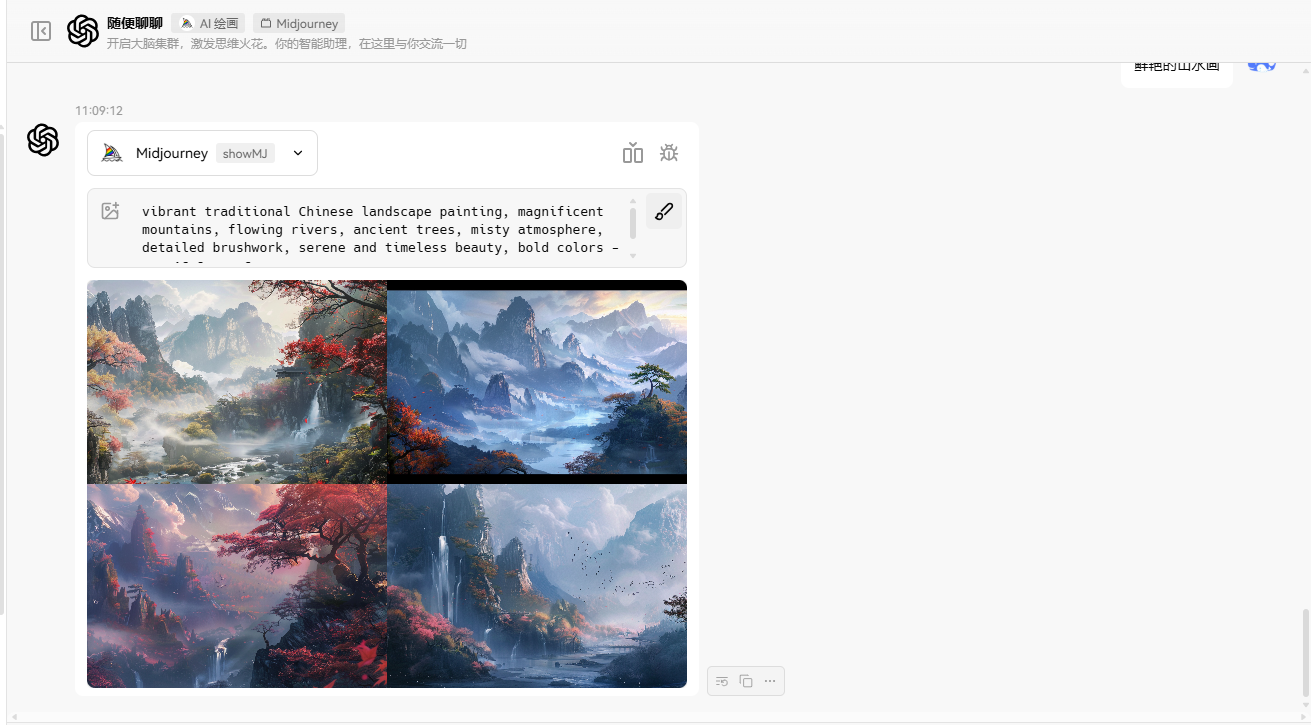
Regionalized ChatGPT Ecosystems and Multimodal AI in 2025: Strategic Insights and Technical Implications
As AI continues its rapid evolution in 2025, one of the most consequential shifts is the emergence of localized ChatGPT deployments , particularly within restrictive internet environments such as...
Wildthing and Role-Reversed Training: Unlocking New Frontiers in LLM Robustness and Conversational AI in 2025
The introduction of Wildthing —a language model trained on role-reversed ChatGPT conversations—marks one of the most intriguing experimental shifts in large language model (LLM) training paradigms in...