Meta’s AI‑Ad Strategy: Why Google Models Aren’t on the Menu in 2025
Executive Snapshot: In September 2025, Meta continues to build its advertising ecosystem on proprietary Llama 4 models and integrated hardware, not on Google‑owned Gemini. The company’s public...
Executive Snapshot:
In September 2025, Meta continues to build its advertising ecosystem on proprietary Llama 4 models and integrated hardware, not on Google‑owned Gemini. The company’s public narrative, product releases, and privacy stance reinforce an end‑to‑end AI stack that keeps data flow in-house. For advertisers, marketers, and investors, this means Meta is investing in internal capabilities to drive contextual relevance, real‑time bidding, and user experience personalization—while Google remains a competitor rather than a partner.
1. The Public Narrative: Meta Stays Independent of Alphabet
Meta’s 2025 product calendar is dominated by self‑hosted AI features. The
Meta AI App
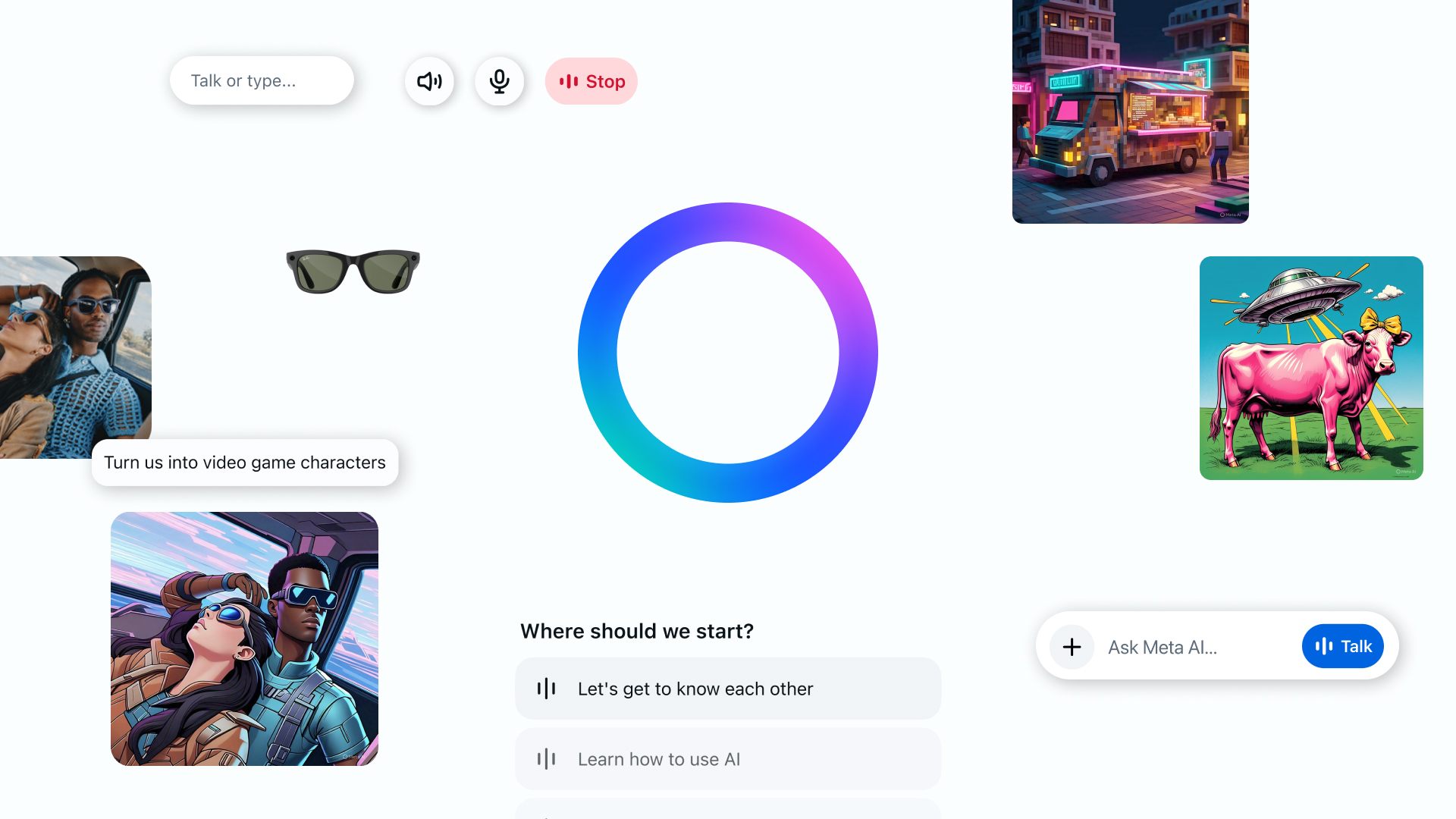
, unveiled in April, explicitly cites Llama 4 as its core model for voice, image generation, and contextual assistance. No press release or developer portal references Gemini or any other Google‑owned language model. This absence is telling: if Meta were evaluating or licensing Google’s LLMs for ad tech, the company would likely surface that in a public statement, given Alphabet’s history of announcing partnership deals (e.g., Google Cloud + Adobe). The lack of such disclosure indicates Meta’s strategic choice to keep its AI stack internal.
From an industry perspective, this independence aligns with Meta’s broader data‑centric philosophy. By controlling model training and inference pipelines, Meta can fine‑tune algorithms on its own user signals—text, images, video—and avoid external dependencies that could introduce latency or compliance risks.
2. Technical Foundations: Llama 4 Meets Real‑Time Ad Demand
Meta’s AI infrastructure already demonstrates capabilities critical to ad optimization:
- Full‑duplex voice inference —demonstrated at the September 2024 Connect event—shows that Meta can run complex language models on-device or with low‑latency edge compute. This is essential for real‑time bidding where decisions must be made in milliseconds.
- On‑device image understanding —the Ray‑Ban Display and Oakley glasses feature high‑resolution cameras paired with dedicated AI accelerators. These devices can capture contextual data (location, surroundings, user intent) without routing raw footage to the cloud, preserving privacy while enriching ad relevance.
- Fine‑tuned Llama 4 —Meta’s internal training pipeline incorporates millions of hours of user interactions. The model can generate natural language explanations for ad targeting decisions, a feature that could improve transparency for advertisers.
When combined, these elements create an AI ecosystem capable of delivering personalized ads in real time, without relying on third‑party cloud services like Google Cloud’s Gemini endpoints.
3. Privacy & Compliance: The In‑House Advantage
Meta’s recent privacy updates—most notably the statement that
Meta AI has no real‑time web access
—highlight a deliberate strategy to keep inference within controlled environments. By avoiding external model calls, Meta reduces data exfiltration risks and aligns with evolving regulations such as the EU Digital Services Act and California Privacy Rights Act.
For advertisers, this means:
- Data sovereignty —ad targeting signals remain on Meta’s servers, reducing exposure to third‑party breaches.
- Auditability —Meta can provide clear logs of how user data informed ad placements, easing compliance audits.
- Reduced latency —Edge inference eliminates round‑trip times to external APIs, improving click‑through rates and conversion metrics.
4. Competitive Landscape: Google vs. Meta in AI‑Powered Ads
Google’s Gemini 1.5 remains the most advanced publicly available LLM in 2025, yet there is no evidence of a partnership with Meta for ad tech. Alphabet continues to monetize its own advertising stack (AdSense, Ad Manager) through proprietary machine learning models hosted on Google Cloud.
Meta’s differentiation lies in:
- Hardware integration —wearables like Ray‑Ban Display provide unique contextual data streams that Google’s ad platform does not natively capture.
- User experience embedding —AI features (e.g., voice assistants, image generation) are woven into the core Meta app, creating a seamless loop where user intent directly informs ad relevance.
- Data breadth —Meta’s access to billions of daily active users across Facebook, Instagram, WhatsApp, and Messenger offers richer behavioral signals than Google’s search‑centric dataset.
For brands, this translates into a distinct set of creative opportunities: contextual micro‑ads triggered by in‑app actions (e.g., “Hey Meta, show me a coffee shop near me”) versus search‑based intent matching on Google.
5. Business Implications for Advertisers and Marketers
Meta’s internal AI strategy offers several tangible benefits for advertisers:
- Higher precision targeting —Llama 4 can ingest multimodal signals (text, image, location) to refine audience segments beyond keyword or demographic filters.
- Dynamic creative generation —The same model that powers the Meta AI App can auto‑generate ad copy and visuals on the fly, reducing creative cycle times.
- Real‑time optimization —Edge inference enables immediate bid adjustments based on live user engagement metrics, potentially lowering cost per acquisition (CPA).
- Transparency tools —Meta can provide AI explanations for ad placements, aiding compliance and trust with consumers concerned about algorithmic bias.
Marketers should monitor Meta’s upcoming
Llama 5
roadmap. If the next generation delivers higher token throughput or better multimodal understanding, advertisers could unlock even more granular personalization—especially in high‑stakes verticals like finance, healthcare, and retail.
6. Investment Considerations for Venture Capitalists and Corporate Partners
From a funding perspective, Meta’s continued investment in proprietary AI hardware and software signals a long‑term commitment to internal capabilities. VC firms should note:
- Capital allocation —Meta’s 2025 Q3 earnings report showed a $4.8 billion spend on AI infrastructure, up 18% YoY.
- IP ownership —All Llama models are fully owned by Meta, offering clear exit pathways for potential spin‑outs or licensing deals.
- Ecosystem lock‑in —Brands that integrate deeply with Meta’s AI ecosystem may face switching costs if they later migrate to other platforms.
Corporate partners in media and e‑commerce could explore joint R&D initiatives around Llama 4 fine‑tuning, leveraging Meta’s hardware accelerators for
edge deployment
.
7. Implementation Roadmap: How to Leverage Meta’s AI-Driven Ad Stack
- Data Alignment: Map your existing customer data to the modalities supported by Llama 4 (text, image, location). Ensure compliance with Meta’s data usage policies.
- Creative Automation: Deploy Meta’s AI API endpoints for on‑the‑fly copy and visual generation. Test A/B variations to measure engagement lift.
- Edge Deployment: If using Ray‑Ban Display or Oakley glasses, integrate SDKs to capture contextual signals locally before sending aggregated metrics to your ad server.
- Real‑Time Bidding Integration: Use Meta’s real‑time bidding (RTB) interface with custom scoring models powered by Llama 4 embeddings. Optimize bid adjustments every 100 ms.
- Transparency Layer: Implement AI explanation modules to log why specific ads were shown, aiding compliance audits and consumer trust reports.
Each step should be iterated with performance KPIs: CTR, CPA, ROAS, and user satisfaction scores. Meta’s internal analytics dashboard provides real‑time feedback loops for continuous improvement.
8. Future Outlook: What 2026 Might Hold
Meta’s trajectory suggests a few key developments:
- Llama 5 Launch: Expected in late 2025, likely featuring larger parameter counts and enhanced multimodal fusion—boosting contextual ad relevance.
- API Expansion: Meta may open limited external API access for advertisers, similar to Google’s Cloud AI Platform, but with tighter data controls.
- Cross‑Platform Integration: Deeper integration between Meta’s social apps and its hardware line could enable seamless in‑context advertising across AR/VR environments.
- Regulatory Adaptation: As privacy laws tighten, Meta will likely enhance on-device inference capabilities to reduce data sent to the cloud.
For business leaders, staying ahead means preparing for these shifts by aligning internal data pipelines with Meta’s evolving AI ecosystem and exploring early partnerships or pilot projects to test Llama 4/5 capabilities in real‑world campaigns.
Conclusion: Strategic Takeaways for Decision Makers
- Meta is not partnering with Google on AI models for ads. Its focus remains on proprietary Llama 4 and hardware integrations, giving it control over data flow and inference latency.
- Advertisers can benefit from Meta’s multimodal AI engine—especially for real‑time personalization and dynamic creative generation.
- Investors should watch Meta’s 2025 Q3 spend on AI infrastructure; a continued upward trend indicates long-term commitment to internal capabilities.
- Implementation requires aligning data, adopting Meta’s SDKs, and building transparency layers to satisfy compliance needs.
- Future opportunities loom with Llama 5 and potential API expansion—prepare now to capitalize on the next wave of AI‑driven advertising.
In 2025, Meta’s strategy is clear: keep its AI stack in-house, leverage hardware for contextual signals, and use proprietary models to drive ad relevance. For brands, marketers, and investors, this means a distinct competitive edge—one that hinges on internal data ownership, low‑latency inference, and the promise of next‑generation multimodal capabilities.
Related Articles
Beyond SOC: Why trust in AI agents requires a new assurance model
Beyond SOC: Building an AI Agent Assurance Economy in 2025 The 2025 enterprise landscape has moved past the era where Software as a Service and traditional audit frameworks could guarantee that...

5 AI Developments That Reshaped 2025 | TIME
Five AI Milestones That Redefined Enterprise Strategy in 2025 By Casey Morgan, AI2Work Executive Snapshot GPT‑4o – multimodal, real‑time inference that unlocks audio/video customer support. Claude...
AI Breakthroughs , Our Most Advanced Glasses, and More...
2025 AI Landscape: From Code‑Gen Benchmarks to Performance Glasses – What Decision Makers Must Know Executive Snapshot Claude Opus 4.5 tops SWE‑Bench with an 80.9% score, redefining code‑generation...