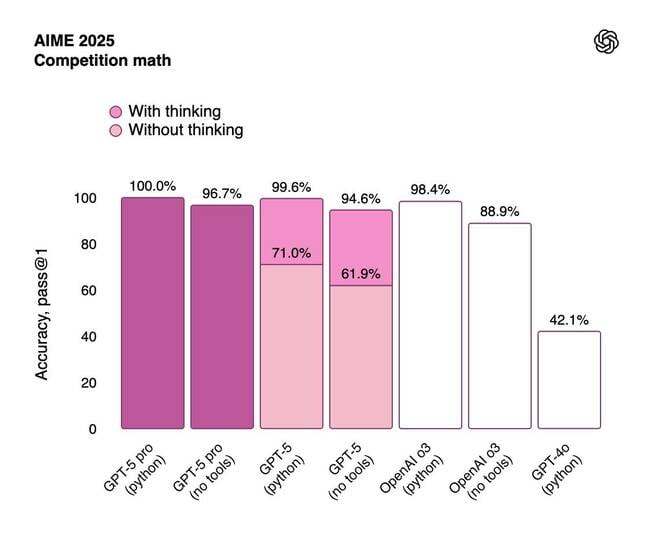
GPT-5 Unveiled: Redefining AI Efficiency, Accuracy, and Multimodal Capabilities in 2025
OpenAI’s launch of the GPT-5 family in August 2025 marks a transformative milestone in large language model (LLM) evolution. With a unified architecture that dynamically routes queries to specialized...
OpenAI’s launch of the GPT-5 family in August 2025 marks a transformative milestone in large language model (LLM) evolution. With a unified architecture that dynamically routes queries to specialized internal variants, GPT-5 delivers unprecedented reductions in hallucinations and enhanced multimodal reasoning, reshaping the AI landscape for enterprises, developers, and AI strategists alike.
From my vantage point as an AI News Curator closely tracking industry shifts, GPT-5 is not merely another iteration; it is a strategic pivot toward adaptive, cost-efficient, and user-personalized AI services that address critical pain points in deployment and trust. This analysis unpacks GPT-5’s technical breakthroughs, business implications, and forward-looking trends crucial for decision-makers navigating AI integration in 2025.
Unified Architecture and Dynamic Model Routing: A Paradigm Shift in AI Deployment
At the core of GPT-5’s innovation is its unified system design that replaces the fragmented multi-model approach of prior generations like GPT-4o and o3. Instead of offering separate discrete models, GPT-5 intelligently routes incoming prompts to one of several internal variants—Nano, Mini, Standard, or Pro/Thinking—based on the complexity, domain, and latency requirements of the task.
This dynamic routing system achieves a delicate balance between resource efficiency and output quality:
- Nano and Mini variants deliver rapid, low-cost responses ideal for simple queries or high-volume applications.
Multimodal Integration Expands AI Interaction Horizons
- Real-time transcription and voice interaction enhancements that improve accessibility and hands-free productivity.
- Video timeline parsing enabling detailed content analysis, annotation, and summarization.
- Multimodal coding assistance that integrates visual debugging and documentation generation within IDEs.
This integration aligns with the industry-wide trend toward generalized AI systems that unify sensory inputs under a single interface, enabling richer user experiences and more comprehensive automation. Enterprises in media, education, and customer service stand to gain immediate value by embedding GPT-5 into multimodal workflows.
Business Models and Market Positioning in a Consolidating AI Landscape
OpenAI’s pricing strategy with GPT-5 reflects a mature tiered approach designed to capture a broad customer base while incentivizing enterprise-grade usage:
- Free access to the Standard model ensures mass adoption and experimentation.
- API pricing ranges from $0.15 per million tokens (Nano) to $1.25/$10 per million tokens for the full Pro model, enabling cost optimization based on workload complexity.
Simultaneously, OpenAI has deprecated legacy models (GPT-4o, o3), signaling a consolidation aimed at reducing fragmentation and support overhead. This move increases switching costs but benefits enterprises by simplifying integration and maintenance.
Against competitors, GPT-5’s broad multimodal capabilities, dynamic routing, and hallucination mitigation deepen OpenAI’s moat. While rivals explore niche strengths—Claude’s tool chaining, Gemini’s hybrid architectures—OpenAI’s unified system architecture and mature commercialization position GPT-5 as the industry’s benchmark for frontier AI in 2025.
Strategic Implications for AI Adoption and Enterprise Integration
GPT-5’s design philosophy embodies OpenAI’s vision of AI as “software on demand.” This framing signals a shift from static AI tools toward dynamic AI-driven software synthesis, where a single prompt can generate complex applications, research reports, or coding projects.
For enterprises, this translates into several strategic opportunities:
- Accelerated software development: GPT-5’s agentic coding abilities with CLI/IDE integration enable rapid prototyping and debugging, reducing developer cycle times.
- Enhanced knowledge work automation: Improved reasoning and hallucination reduction support high-value tasks such as legal document drafting, scientific data analysis, and regulatory compliance.
- Personalized AI assistants: Customizable personalities, UI accents, and session memory improve user engagement and productivity, critical in customer-facing applications and internal collaboration tools.
- Cost-optimized deployment: Dynamic routing allows organizations to tailor AI usage patterns economically without sacrificing quality.
However, these opportunities come with implementation challenges. Enterprises must evaluate:
- Integration complexity across legacy systems and diverse data types.
- Governance and risk management around AI hallucinations, despite reductions.
- Balancing personalization with privacy and security mandates.
Technical Considerations for Effective GPT-5 Deployment
Deploying GPT-5 in production requires nuanced understanding of its multi-variant routing and multimodal capabilities:
- Task profiling: Organizations should map workloads against GPT-5 variants to optimize cost/performance—e.g., routing bulk customer service queries to Nano/Mini while reserving Pro mode for complex analytics.
- Multimodal data pipelines: Preparing and integrating text, image, audio, and video inputs demand robust preprocessing and postprocessing frameworks.
- API usage monitoring: Real-time telemetry on token consumption and response latencies helps manage budgets and service-level agreements (SLAs).
- Customization: Leveraging GPT-5’s personalization features requires building UI/UX layers that can dynamically adjust AI “personalities” while maintaining brand consistency.
Enterprises with mature MLOps practices will benefit most from GPT-5’s flexibility, while newcomers should prioritize pilot programs focusing on clearly defined use cases to validate ROI.
Market Trends and Competitive Dynamics Shaped by GPT-5’s Arrival
GPT-5’s launch crystallizes several 2025 AI market dynamics:
- Consolidation of AI platforms: With OpenAI retiring older models and concentrating developer mindshare on GPT-5, enterprises face fewer fragmented options but increased vendor lock-in risk.
- Multimodal generalist AI dominance: The ability to handle diverse input types in a single model is becoming table stakes, pressuring competitors to accelerate multimodal integration.
- Hallucination reduction as competitive differentiator: Models with lower error rates will capture enterprise trust, particularly in regulated industries.
- Emerging monetization models: While OpenAI maintains subscription- and API-based revenue, ongoing industry experiments—such as xAI’s ad-supported Grok—point to potential hybrid monetization strategies in the near future.
- Personalization and UX as strategic battlegrounds: Customizable AI personalities and seamless voice/video interfaces are becoming critical user retention factors.
These trends suggest that enterprises should adopt a forward-looking AI strategy that balances immediate business value with flexibility to pivot as the AI landscape evolves.
Actionable Takeaways and Strategic Recommendations for AI Leaders
For business and technology leaders evaluating GPT-5 adoption in 2025, the following insights are essential:
- Prioritize pilot projects that leverage GPT-5’s multimodal and Pro/Thinking capabilities for high-value, complex workflows—such as scientific research, legal analysis, or advanced coding—to validate impact before scaling.
- Optimize cost-efficiency by leveraging dynamic routing: Integrate GPT-5’s variant selection logic into workload management to balance speed and expense without sacrificing quality.
- Incorporate hallucination mitigation workflows: Embed human-in-the-loop verification initially, particularly for regulated or mission-critical applications, until confidence thresholds are met.
- Leverage personalization features strategically to enhance user engagement in customer-facing tools and internal AI assistants, but incorporate strong governance to mitigate bias and privacy risks.
- Plan for legacy model deprecation: Expedite migration from GPT-4o and earlier to unify AI infrastructure on GPT-5, reducing operational complexity.
- Monitor emerging monetization models: Stay alert to shifts beyond subscriptions and API fees, including ad integration and AI-driven commerce, to inform long-term budget and vendor strategies.
- Invest in multimodal data readiness: Develop capabilities in video, audio, and image processing pipelines to fully exploit GPT-5’s rich input modalities.
Ultimately, GPT-5’s release signals a new operational
coding and
writing - AI2Work Analysis">for coding
and writing - AI2Work Analysis">model for
AI services—one that demands agile adaptation but promises transformative gains in productivity, trustworthiness, and user experience.
Future Outlook: GPT-5 and the Road Ahead for Frontier AI
While GPT-5 sets a new bar in 2025, it also raises compelling questions about the next evolution steps:
- Will OpenAI achieve full unification of all internal variants into a single adaptive model, further simplifying deployment?
- How will personalization capabilities mature to balance user preference, ethical AI use, and alignment at scale?
- What role will hybrid monetization models play as AI adoption saturates subscription revenue streams?
- Can hallucination mitigation continue to improve toward near-zero error rates, enabling fully autonomous AI systems in regulated verticals?
For enterprises and developers, the strategic imperative is clear: embrace GPT-5’s advances now while building flexible AI frameworks ready for rapid iteration. The era of AI as “software on demand” is here, and those who adapt quickly will shape the future of intelligent automation and innovation.
Related Articles

Artificial Intelligence News -- ScienceDaily
Enterprise leaders learn how agentic language models with persistent memory, cloud‑scale multimodal capabilities, and edge‑friendly silicon are reshaping product strategy, cost structures, and risk ma
December 2025 Regulatory Roundup - Mac Murray & Shuster LLP
Federal Preemption, State Backlash: How the 2026 Executive Order is Reshaping Enterprise AI Strategy By Jordan Lee – Tech Insight Media, January 12, 2026 The new federal executive order on...
Microsoft named a Leader in IDC MarketScape for Unified AI Governance Platforms
Microsoft’s Unified AI Governance Platform tops IDC MarketScape as a leader. Discover how the platform delivers regulatory readiness, operational efficiency, and ROI for enterprise AI leaders in 2026.