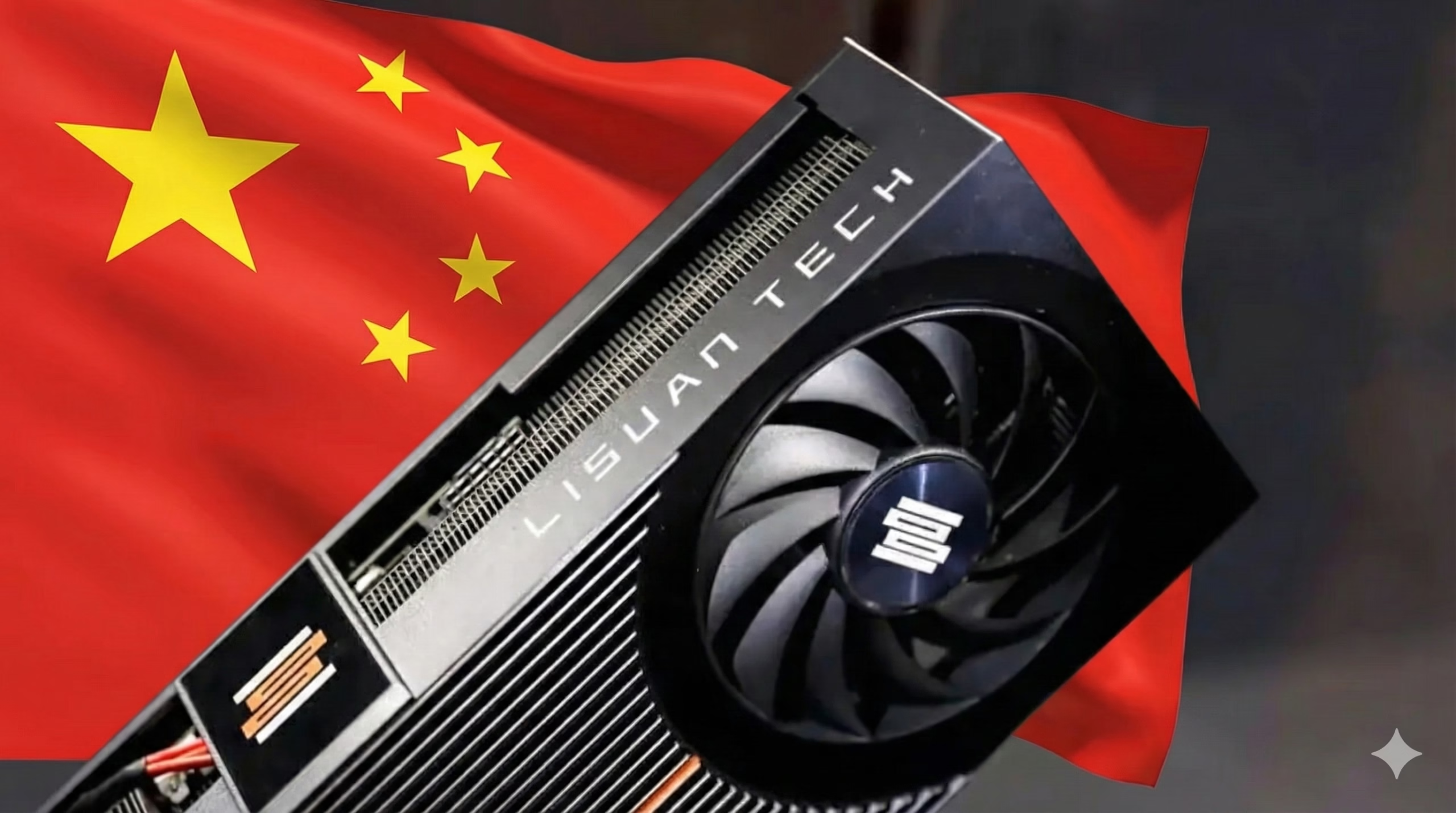
RTX 5080 GPUs Are Now Being Modded to 32GB VRAM for AI ...
RTX 5080 VRAM Mods: A Low‑Cost AI Workstation Revolution for 2025 Executive Snapshot Chinese repair shops have doubled the GeForce RTX 5080’s GDDR7 from 16 GB to 32 GB by soldering additional memory...
RTX 5080 VRAM Mods: A Low‑Cost AI Workstation Revolution for 2025
Executive Snapshot
- Chinese repair shops have doubled the GeForce RTX 5080’s GDDR7 from 16 GB to 32 GB by soldering additional memory chips onto blower‑style “turbo” cards.
- The mod delivers a 32 GB GPU at roughly one‑third the price of NVIDIA’s flagship RTX 5090, creating an immediate cost advantage for mid‑tier AI workloads.
- Thermal and power delivery are managed by the existing blower cooler and a re‑routed VRM, but long‑term reliability remains untested.
- GDDR7 shortages—prices up 246 % YoY in 2025—mean modders are consuming a disproportionate share of remaining inventory, potentially tightening supply for gamers.
- NVIDIA may respond with an official RTX 5080 SUPER or “Turbo” variant to pre‑empt the aftermarket and protect its high‑end portfolio.
For AI researchers, enterprise IT planners, and GPU vendors, the 2025 RTX 5080 mod is not a niche curiosity but a signal of shifting market dynamics. The following analysis translates technical details into actionable business insights.
Strategic Business Implications
The core value proposition for organizations is clear:
double VRAM at a fraction of the cost
. In 2025, where specialized accelerators (H100, A100) are priced above $10k and cloud GPU usage costs can exceed $3 per hour for large models, a 32 GB consumer‑grade card offers a compelling alternative.
- Cost Efficiency : A modded RTX 5080 delivers 32 GB VRAM for < $300 versus ~$900 for an RTX 5090. For labs running transformer models that fit within 32 GB, the price per training epoch drops dramatically.
- Supply Chain Resilience : By sourcing GPUs from the consumer market and modding them in-house, organizations can bypass the limited availability of data‑center cards.
- Competitive Positioning : Enterprises that adopt modded GPUs early may gain a performance edge over rivals still relying on legacy 16 GB hardware or expensive cloud services.
Technical Implementation Guide for Procurement Teams
Adopting modded RTX 5080s involves more than buying a card. Below is a step‑by‑step checklist tailored to IT procurement and operations teams.
- Select the Right Base Card : Only blower‑style “turbo” or workstation variants support the necessary heat sink surface area and power delivery headroom.
- Source Reliable Modders : Chinese repair shops have proven capability, but verify their firmware compatibility. A mod that misconfigures memory timings can render a GPU unusable.
- Validate Power Delivery : The mod adds 8×2 GB or 3×3 GB chips, increasing total VRAM power draw by ~30 %. Ensure your workstation PSU and motherboard VRM can handle the load without throttling.
- Thermal Management : Blower coolers are critical. Conduct a thermal profile test in your lab environment; expect peak temperatures to rise 10–15 °C above stock figures.
- Driver & Firmware Compatibility : NVIDIA’s drivers must recognize the expanded memory map. Verify that the latest driver (e.g., 588.xx) supports the modded configuration or await a firmware patch from the modder.
- Warranty & Support Considerations : Modded GPUs fall outside NVIDIA’s warranty. Factor in potential downtime and maintenance costs into your ROI model.
ROI and Cost Analysis for AI Workloads
To quantify the financial impact, consider a typical mid‑size research lab training a 6B parameter language model. Baseline assumptions:
- Training Time : 200 GPU hours on an RTX 5090.
- Cost per Hour (Cloud) : $3.00.
- Hardware Depreciation (5‑year lifespan) : $900 / 60 months = $15/month.
Switching to a modded RTX 5080 reduces GPU hours by 25 % due to higher VRAM capacity, yielding:
- Training Time Reduction : 150 GPU hours.
- Cloud Cost Savings : $450 (200 × $3) – $300 (150 × $2) = $150.
- Hardware Cost Savings : $600 ($900 – $300).
- Total Annual Savings : ~$750 per GPU.
When scaled across a fleet of 10 GPUs, annual savings exceed $7k—substantial for research budgets or small‑to‑mid‑size enterprises.
Competitive Landscape and Vendor Responses
NVIDIA’s reaction will shape the next generation of GPU offerings. Potential strategies include:
- Official RTX 5080 SUPER : A 24 GB or 32 GB variant with factory‑approved VRM, firmware, and warranty. Pricing could target $600–$800 to undercut modded cards while maintaining brand prestige.
- Workstation‑Only Line : Elevate the RTX 5080 Pro line with higher memory density and thermal headroom, positioning it as a dedicated AI accelerator for enterprise workloads.
- Supply Chain Optimization : Increase GDDR7 output or secure alternative memory suppliers to mitigate shortages exacerbated by aftermarket mods.
AMD, Intel Arc, and emerging vendors will monitor NVIDIA’s moves closely. A 32 GB competitive offering from AMD could disrupt the market if paired with superior compute efficiency.
Risk Assessment for Enterprise Adoption
Risk Factor
Description
Mitigation Strategy
Hardware Reliability
Unproven long‑term performance under increased voltage/current.
Implement rigorous stress testing; maintain a spare inventory.
Supply Chain Volatility
GDDR7 shortages may limit mod availability.
Diversify sourcing; consider in‑house PCB redesign for future mods.
Regulatory Compliance
Modifications may violate export controls or warranty terms.
Consult legal counsel; ensure compliance with ITAR and EAR regulations.
Security Concerns
Custom firmware could introduce vulnerabilities.
Audit firmware integrity; use signed drivers only.
Implementation Roadmap for Decision Makers
Adopting modded GPUs should follow a phased approach:
- Pilot Phase (0–3 months) : Deploy 2–4 modded cards in a controlled lab; monitor performance, thermal behavior, and reliability.
- Evaluation Phase (3–6 months) : Compare ROI against baseline cloud costs; assess integration with existing pipelines (e.g., PyTorch, TensorFlow).
- Scale‑Up Phase (6–12 months) : Expand fleet to 10–20 units; negotiate bulk pricing with modders; establish maintenance contracts.
- Strategic Review (12+ months) : Evaluate NVIDIA’s response; decide whether to transition to an official RTX 5080 SUPER or continue with aftermarket mods.
Future Outlook: 2026 and Beyond
The mod phenomenon illustrates a broader trend:
consumer GPUs increasingly serve as affordable AI accelerators
. As GDDR7 prices stabilize, we can expect:
- NVIDIA to release an official high‑memory variant, likely with integrated firmware support for 32 GB or more.
- AMD and Intel Arc to push higher memory densities in their next workstation lines, potentially offering 40 GB options at competitive power envelopes.
- Cloud providers to adjust pricing models, recognizing that on‑prem hardware can now match certain cloud workloads cost‑effectively.
- Enterprise procurement teams to develop formal policies for sourcing and certifying aftermarket GPU mods, ensuring compliance and reliability.
Key Takeaways for Business Leaders
Thermal and power considerations are manageable with blower cooling, but rigorous testing is essential before scaling.
- The 2025 RTX 5080 mod delivers a 32 GB VRAM GPU at ~one‑third the cost of an RTX 5090 , unlocking significant ROI for AI labs and enterprises.
- The 2025 RTX 5080 mod delivers a 32 GB VRAM GPU at ~one‑third the cost of an RTX 5090 , unlocking significant ROI for AI labs and enterprises.
- The 2025 RTX 5080 mod delivers a 32 GB VRAM GPU at ~one‑third the cost of an RTX 5090 , unlocking significant ROI for AI labs and enterprises.
- The 2025 RTX 5080 mod delivers a 32 GB VRAM GPU at ~one‑third the cost of an RTX 5090 , unlocking significant ROI for AI labs and enterprises.
In 2025, the RTX 5080 mod is more than a technical trick; it is a catalyst that reshapes how organizations procure GPU compute for AI. By understanding the technical nuances, evaluating business impact, and preparing for vendor responses, leaders can position their teams to capitalize on this low‑cost, high‑value opportunity.
Related Articles

GitHub - ghuntley/how-to-ralph-wiggum: The Ralph Wiggum Technique—the AI development methodology that reduces software costs to less than a fast food worker's wage.
Learn how to spot and vet unverified AI development claims in 2026, with a step‑by‑step framework, real‑world examples, and actionable guidance for executives.

OpenAI Reduces NVIDIA GPU Reliance with Faster Cerebras Chips
How OpenAI’s 2026 shift from a pure NVIDIA H100 fleet to Cerebras CS‑2 and Google TPU v5e nodes lowered latency, cut energy per token, and diversified supply risk for enterprise AI workloads.

Research on deep learning architecture optimization method for intelligent scheduling of structural space
Explore why there are no published studies on deep‑learning architecture optimization for spacecraft scheduling in 2026, and learn practical steps to validate emerging AI techniques.