
OpenAI could reportedly run out of cash by mid-2027 — analyst paints grim picture after examining the company's finances
OpenAI’s 2026 cash‑runway challenge: What enterprise partners and investors need to know about GPT‑4 Turbo, Claude 3.5, token volumes, and funding prospects.
OpenAI’s 2026 Cash‑Runway Challenge: What It Means for Enterprise Partners and Investors
Executive Snapshot
: By mid‑2027 OpenAI faces a projected liquidity crunch unless it dramatically accelerates monetisation or secures new capital. Current burn rates of roughly $17 billion per year, coupled with an ambitious $1.4 trillion data‑center investment plan, create a gap that threatens the company’s ability to sustain its flagship models (GPT‑4 Turbo, Claude 3.5) and compete with entrenched hyperscalers.
Quantitative Overview of the Cash‑Burn Engine
The 2026 burn estimate of $8 billion—doubling in 2027 and reaching $40 billion by 2029—derives from a combination of capital expenditures (CapEx) on edge and core cloud infrastructure, research & development (R&D), and talent acquisition. The company’s revenue stream, primarily API usage ($13 billion annually) and ChatGPT with GPT-4o subscriptions, has not kept pace with the outflow.
- Annual CapEx (2026) : $8 bn
- R&D & Talent (2026) : $3 bn
- Total Burn (2026) : $11 bn
- Operating Loss (Q4 2026) : $12 bn
- Cash Balance (end‑2026) : ~$30 bn (based on the latest public figure)
- Runway (at current burn) : ~18 months
Capital Expenditure versus Revenue Generation: The Core Conflict
The $1.4 trillion infrastructure commitment is structured as long‑term contracts with Nvidia, Broadcom, and Oracle for GPU, networking, and storage hardware. These deals imply a pay‑back horizon of 10–12 years if the company can generate sufficient revenue from model inference usage.
Per‑token inference costs for GPT‑4 Turbo hover between $0.0001 and $0.001. To justify the CapEx, OpenAI would need to process on the order of 10 million active tokens per day across its portfolio—a volume that rivals the throughput of AWS Inferentia or Google Vertex AI.
In contrast, current token volumes for GPT‑4 Turbo are estimated at
~1.5 million/day
, well below the breakeven threshold. This mismatch underscores why the company is betting on an AGI breakthrough to unlock new revenue streams (e.g., high‑margin enterprise AI services, licensing, or a consumer platform that monetises usage at scale).
Revenue Diversification: Where the Company Is and Where It Needs to Go
OpenAI’s top line is dominated by:
- API Usage (70%) : Enterprise customers pay per token, but pricing tiers are capped to remain competitive with Azure OpenAI Service.
- ChatGPT with GPT-4o & Enterprise (20%) : Subscription revenue is growing but still modest relative to the CapEx.
- Other (10%) : Licensing deals, research collaborations, and limited advertising experiments.
To bridge the $17 bn annual burn gap, OpenAI must:
- Increase token volume by 6–7× within two years.
- Introduce higher‑margin offerings (e.g., dedicated inference endpoints for regulated industries).
- Explore non‑token revenue such as data‑labeling services, AI consulting, or a “AI cloud” subscription model that bundles compute and storage.
Competitive Landscape: Hyper‑Scale vs. Niche Dominance
Microsoft Azure OpenAI Service already enjoys deep integration with enterprise workloads (Dynamics 365, Power Platform). AWS Inferentia, Google Vertex AI, and Meta’s Llama 2 infrastructure are aggressively pricing for volume, offering discounts that undercut OpenAI’s per‑token rates.
OpenAI’s strategy of positioning itself as a “standalone AI cloud” places it at odds with these incumbents. The company must either:
- Differentiate via model superiority : GPT‑4 Turbo currently leads on few‑shot reasoning and multimodal tasks, but competitors are closing the gap.
- Leverage strategic partnerships : Deepening ties with Microsoft could provide access to Azure’s enterprise customer base while keeping OpenAI’s brand distinct.
- Invest in proprietary hardware accelerators : Custom ASICs could reduce inference costs, but require significant upfront investment and carry execution risk.
Risk Assessment: What Could Go Wrong?
- Token Volume Shortfall : If GPT‑4 Turbo adoption stalls, the company will fail to recover CapEx and R&D spend.
- Pricing Pressure : Competitors may undercut OpenAI’s rates, eroding margin and forcing a price war.
- AGI Delay : The assumption that an AGI breakthrough will unlock new revenue streams is speculative; any delay could extend the burn period.
- Capital Market Constraints : A tightening of venture capital or a shift in investor sentiment towards more mature AI firms could limit OpenAI’s ability to raise additional equity or debt.
- Regulatory Hurdles : Data privacy and AI governance regulations may impose additional compliance costs, further straining cash flow.
Strategic Options for Investors and Partners
- Capital Infusion : A new funding round (equity or convertible debt) could extend the runway. However, dilution concerns and valuation pressure are significant.
- Strategic Equity Partnership : Aligning with Microsoft or AWS through a joint venture could provide both capital and customer access while preserving OpenAI’s brand autonomy.
- Revenue‑Sharing Models : Structuring contracts where OpenAI receives a royalty on downstream revenue generated by its models (e.g., in SaaS products) can align incentives.
- Cost Optimization Initiatives : Reassessing CapEx commitments, negotiating better terms with hardware vendors, or scaling down non‑core R&D projects could reduce burn without sacrificing long‑term capability.
- Portfolio Diversification : Expanding beyond language models to vision (Gemini 1.5) and multimodal offerings can spread risk and open new monetisation avenues.
Financial Modeling: Scenario Analysis for Decision Makers
Scenario
Token Volume (million/day)
Annual Revenue ($bn)
Runway (months)
Base Case (current growth)
1.5
13
18
Aggressive Growth (6× volume)
9
78
60+
Conservative (4× volume)
6
52
36
Implications for Corporate Finance Teams
- Contractual Flexibility : Ensure pricing models allow for rapid scaling without large upfront commitments.
- Risk‑Mitigation Clauses : Include performance guarantees or early termination rights if service levels degrade.
- Capital Allocation Alignment : If partnering via a joint venture, align capital contributions with projected ROI timelines.
- Compliance and Governance : Verify that OpenAI’s data handling practices meet industry standards (GDPR, CCPA, FedRAMP).
Outlook: 2026‑2027 – A Narrow Window for Transformation
The next 12–18 months are critical. If OpenAI can:
- Secure a new funding round or strategic equity partnership.
- Accelerate token volume through enterprise contracts and consumer adoption.
- Reduce per‑token costs via hardware optimisation or tiered pricing.
It may stave off insolvency and position itself as the premier AI cloud provider. Failure to execute on these levers will likely force a restructuring, divestiture of non‑core assets, or even an acquisition by a larger hyperscaler.
Actionable Takeaways for Investment Professionals
- Monitor Funding Announcements : Track OpenAI’s capital raises and partnership deals; any dilution signals market confidence levels.
- Evaluate Token Growth Metrics : Use public API usage reports to gauge adoption velocity versus CapEx commitments.
- Assess Competitive Pricing Dynamics : Compare OpenAI’s per‑token rates with Azure, AWS, and Google to understand margin erosion risks.
- Consider Strategic Entry Points : For corporates, negotiate pilot projects that lock in early usage volumes at discounted rates.
- Prepare Contingency Plans : If partnering, include clauses for rapid disengagement if OpenAI’s financial health deteriorates.
In summary, OpenAI’s 2026 cash‑runway challenge is not merely a startup story; it reflects a broader industry tension between hyper‑scale infrastructure spending and the pace of monetisation. Investors and corporate partners must weigh the upside of early access to cutting‑edge models against the downside of potential liquidity constraints. The next two years will determine whether OpenAI can transform its ambitious investment thesis into sustainable, profitable growth.
See also our deep dive on
OpenAI’s GPU strategy
and a comparison of the
Azure OpenAI Service versus competitors
.
The analysis draws on recent Gartner insights into AI cloud spend, Bloomberg coverage of OpenAI’s funding trajectory, and industry reports from Forrester that outline cost‑per‑token benchmarks.
Related Articles

OpenAI researchers delete X posts claiming a GPT-5 math breakthrough after pushback from Hassabis, others; LeCun says they were "hoisted by their own GPTards" (Matthias Bastian/The Decoder) - AI2Work Analysis
OpenAI’s GPT‑5 Math Claim Fallout: A 2025 Blueprint for Responsible AI Marketing and Enterprise Adoption The October 2025 controversy surrounding OpenAI’s alleged “Erdős problem breakthrough” offers...
Consumer AI in 2025: Navigating Mainstream Adoption and Monetization Challenges
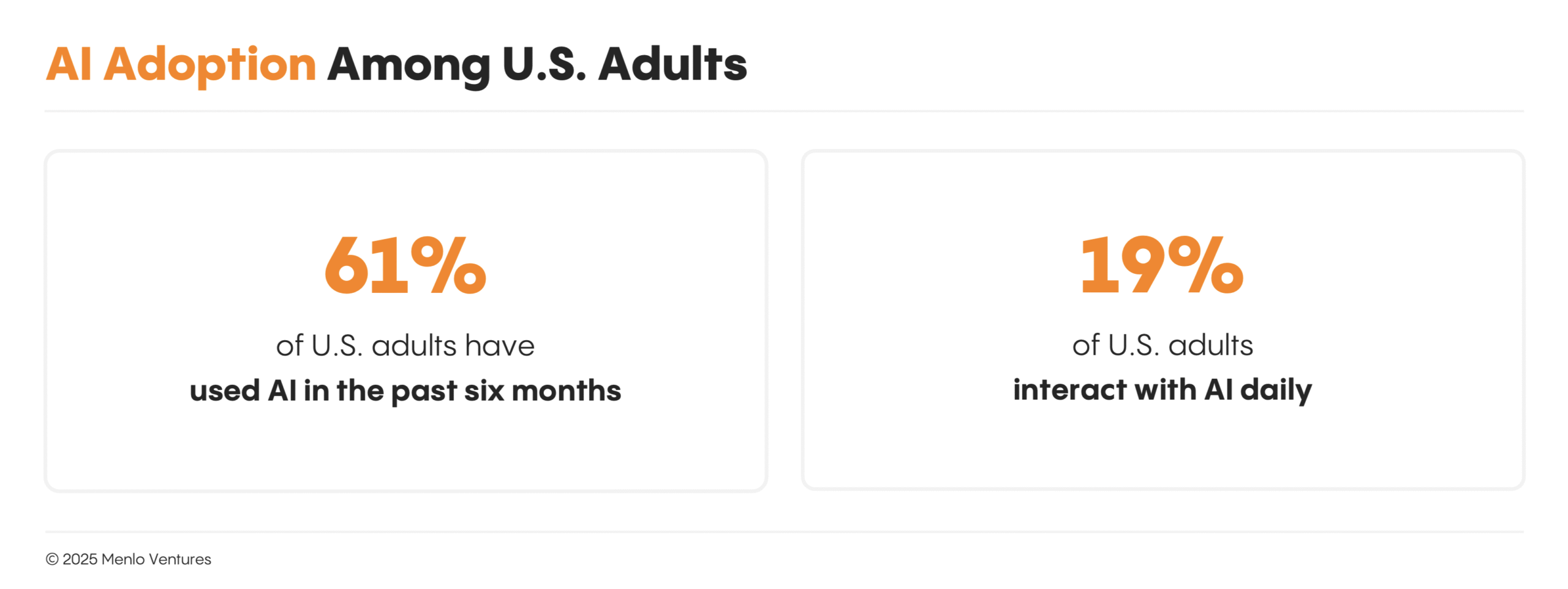
In 2025, consumer AI has decisively crossed the threshold from experimental novelty to essential, everyday technology. With over 60% of American adults engaging with AI tools in the past six months...

Emerging Trends in AI Ethics and Governance for 2026
Explore how agentic LLMs—GPT‑4o, Claude 3.5, Gemini 1.5—reshape governance, compliance costs, and market positioning in 2025.