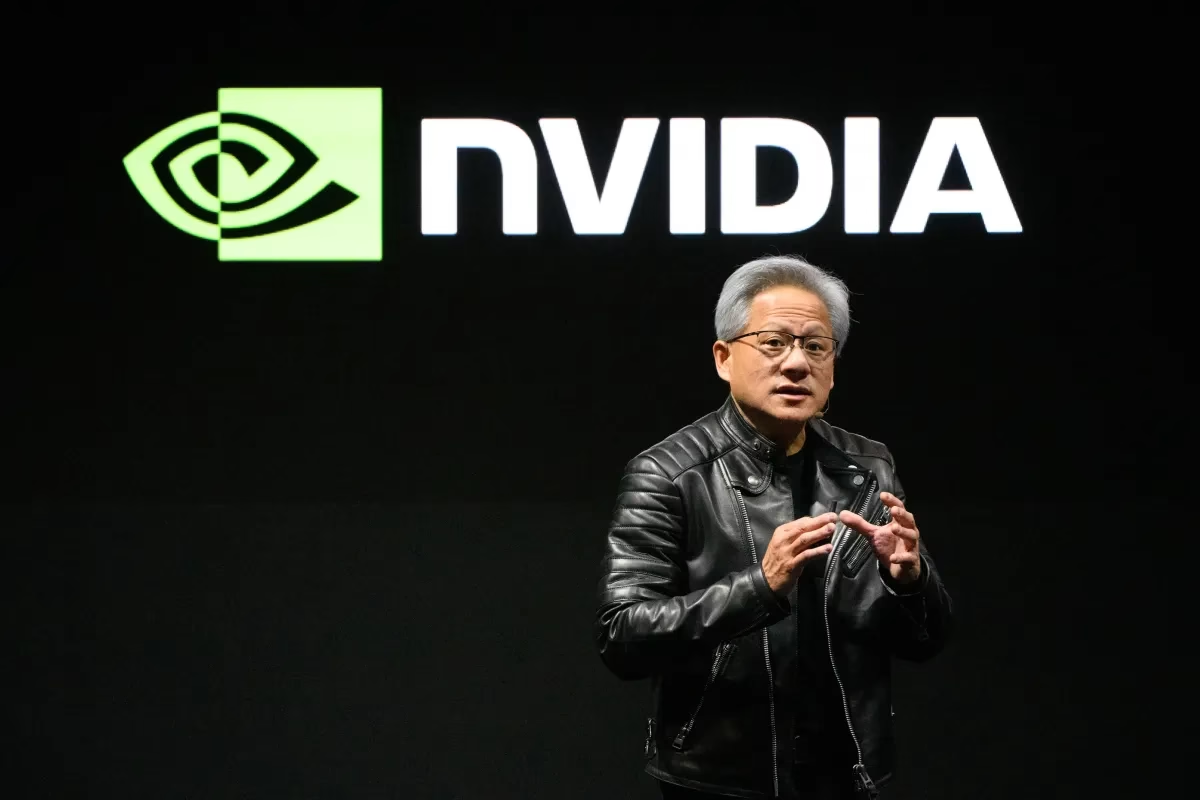
Nvidia's AI empire: A look at its top startup investments | TechCrunch
In 2026 Nvidia turns from GPU supplier into an integrated AI ecosystem architect. Explore its venture strategy, acquisitions like Groq, and the impact on the GPU ecosystem for enterprise leaders.
Nvidia’s AI Ecosystem Engine: 2026 Investment Strategy { "@context": "https://schema.org", "@type": "Article", "headline": "Nvidia’s AI Ecosystem Engine: 2026 Investment Strategy", "author": { "@type": "Person", "name": "Alexei Morozov" }, "datePublished": "2026-01-03", "lastModified": "2026-01-03", "articleSection": ["AI Hardware", "Corporate Venture Capital", "Semiconductor Strategy"] } Nvidia’s AI Ecosystem Engine: 2026 Investment Strategy Meta Title (60 chars): Nvidia’s AI Ecosystem Engine: 2026 Investment Strategy Meta Description (158 chars): In 2026 Nvidia shifts from GPU supplier to integrated AI ecosystem architect. Dive into its venture playbook, Groq acquisition, and market implications. Table of Contents Executive Overview From Supplier to Ecosystem Builder Corporate Venture Engine in 2026 Groq Acquisition: IP & Talent Playbook Consolidation Dynamics Across the GPU Ecosystem Implications for Startups and Investors Strategic Recommendations Future Outlook & Trend Predictions Conclusion & Key Takeaways Executive Overview By Q1 2026 Nvidia’s market capitalization tops $4.6 trillion , backed by a cash reserve exceeding $60 billion . Behind these headline figures lies an intentional pivot: the company is no longer merely a GPU supplier; it has become a strategic investor and integrator across the AI stack. This article dissects that transformation, quantifies its venture activity, examines the high‑profile Groq acquisition, and maps the ripple effects throughout the GPU ecosystem. From Supplier to Ecosystem Builder Nvidia’s core competency has long been accelerating compute via GPUs. In 2026 that role has expanded to architecting software stacks, securing foundational model demand, and acquiring complementary IP . The result is a self‑reinforcing loop: investments in AI founders generate GPU workloads, which justify further capital deployment. CUDA Optimization Techniques (internal link) demonstrate how Nvidia’s software ecosystem remains the de‑facto standar
Related Articles
Show HN: Averi – The AI Marketing Workspace - AI2Work Analysis
Explore how GPT‑4o, Claude 3.5, Gemini 1.5 and the new o1 series are reshaping enterprise AI. Gain actionable insights on scaling, governance, and ROI to guide your organization’s growth strategy in 2

Breakthrough AI models revolutionize robot intelligence with... - AI2Work Analysis
Assessing the “Breakthrough AI” Claim in Robot Intelligence: A 2025 Analyst’s Lens In late October 2025, a headline that read “Breakthrough AI Models Revolutionize Robot Intelligence” circulated...
OpenAI’s Acquisition of Statsig: Accelerating Generative AI Product Innovation in 2025
In a landmark move that signals a new phase in AI product development, OpenAI’s $1.1 billion acquisition of Statsig in September 2025 is a clear declaration: the future of generative AI is not just...