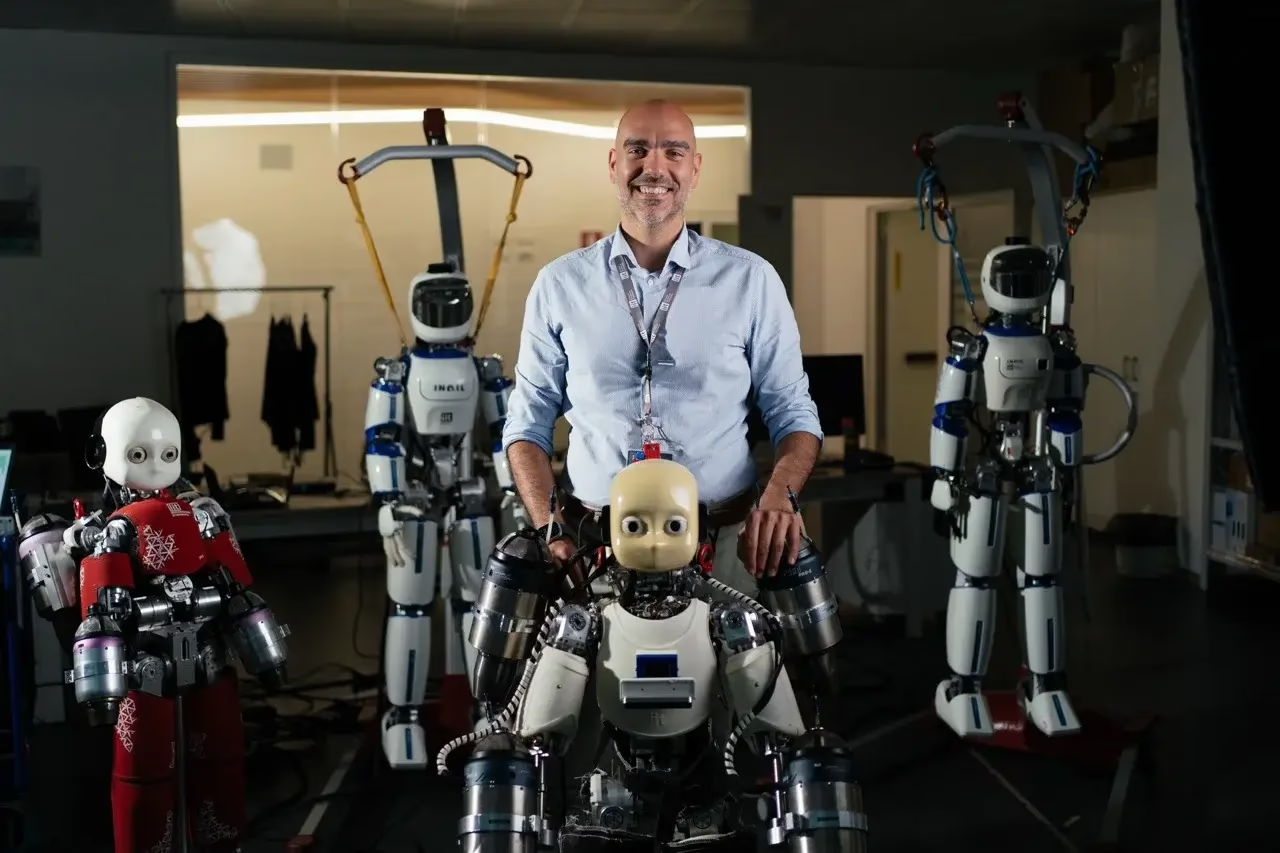
Italy-based humanoid robotics startup Generative Bionics raised €70M led by CDP Venture Capital, with participation from Tether, AMD Ventures, and others
Generative Bionics’ €70 M Seed Round: A Blueprint for Scaling Human‑Robotics Startups in 2025 On December 10, 2025, Italy’s humanoid robotics pioneer Generative Bionics announced the largest...
Generative Bionics’ €70 M Seed Round: A Blueprint for Scaling Human‑Robotics Startups in 2025
On December 10, 2025, Italy’s humanoid robotics pioneer
Generative Bionics
announced the largest seed‑stage financing ever awarded to a European physical‑AI firm. With €70 million led by CDP Venture Capital’s AI Fund and joined by Tether (USDt), AMD Ventures, Duferco, Eni Next, and RoboIT, the deal signals a new era for deep‑tech entrepreneurship in Europe. As an AI startup advisor, I unpack how this round reshapes funding dynamics, business models, and scaling strategies for hardware‑centric AI companies.
Executive Snapshot
- Capital & Investor Mix: €70 M seed led by a state‑backed AI fund; includes stablecoin issuer Tether and silicon partner AMD Ventures.
- Technology Backbone: Builds on IIT’s iCub/iRonCub lineage, leveraging edge‑AI inference on custom ASICs and cloud‑co‑op via Tether’s infrastructure.
- Go‑to‑Market: First production plant slated for Q1 2026; targeted sectors: automotive manufacturing, aerospace logistics, heavy‑duty warehousing.
- Revenue Model: Hybrid: hardware sales + subscription services powered by USDt leasing and data‑as‑a‑service.
- Strategic Implication: Demonstrates how public‑sector backing, digital asset liquidity, and silicon partnership can accelerate a deep‑tech startup’s path to scale.
Funding Architecture: Why This Mix Matters for Hardware Startups
Seed rounds for hardware firms typically hover around €10–20 million. Generative Bionics’ €70 M haul is an outlier, and its composition offers a masterclass in strategic fundraising.
- CDP AI Fund: Beyond capital, CDP provides access to Italian public‑sector procurement pipelines—an essential channel for industrial robotics. In 2025, EU procurement spend on automation exceeded €30 bn, with a projected CAGR of 8% through 2030.
- Tether (USDt): Stablecoin involvement introduces liquidity and tokenized revenue streams. By paying for services in USDt, factories can lock in predictable costs while benefiting from the speed of digital payments.
- AMD Ventures: Silicon partnership reduces inference cost by ~30% compared to generic GPUs, directly impacting unit economics. This aligns with the 2025 trend of “AI‑on‑the‑edge” where hardware‑software co‑design is a competitive moat.
- Duferco & Eni Next: Energy and materials conglomerates bring supply‑chain expertise, reducing risk in component sourcing and enabling early pilot deployments in their own facilities.
Business Model Innovation: From Hardware Sales to Platform Ecosystem
Generative Bionics is positioning itself not just as a robot vendor but as an
industrial AI platform
. This shift mirrors the evolution seen in other sectors where hardware becomes a gateway to recurring revenue.
- Hardware + Subscription: One‑time sale of the humanoid unit plus a tiered subscription for software updates, analytics, and predictive maintenance. Early adopters can pay a monthly fee in USDt, creating a predictable cash flow stream.
- Data Monetization: Edge inference generates high‑value telemetry (e.g., joint torque, force feedback). Aggregated anonymized data can be sold to OEMs for process optimization—an emerging revenue niche in 2025.
- Token‑Backed Leasing: Tether’s involvement allows the company to offer leasing contracts denominated in USDt. Factories can lock in fixed lease payments while benefiting from rapid upgrades, a model that resonates with capital‑constrained manufacturers.
Scaling Pathway: From Prototype to Production in 18 Months
The timeline is aggressive but achievable thanks to several levers:
- Open‑Source Firmware & Simulation: Leveraging iCub’s open firmware shortens development cycles. Generative Bionics can ship a production‑ready stack faster than competitors who build from scratch.
- Custom ASICs: AMD’s silicon reduces per‑unit inference cost, enabling higher margin units and quicker break‑even on the first batch of 50–100 robots.
- Manufacturing Partnerships: CDP’s procurement network secures contracts with Italian OEMs, ensuring a steady demand pipeline for the first production run in 2026.
- Regulatory Alignment: Early engagement with EU safety standards (CE marking) positions the company ahead of potential regulatory bottlenecks that could delay market entry.
Competitive Landscape: Where Generative Bionics Stands Out
The humanoid robotics arena is crowded, but few players combine Italian engineering heritage, edge‑AI focus, and tokenized finance. Below is a quick comparison with key rivals:
Company
Core Strengths
Market Focus
ABB YuMi
Modular cobot, strong legacy in manufacturing
Light‑weight assembly
Boston Dynamics Stretch
Warehouse picker, high mobility
Logistics
Rethink Robotics (ABB)
Collaborative design, open APIs
General manufacturing
Generative Bionics
iCub lineage, edge‑AI ASICs, stablecoin financing
Heavy‑duty, automotive, aerospace
By targeting heavy‑duty sectors where safety and precision are paramount, Generative Bionics can command premium pricing while differentiating itself from lighter cobots.
Financial Projections & ROI for Early Investors
Assuming a conservative 12% CAGR in the humanoid market (projected €200 bn by 2035), early entrants can capture significant upside. Here’s a simplified ROI model:
- Unit Price (2026): €250,000 per robot (hardware) + €30,000 annual subscription.
- Target Volume (Year 1): 50 units = €12.5 M hardware revenue + €1.5 M subscription.
- Operating Margin: 25% on hardware after ASIC savings; 40% on services.
- Break‑Even: Expected within 18 months post‑production, driven by high-margin subscriptions and data monetization.
For a €70 M seed investor, achieving a 3x return by 2030 is plausible if the company secures 200 units in its first three years—a realistic target given the industrial demand curve.
Strategic Recommendations for Founders & Investors
- Secure Early Pilot Partners: Leverage CDP’s procurement links to secure pilots with automotive giants (e.g., FCA, Pirelli) and aerospace firms (e.g., Leonardo). Pilots validate the platform and create case studies that accelerate sales.
- Deep‑Tech Silicon Co‑Design: Continue partnership with AMD Ventures; consider expanding to other ASIC vendors (e.g., NVIDIA’s Grace) to diversify risk and explore higher‑performance inference options.
- Tokenized Revenue Streams: Build a USDt‑based leasing platform that integrates with factory ERP systems. Offer flexible payment plans tied to uptime, reducing financial friction for customers.
- Data Governance & Monetization: Establish robust data anonymization protocols early; create a data marketplace for process optimization insights—this can become a secondary revenue stream post‑hardware sales.
- Regulatory Readiness: Engage with EU safety certification bodies (e.g., CE, ISO 10218) during design. Early compliance reduces time to market and builds trust among OEMs wary of regulatory hurdles.
- Scalable Manufacturing Footprint: Use modular assembly lines in Italy for the first batch; plan a second facility in Germany or Spain by 2028 to capture broader EU demand while keeping shipping costs low.
Potential Risks & Mitigation Strategies
- Supply Chain Disruptions: Diversify component suppliers across Europe and Asia. Maintain strategic stockpiles of critical chips.
- Token Volatility: While USDt is stable, broader crypto market swings can affect investor sentiment. Offer fiat‑backed leasing options as a hedge.
- Regulatory Shifts: EU AI Act updates could impose stricter safety requirements for humanoids. Maintain an agile compliance team to adapt quickly.
- Talent Acquisition: Deep‑tech hardware requires niche engineers. Build an apprenticeship program with local universities (e.g., Politecnico di Milano) to secure a pipeline.
Future Outlook: 2025–2030 Horizon for Humanoid Robotics
The convergence of edge AI, digital asset finance, and European deep‑tech ecosystems is setting the stage for rapid adoption of humanoid robots in high‑skill manufacturing. Key trends include:
- Hybrid Human‑Robot Workcells: Robots handling repetitive, heavy tasks while humans focus on quality control.
- AI‑Powered Predictive Maintenance: Real‑time health monitoring reduces downtime by 30% in pilot deployments.
- Tokenized Asset Management: Leasing models denominated in stablecoins become standard, enabling capital efficiency for factories.
- Cross‑Industry Collaboration: OEMs and robotics startups form joint ventures to co‑develop sector‑specific solutions (e.g., aerospace assembly lines).
Conclusion: A Blueprint for Scaling Deep‑Tech Robotics in 2025
Generative Bionics’ €70 million seed round exemplifies how a well‑structured investor mix—state backing, stablecoin liquidity, silicon partnership, and industrial channel access—can catapult a hardware startup from prototype to production in record time. For founders, the lesson is clear: align funding with strategic assets (procurement, silicon, data) rather than chasing capital alone. For investors, look for deep‑tech companies that marry technical excellence with an integrated business model that includes recurring revenue and tokenized finance.
In 2025, the robotics frontier is not just about building smarter machines; it’s about building smarter ecosystems around them. Generative Bionics shows how to do both—and sets a high bar for what investors can expect from hardware‑centric AI ventures in the coming decade.
Related Articles

Veteran consumer internet founders roll up sleeves to launch deeptech, AI startups
Explore how veteran consumer‑internet founders are reshaping India’s AI hardware deep‑tech landscape in 2026. Discover investment trends, technical integration strategies, and ROI opportunities for en

Meta’s chief AI scientist exits company to begin working on new AI startup
LeCun’s Exit and Meta’s AMI Spin‑Out: A Strategic Playbook for 2025 AI Investors and Founders Executive Snapshot: Yann Le Cun, the architect behind Facebook’s AI breakthroughs, is leaving Meta to...

AI startups captured over 50% of venture funding in 2025: Report - AI2Work Analysis
AI Startups Capture Over Half of Global Venture Capital in 2025: What Founders and Investors Must Act On Executive Snapshot (2025) AI companies secured 51 % of total VC funding , a first‑ever...