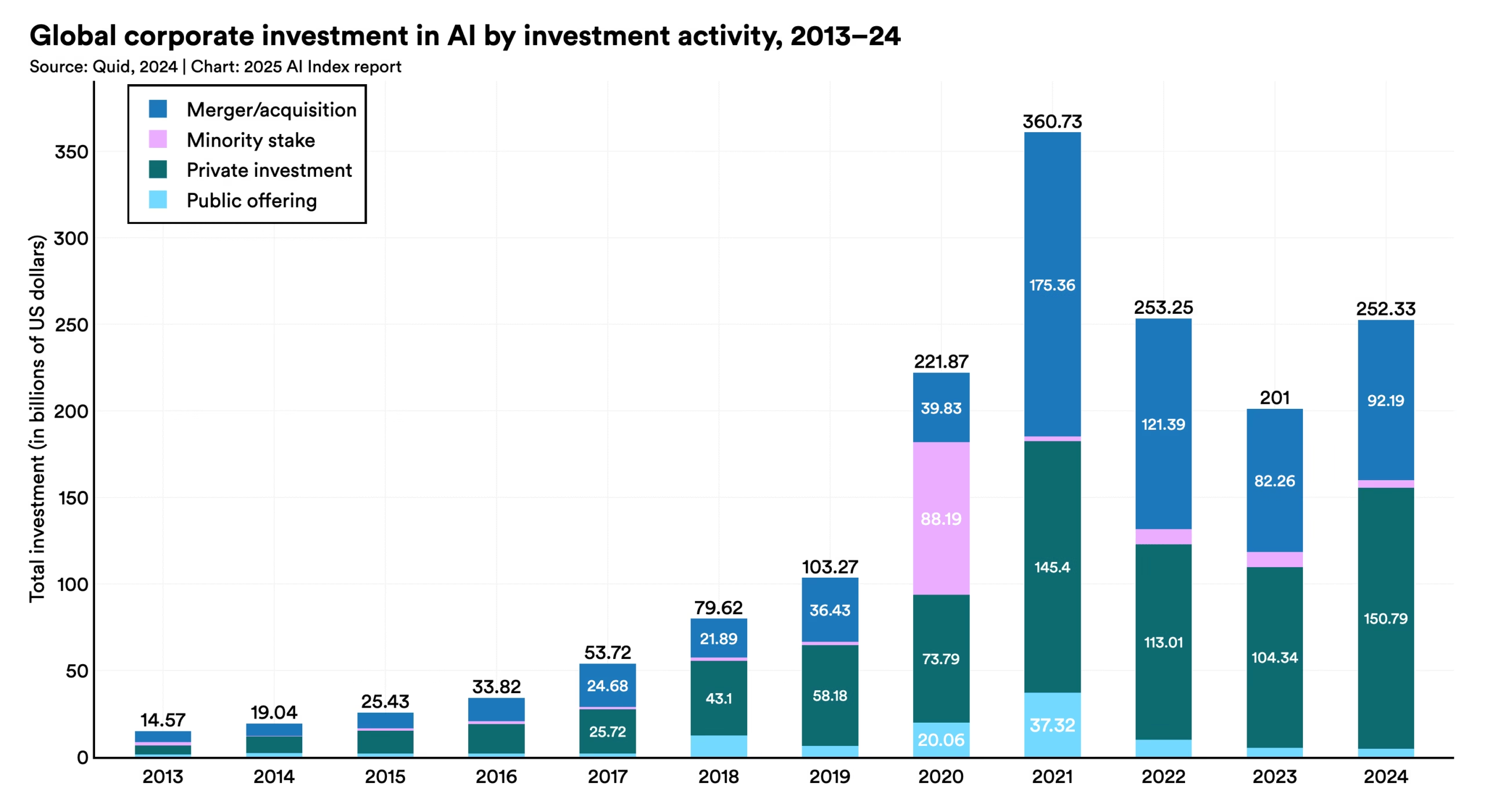
Global AI adoption in 2025 — A widening digital divide
Explore how the 2026 Global AI adoption gap shapes productivity, trade, and investment. Learn actionable strategies for enterprises, investors, and policymakers to bridge the divide with edge cloud, m
Global AI Adoption 2026: Policy‑Driven Economic Divergence & Strategic Implications { "@context":"https://schema.org", "@type":"Article", "headline":"Global AI Adoption 2026: Policy‑Driven Economic Divergence & Strategic Implications", "author":{"@type":"Person","name":"Alex Monroe"}, "publisher":{"@type":"Organization","name":"AI2Work","logo":{"@type":"ImageObject","url":"https://ai2work.com/logo.png"}}, "datePublished":"2026-01-12" } Global AI Adoption 2026: Policy‑Driven Economic Divergence & Strategic Implications By Alex Monroe, AI Economic Analyst, AI2Work Executive Summary Adoption Rate. Roughly one in six adults worldwide use generative‑AI tools (≈16 % penetration). North–South Gap. Growth in the Global North is nearly twice that of the Global South, widening a digital divide that threatens inclusive economic development. Market Leadership Shift. U.S. leaders such as Microsoft and OpenAI are slipping in usage rankings while Chinese‑origin models (DeepSeek, Gemini 4 agents) capture new markets. Policy Lag. Many Global South jurisdictions lack mature AI governance frameworks, creating regulatory uncertainty that dampens investment. Strategic Opportunity. Enterprises can capitalize on low‑cost inference pipelines and multilingual models; investors should target edge‑cloud infrastructure in emerging economies; policymakers must deploy broadband subsidies and harmonized privacy laws to unlock value. 1. The Macro Landscape of AI Adoption in 2026 Global AI adoption is now a top‑line driver for productivity, yet the momentum remains uneven. According to the Microsoft AI Economy Institute , late‑year penetration rose by 1.3 percentage points, bringing global usage to roughly 16 % of adults—an uptick that masks a stark North–South divide. 1.1 Infrastructure as a Bottleneck High‑speed broadband remains the linchpin for real‑time generative AI. While urban coverage in the Global North exceeds 90 %, many sub‑Saharan African countries report only 40 % fixed‑line penetrati
Related Articles

3 in 4 Enterprise Users Upload Data to GenAI Including passwords...
Silent Credential Leaks: How GenAI Is Creating a New Enterprise Risk Vector in 2026 Meta Description: GenAI credential leakage is emerging as a high‑volume exfiltration channel that rivals phishing...
Enterprises continue to hit generative AI roadblocks | CIO Dive
Generative AI in 2025: Turning Operational Wins into Enterprise‑Wide Value By Morgan Tate, AI Business Strategist at AI2Work Executive Summary In 2025, generative AI has moved beyond the lab and into...

Domain-led strategy for growth as AI blurs line between engineering and IT: Tata Technologies CTO
Explore Tata Technologies’ 2025 domain‑led AI strategy, blending generative models like Claude 3.5 Sonnet and Gemini 3 Pro with ISO 26262 compliance to accelerate engineering and drive ROI.