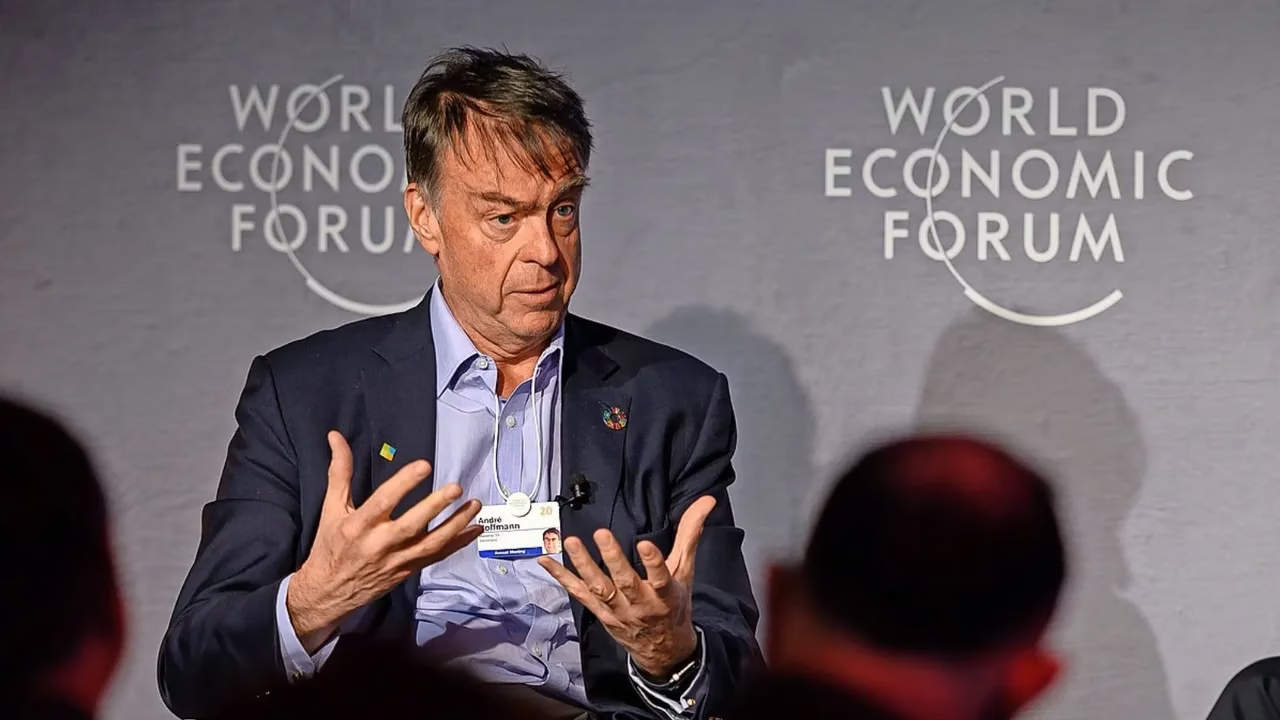
World Economic Forum: Davos' role more important than ever in a fragmented world, says Co-Chair
Explore how Davos 2026’s new AI strategy reshapes energy demand, ESG capital flows and regulatory landscapes. Practical insights for executives, data scientists and portfolio managers in 2025.
Davos 2026 AI Strategy: Navigating Energy, Finance & Policy in 2025 { "@context": "https://schema.org", "@type": "TechArticle", "headline": "Davos 2026 AI Strategy: Navigating Energy, Finance & Policy in 2025", "description": "Explore how Davos 2026’s new AI strategy reshapes energy demand, ESG capital flows and regulatory landscapes. Practical insights for executives, data scientists and portfolio managers in 2025.", "author": { "@type": "Person", "name": "Senior Technology Journalist" }, "datePublished": "2025-01-15", "articleBody": "" } Davos 2026 AI Strategy: Navigating Energy, Finance & Policy in 2025 The World Economic Forum’s (WEF) January 2026 Davos agenda signals more than a thematic shift; it reflects a structural recalibration of how global governance, capital flows and technology policy will interact over the next decade. For technical professionals—data scientists, AI engineers, energy strategists and investment technologists—the new “Davos 2026 AI strategy” is a roadmap for aligning product roadmaps, grid investments and ESG portfolios with emerging regulatory frameworks. Executive Summary: Why the Davos Pivot Matters to 2025 Executives Davos as a “trusted deliberation hub” : The WEF’s move from elite networking to neutral dialogue is a response to growing distrust of top‑down governance and the rise of minilateral coalitions. AI slop & media literacy : A 27 % surge in AI‑generated misinformation between 2024–25 demands robust content vetting protocols for firms presenting at Davos. The electron gap : Electricity is emerging as a strategic asset for AI; green hydrogen and battery storage will be central to panel discussions, offering investment signals for energy companies. Capital re‑allocation toward ESG : LomGemini 1.5 Odier’s analysis links green growth to capital flows—an insight that will guide asset managers and banks in developing new green‑finance products. Security vetting & geopolitical fragmentation : The removal of Russian participants and
Related Articles
Carney has sketched the broad strokes of an AI policy , but details...
Canada’s 2025 AI Strategy: From Regulation to Market Integration – A Macro‑Economic Analysis Executive Summary Mark Carney and Minister Evan Solomon have shifted Canada from a cautious, “fence‑in”...

AI regulation shifts as states surge ahead in 2025
State‑Led AI Regulation in 2025: Market Dynamics, Strategic Choices, and Fiscal Implications for U.S. Enterprises The United States has entered a new regulatory epoch in which state governments—not...
OpenAI Continues to Push for Government Help in AI Growth
OpenAI’s 2025 Push for Federal Support: A Macro‑Economic Lens on AI Infrastructure Policy The 2025 lobbying surge by OpenAI, centered on expanding eligibility under the U.S. Chip Act tax credit and...