Show HN: We're pitting 9 AI models in a stock portfolio competition
LLM for trading – compare GPT‑4o, Claude 3.5, o1-preview and legacy models to build a cost‑efficient, risk‑aware AI stack that delivers alpha in 2026.
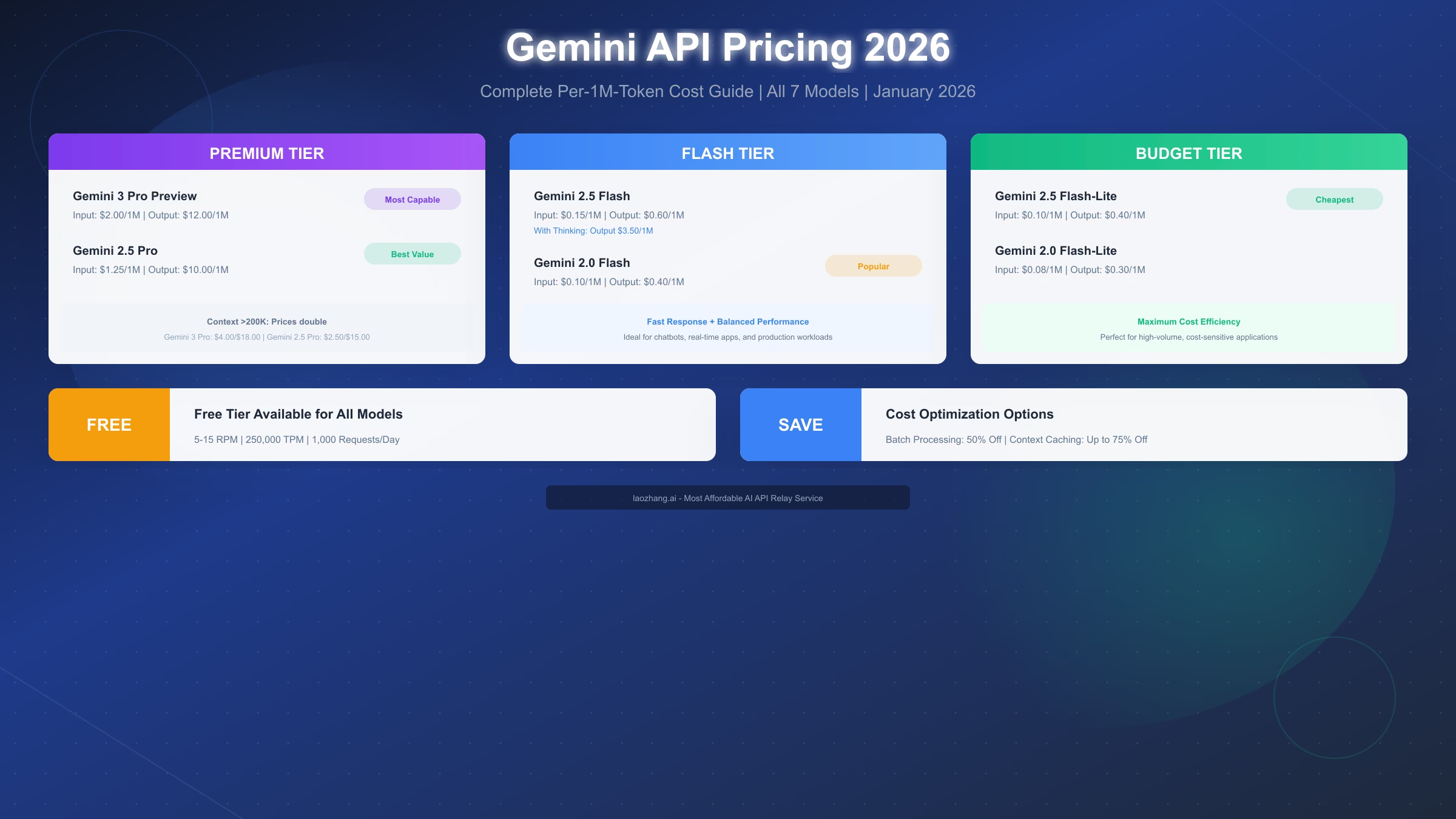
Choosing the Right LLM for Trading in 2026: A Cost‑Benefit Playbook Choosing the Right LLM for Trading in 2026: A Cost‑Benefit Playbook Executive Summary The latest head‑to‑head competition of nine large language models (LLMs) on live equity portfolios reveals a counterintuitive pattern: older, “dumbed‑down” models outperform newer, higher‑capability ones in aggressive, momentum‑driven strategies. Conversely, cutting‑edge LLMs shine on moderate and conservative mandates where nuanced risk management matters. Per‑token pricing varies dramatically across vendors—Gemini 3 Pro can cost $12 per million output tokens, while legacy GPT‑5.x models remain under $0.50/1M. A hybrid architecture that assigns each model to a specific risk bucket maximizes alpha while keeping costs in check. Regulators are poised to scrutinize firms that rely on older LLMs for high‑frequency, aggressive trading; audit trails and model choice documentation will become mandatory by 2027. This article translates those findings into a practical decision framework for portfolio managers, quant developers, and fintech product leaders. It blends quantitative cost modeling, risk metrics, and strategic positioning to help you build an AI‑driven trading stack that aligns with your firm’s appetite for volatility, capital efficiency, and regulatory compliance. Strategic Business Implications of Model Age vs. Risk Appetite The competition revealed a stark divergence between model sophistication and trading style: Aggressive momentum strategies : GPT‑5.1 (+5.82 %) outperformed Gemini 2.5 Pro (+4.94 %) and Haiku 3.5 (+1.80 %). These older models are less cautious, take larger positions, and react more decisively to short‑term price swings. Moderate/conservative strategies : Newer LLMs (Gemini 3 Pro, Claude Opus 4.5) excel where fine‑grained exposure sizing and hedging are critical. From a portfolio construction perspective, this translates into a model‑by‑risk‑profile mapping: High‑risk, high‑reward mandates :
Related Articles
Fintech’s Next Chapter: Profits Rise, AI Reshapes the ... - AI2Work Analysis
Fintech in 2025: Quantifying the Value of OpenAI’s o‑Series for Compliance, Fraud Detection and Customer Engagement OpenAI’s May 2025 launch of the o‑series—particularly the o1 line—has shifted the...

Behind the Wheel of Growth: Fintech Innovations in 2025
AI‑Driven Fintech 2026: Quantifying Cost, Risk and Return for Executives Meta Description: Discover how AI‑driven fintech in 2026 delivers measurable cost savings, risk reduction and revenue growth....

SoftBank lifts OpenAI stake to 11% with $41bln investment
SoftBank’s $41 B Stake in OpenAI: A 2025 Capital Play with Far‑Reaching Financial Implications On December 31, 2025 SoftBank Group Corp. closed a two‑tranche investment that pushed its ownership of...