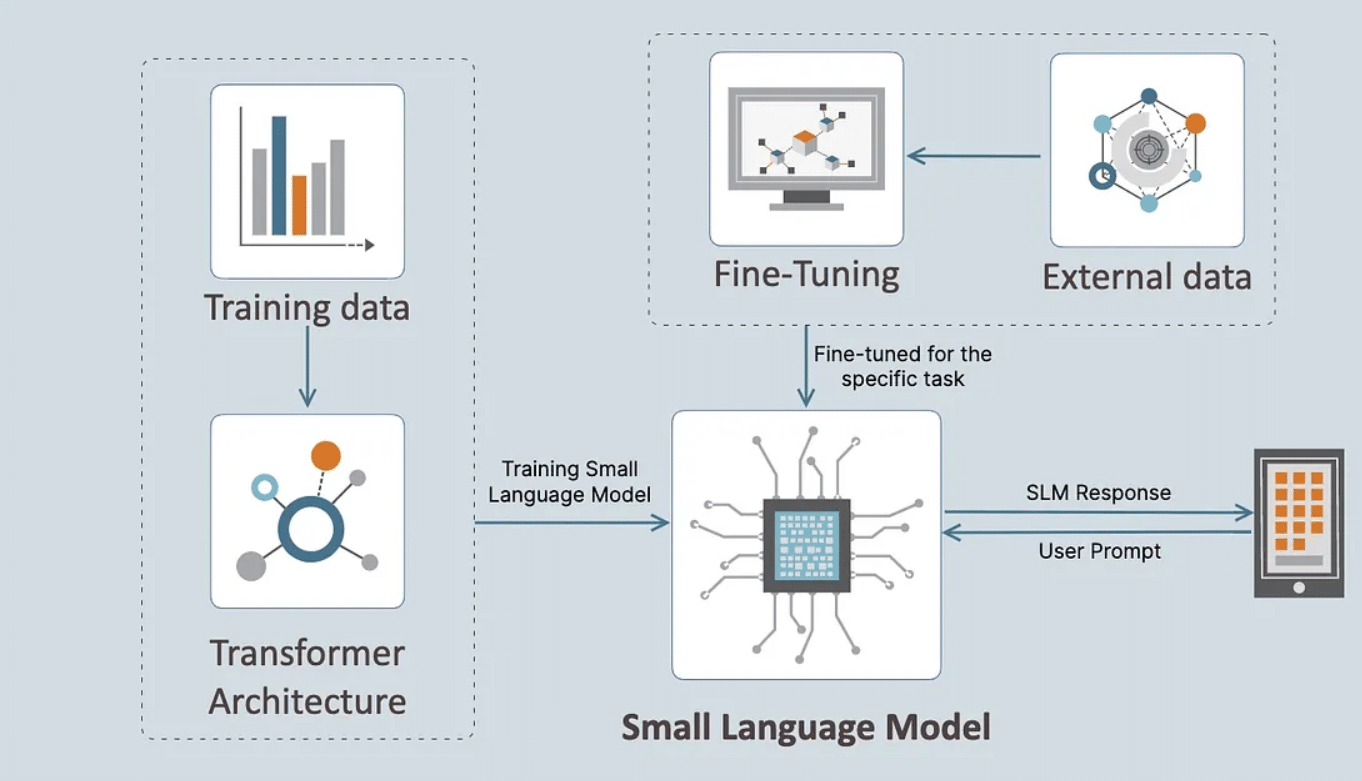
AI Model Compression: Unlocking Edge Deployment Opportunities in 2025
As organizations strive for efficiency and agility in their AI initiatives, the advent of advanced model compression techniques tailored for edge deployment is reshaping the landscape. In 2025, the...
As organizations strive for efficiency and agility in their AI initiatives, the advent of advanced model compression techniques tailored for edge deployment is reshaping the landscape. In 2025, the release of models like OpenAI's GPT-OSS 20B and Meta's Llama 4 signals a pivotal moment where sophisticated AI capabilities are accessible on consumer devices, enabling real-time processing with minimal reliance on cloud infrastructure. This article delves into the insights derived from the latest advancements in AI model compression, exploring their business implications, operational advantages, and strategic recommendations for technical decision-makers.
Business Model Transformation through Edge AI
The transition to edge AI fundamentally alters existing business models.
With these
models capable of local processing, companies can shift from cloud-centric services to a decentralized approach. This transformation enhances data privacy and security, particularly critical for sectors such as healthcare and finance where compliance with data sovereignty regulations is paramount. The ability to process sensitive data on-device minimizes risks associated with data transfer and storage in the cloud.
Strategic Advantages of Edge Deployment
Organizations that adopt edge-deployed
Models With
These Features - AI2Work Analysis">AI models
are positioned for competitive differentiation. The ability to deliver faster, more responsive AI applications can enhance user experiences and streamline operations. For instance, in customer service applications, deploying AI chatbots at the edge allows for instantaneous responses, improving customer satisfaction and engagement. Furthermore, this agility can facilitate rapid iteration and deployment of AI solutions, enabling organizations to respond swiftly to market changes.
Market Trends Driving Edge AI Adoption
The shift towards edge AI reflects broader industry trends, including the ever-growing demand for data privacy, real-time processing, and reduced latency. As organizations seek to enhance user experiences, the development of smaller, more efficient AI models becomes essential. Additionally, the rise of remote work and mobile applications necessitates solutions that can function independently of reliable internet connectivity, making edge AI increasingly attractive.
Actionable Strategies for Business Leaders
For organizations looking to leverage the advantages of AI model compression and edge deployment, several strategic recommendations emerge:
- Invest in Infrastructure: Ensure that your hardware is optimized for AI workloads, focusing on devices that can support advanced models like GPT-OSS 20B.
- Explore Partnerships: Collaborate with AI vendors and technology partners that specialize in edge deployment to accelerate your adoption journey.
- Pilot Projects: Initiate pilot projects to experiment with edge AI applications in non-critical environments, allowing for real-world testing and iteration.
- Monitor Performance: Establish metrics for measuring the performance and cost-effectiveness of deployed models, adjusting strategies as needed based on data-driven insights.
- Prioritize Security: Implement robust security protocols to protect data processed locally, ensuring compliance with relevant regulations.
Future Outlook: The Evolution of Edge AI
Looking ahead, the trend towards edge AI is poised to continue its trajectory of growth and innovation. As more enterprises recognize the value of local processing capabilities, we can expect a proliferation of specialized AI models designed for specific use cases. This evolution may lead to a competitive landscape where smaller firms focusing on niche applications thrive alongside tech giants. Additionally, ongoing advancements in model compression and optimization techniques will further enhance the feasibility and attractiveness of edge AI solutions.
Conclusion
The advancements in AI model compression techniques for edge deployment in 2025 signal a transformative shift in the AI landscape. With models like OpenAI's GPT-OSS 20B and Meta's Llama 4 leading the way, organizations now have unprecedented access to powerful AI capabilities directly on consumer devices. This shift not only enhances data privacy and reduces costs but also enables organizations to deliver faster, more responsive applications. As businesses adapt to this new paradigm, they must leverage these insights and strategies to remain competitive in an increasingly digital world.
Related Articles

Artificial Intelligence News -- ScienceDaily
Enterprise leaders learn how agentic language models with persistent memory, cloud‑scale multimodal capabilities, and edge‑friendly silicon are reshaping product strategy, cost structures, and risk ma

China just 'months' behind U.S. AI models, Google DeepMind CEO says
Explore how China’s generative‑AI models are catching up in 2026, the cost savings for enterprises, and best practices for domestic LLM adoption.
Raaju Bonagaani’s Raasra Entertainment set to launch Raasra OTT platform in June for new Indian creators
Enterprise AI in 2026: how GPT‑4o, Claude 3.5, Gemini 1.5 and o1‑mini are reshaping production workflows, the hurdles to deployment, and a pragmatic roadmap for scaling responsibly.