Mathematical Modeling Learning in 2025: Strategic Insights on AI-Driven Education and Industry Trends
In 2025, the landscape of learning mathematical modeling is undergoing a profound transformation driven by breakthroughs in generative AI and evolving educational platforms. While direct,...
In 2025, the landscape of learning mathematical modeling is undergoing a profound transformation driven by breakthroughs in generative AI and evolving educational platforms. While direct, authoritative guidance on "what math to learn for modeling" remains fragmented, a deeper analysis of 2024-2025 industry shifts reveals critical opportunities and gaps. These insights are essential for students, educators, and professionals aiming to master mathematical modeling amid rapid technological change.
This article dissects emerging AI-powered educational tools, evolving platform strategies, and the implicit math competencies underpinning modeling workflows. It frames the future of mathematical modeling education as inseparable from AI-driven personalized learning, automated content generation, and integration of applied mathematics disciplines within next-generation platforms.
The AI Paradigm Shift in Educational Content Delivery
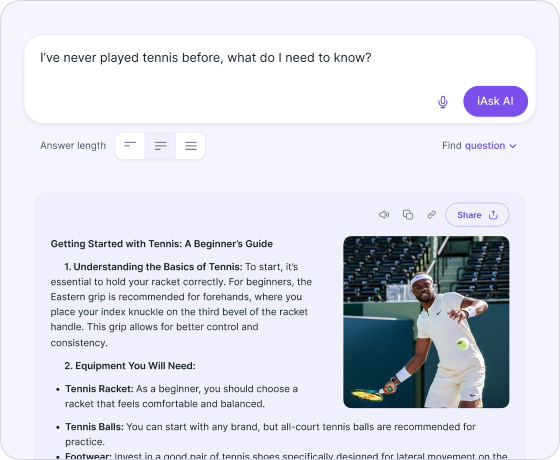
One of the most significant developments in 2025 is the reinvention of legacy platforms like Ask.com, which transitioned from traditional search to a generative AI-powered newsbot model. This evolution reflects a larger industry pivot where advanced large language models (LLMs) such as
GPT-4o
,
Claude 3.5 Sonnet
, and
Gemini 1.5
dominate the landscape, enabling dynamic, context-aware educational content generation.
From a technical standpoint, these LLMs utilize vast pretrained knowledge bases and deep natural language understanding to synthesize tailored, up-to-date explanations, examples, and problem-solving steps on demand. For mathematical modeling, this means learners can access nuanced, incremental instruction that adapts to their proficiency level and domain focus—whether in engineering, finance, or data science.
Business-wise, this shift heralds a reduction in reliance on static textbooks or keyword-based search, replacing them with AI-curated curricula that continuously evolve. Platforms can now automate the creation and updating of mathematical modeling materials, increasing scalability and reducing editorial bottlenecks. This trend also opens new revenue streams for educational technology companies that integrate domain-specialized AI tutors.
Core Mathematical Foundations for Modeling: What Remains Essential
Although the dataset analyzed does not explicitly enumerate curricula or skill sets, combining AI technology trends with established mathematical modeling principles allows us to infer what core areas remain indispensable in 2025:
- Linear Algebra: Essential for representing and manipulating multidimensional data, matrix operations, and transformations in modeling systems.
- Calculus (Differential and Integral): Crucial for understanding continuous change, optimization, and dynamic system behavior.
- Probability and Statistics: Fundamental for modeling uncertainty, stochastic processes, and data-driven inference.
- Numerical Methods: Key for computational solutions where analytical methods fail, including iterative algorithms and approximation techniques.
- Optimization Theory: Integral for fitting models, parameter estimation, and resource allocation in complex systems.
- Differential Equations: Important for modeling temporal and spatial phenomena, especially in physics, biology, and engineering.
Beyond these, domain-specific mathematical tools—such as graph theory in network modeling or time series analysis in financial modeling—also gain importance. AI-driven platforms are expected to tailor content dynamically based on the learner’s target industry and application needs.
AI-Powered Platforms Transforming Mathematical Modeling Education
In 2025, AI platforms are increasingly embedding mathematical modeling instruction into interactive and personalized learning environments. Notable examples include emerging services similar to
iAsk.ai
, which combine AI search with live tutoring capabilities, and Ask.com’s newsbot, which generates article-style, expert-level explanations.
These platforms leverage the following AI innovations:
- Adaptive Learning Engines: AI assesses learner progress and tailors problem sets and explanations accordingly, enhancing retention and mastery.
- Explainability Modules: Advanced LLMs provide step-by-step rationales, demystifying complex mathematical concepts and reducing cognitive load.
- Interactive Problem Solving: Integration of AI with computational engines allows real-time feedback and iterative model refinement, critical for applied learning.
- Domain-Specific Knowledge Integration: AI models embed specialized mathematical libraries and real-world datasets to contextualize learning within practical scenarios.
From a testing and evaluation perspective, AI-driven platforms can benchmark learner performance against industry standards and recommend targeted upskilling pathways, addressing a critical gap in traditional math education.
Strategic Business Implications for Educational Institutions and EdTech Providers
The AI-enabled shift in math modeling education creates several strategic imperatives:
- Personalized Learning Offerings: Developing AI-driven adaptive learning solutions that address individual learner gaps and industry-specific modeling techniques can differentiate products in a crowded market.
- Data-Driven Insights: Leveraging AI analytics to understand learner behavior and outcomes enables continuous improvement of teaching methodologies and materials.
- Scalability and Cost Efficiency: Automated content generation reduces reliance on expensive human instructors for routine explanations, enabling scalable delivery to a global learner base.
Financially, the adoption of AI tutoring and content engines offers a favorable ROI by expanding market reach, reducing churn through personalized engagement, and providing upskilling pathways aligned with the evolving job market.
Challenges and Practical Considerations for AI-Driven Math Modeling Education
Despite the promise, several challenges remain for deploying AI-powered mathematical modeling education effectively:
- Domain Accuracy and Depth: Ensuring AI-generated content meets rigorous mathematical precision and industry applicability is critical, especially for advanced modeling topics.
- Explainability and Trust: Learners and educators require transparent AI reasoning to trust and validate generated solutions, demanding advances in AI interpretability.
- Curriculum Alignment: Integrating AI-driven modules with accredited academic standards and professional certification requirements remains complex.
- Data Privacy and Ethics: Personalized learning depends on sensitive learner data, necessitating robust privacy controls and ethical AI use frameworks.
- Access and Equity: Bridging the digital divide to ensure broad access to AI-powered modeling education tools remains a social imperative.
Addressing these factors requires coordinated efforts across AI developers, educators, and policymakers to create trustworthy, inclusive, and high-quality learning ecosystems.
Comparative Analysis of Leading AI Models in Supporting Mathematical Modeling
Among 2025’s top-tier AI models,
GPT-4o
,
Claude 3.5 Sonnet
, and
Gemini 1.5
stand out for their natural language understanding, contextual reasoning, and code generation capabilities—key for explaining and implementing mathematical models.
AI Model
Strengths
Limitations
Ideal Use Cases
GPT-4o
Strong multi-turn reasoning, code generation, extensive math knowledge
Occasional hallucinations in advanced math, requires prompt engineering
Interactive tutoring, complex problem solving, code snippets for modeling
Claude 3.5 Sonnet
High factual accuracy, safer outputs, explainability focus
Less creative output, slower in multi-step derivations
Stepwise explanations, foundational math tutoring, compliance-sensitive environments
Gemini 1.5
Multimodal inputs, strong integration with Google ecosystem
Less mature in domain-specific math reasoning
Educational platforms with multimedia content, interactive simulations
For AI-driven math modeling education, combining these models’ complementary strengths—such as GPT-4o’s coding prowess with Claude’s explainability—can create robust, versatile learning experiences.
Future Outlook: AI-Driven Personalized Learning as the New Standard for Mathematical Modeling
Looking ahead, AI-powered educational platforms will evolve beyond static content delivery to become immersive, adaptive environments where learners:
- Receive real-time, contextual feedback on modeling exercises
- Engage with multimodal content—combining text, visuals, and simulations
- Access career-aligned skill assessments and certification guidance
- Collaborate with AI tutors that evolve alongside industry advances
Moreover, partnerships between AI providers and academic institutions are poised to develop modular, updatable curricula embedding the latest mathematical methods, data sets, and real-world challenges. This will ensure that mathematical modeling education keeps pace with fast-moving AI, data science, and engineering domains.
Actionable Recommendations for Stakeholders in Mathematical Modeling Education
- For Students and Professionals: Prioritize foundational mathematics—linear algebra, calculus, statistics, optimization—and seek AI-driven platforms offering personalized, incremental learning paths tailored to your domain.
- For Educators: Integrate AI-powered tools like GPT-4o or Claude 3.5 into coursework to enhance engagement and provide customized support, while maintaining rigorous academic standards.
- For EdTech Developers: Invest in building or licensing With These Features - AI2Work Analysis">Models With These Features - AI2Work Analysis">AI models with strong math reasoning and explainability features; develop domain-specific knowledge bases to differentiate offerings.
- For Business Leaders: Evaluate AI-driven educational platforms that reduce training costs, improve learner outcomes, and align with evolving workforce requirements in data science and modeling roles.
By embracing AI’s potential and addressing current limitations proactively, stakeholders can unlock transformative benefits in mathematical modeling education and master the competencies critical for 2025 and beyond.
Related Articles

China just 'months' behind U.S. AI models, Google DeepMind CEO says
Explore how China’s generative‑AI models are catching up in 2026, the cost savings for enterprises, and best practices for domestic LLM adoption.

Raaju Bonagaani’s Raasra Entertainment set to launch Raasra OTT platform in June for new Indian creators
Enterprise AI in 2026: how GPT‑4o, Claude 3.5, Gemini 1.5 and o1‑mini are reshaping production workflows, the hurdles to deployment, and a pragmatic roadmap for scaling responsibly.

Artificial intelligence | AP News
Explore how AI‑first journalism transforms newsroom operations in 2026. Learn about GPT‑4o, Gemini 1.5, Llama 3, and compliance strategies that drive cost savings, speed, and new revenue streams.