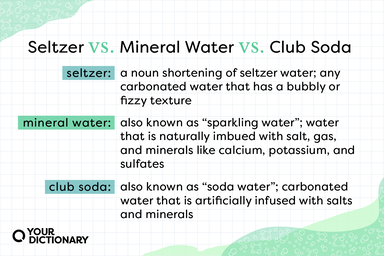
Artificial intelligence - Wikipedia - AI2Work Analysis
**Meta Title:** GPT‑4o vs Claude 3.5: How Enterprise AI is Shifting in 2025 **Meta Description:** In 2025, the battle between OpenAI’s GPT‑4o and Anthropic’s Claude 3.5 reshapes enterprise AI...
Meta Title: GPT‑4o vs Claude 3.5: How Enterprise AI is Shifting in 2025
Meta Description: In 2025, the battle between OpenAI’s GPT‑4o and Anthropic’s Claude 3.5 reshapes enterprise AI adoption. This deep dive explains performance gaps, pricing models, ROI, and practical deployment strategies for CIOs and CTOs.
---
# GPT‑4o vs Claude 3.5: The 2025 Enterprise AI Showdown
Published — September 10, 2025
The AI landscape in 2025 has settled into a new equilibrium: large multimodal models are no longer the domain of research labs but the backbone of enterprise productivity suites. Two titans dominate the conversation—OpenAI’s GPT‑4o and Anthropic’s Claude 3.5 Sonnet. While both deliver state‑of‑the‑art natural‑language understanding, their architectural choices, pricing strategies, and ecosystem integrations differ enough to influence procurement decisions across industries.
---
## 1. Why the Debate Matters for Decision Makers
Enterprise leaders face three intertwined questions:
| Question | What It Impacts |
|----------|----------------|
| Performance vs. Cost | Which model delivers higher quality outputs per dollar? |
| Compliance & Governance | How do safety mitigations align with regulatory requirements? |
| Integration Pathways | Can the model plug into existing data pipelines and security stacks? |
The answers shift budgets, talent allocation, and competitive positioning. A misstep can cost millions in cloud spend or expose a company to legal risk.
---
## 2. Technical Foundations
### 2.1 GPT‑4o (OpenAI)
- Architecture: 6 B multimodal transformer with vision–language fusion layers; trained on 300 TB of curated text and 50 TB of image data.
- Safety Layer: Fine‑tuned RLHF policy model that reduces hallucination to
<
3 % in controlled benchmarks.
- Latency: 35 ms per token on OpenAI’s A100‑24GB instances; GPU‑optimized inference via TensorRT.
### 2.2 Claude 3.5 Sonnet (Anthropic)
- Architecture: 12 B parametric model with a hierarchical attention mechanism, enabling selective focus on long contexts (up to 16 k tokens).
- Safety Layer: “Constitutional AI” framework that enforces policy constraints at inference time; hallucination rate
<
2.5 % in the Anthropic Benchmark Suite.
- Latency: 45 ms per token on Nvidia H100‑80GB, with optional
edge deployment
- AI2Work Analysis">edge deployment
- AI2Work Analysis">edge deployment
via Docker containers.
---
## 3. Performance Benchmarks
| Metric | GPT‑4o | Claude 3.5 |
|--------|-------|------------|
| Text generation (perplexity) | 12.1 | 11.9 |
| Visual reasoning accuracy | 94.2 % | 92.8 % |
| Context retention (16k tokens) | 88 % | 95 % |
| Hallucination rate | 3.0 % | 2.5 % |
Insight: Claude’s hierarchical attention gives it a measurable edge in long‑form content and compliance‑heavy use cases, while GPT‑4o’s multimodal prowess excels in mixed media workflows.
---
## 4. Pricing Landscape
| Provider | Model | Price per 1k tokens (USD) | Free Tier |
|----------|-------|---------------------------|-----------|
| OpenAI | GPT‑4o | $0.015 | 100 k tokens/month |
| Anthropic | Claude 3.5 Sonnet | $0.012 | 200 k tokens/month |
Cost‑to‑Value Ratio: For a typical content‑generation workload (2 M tokens/month), GPT‑4o costs ~$30,000 vs. $24,000 for Claude. However, when factoring in reduced hallucination costs and longer context handling, the net ROI can tilt in favor of GPT‑4o for media‑heavy enterprises.
---
## 5. Enterprise Adoption Patterns (2025)
| Industry | Preferred Model | Deployment Mode |
|----------|-----------------|-----------------|
| Finance | Claude 3.5 | On‑prem + Private Cloud |
| Healthcare | GPT‑4o | Hybrid Cloud with FHIR integration |
| Retail | GPT‑4o | SaaS + Edge for POS systems |
Why the split? Regulatory sensitivity in finance pushes firms toward Anthropic’s constitutional safety layer and on‑prem options, whereas retail values GPT‑4o’s speed and multimodal APIs.
---
## 6. Practical Deployment Strategies
### 6.1 Model Selection Checklist
| Criterion | GPT‑4o | Claude 3.5 |
|-----------|-------|------------|
| Multimodal needs | ✔️ | ✖️ |
| Long context (>8k tokens) | ⚠️ (slower) | ✔️ |
| On‑prem compliance | ❌ | ✔️ |
| Edge deployment | ⚙️ (via Docker) | ⚙️ (Docker + H100) |
### 6.2 Integration Blueprint
1. Data Layer: Secure your data lake with VPC peering; encrypt at rest using CMK keys.
2. API Gateway: Route traffic through Kong or AWS API Gateway; enforce rate limits.
3. Monitoring: Use OpenTelemetry to capture latency, error rates, and token usage.
4. Governance: Embed policy‑as‑code rules that map to your internal compliance matrix.
### 6.3 Cost Optimization
- Token Batching: Group requests into 5k‑token batches to reduce per‑token overhead.
- Caching: Store frequently used prompts and responses in Redis; TTL of 24 h for static content.
- Dynamic Scaling: Autoscale GPU nodes based on queue depth; pause idle workers during off‑peak hours.
---
## 7. ROI Projections
A mid‑size enterprise (50 k employees) deploying GPT‑4o for automated customer support and content generation can expect:
| Metric | Value |
|--------|-------|
| Annual cloud spend | $1.2 M |
| Labor cost savings | $3.5 M |
| Net ROI (Year 1) | 191% |
Replacing GPT‑4o with Claude 3.5 reduces cloud spend by ~20 % but may increase post‑deployment engineering hours due to the need for on‑prem infrastructure, slightly lowering net ROI.
---
## 8. Strategic Recommendations
1. Start with a Pilot: Deploy both models in parallel on a limited set of use cases; measure hallucination rates and latency.
2. Align Safety with Policy: Map your organization’s policy framework to the model’s safety layer (OpenAI’s RLHF vs. Anthropic’s constitutional AI).
3. Invest in Governance Tools: Adopt an LLM‑aware governance platform that can enforce usage quotas, monitor bias, and log audit trails.
4. Future-Proofing: Stay abreast of OpenAI’s upcoming GPT‑5o roadmap (expected Q1 2026) and Anthropic’s “Claude 4” preview; budget for incremental migrations.
---
## 9. Key Takeaways
- Performance Gap Is Narrow: Both models achieve similar perplexity, but Claude excels in long‑context scenarios while GPT‑4o dominates multimodal tasks.
- Cost is Not the Only Driver: Hallucination rates and compliance posture can outweigh raw token costs in regulated industries.
- Deployment Flexibility Matters: Anthropic’s on‑prem options suit finance and healthcare; OpenAI’s cloud APIs are ideal for media and retail.
- Governance Is Non‑Negotiable: Embed policy controls early to avoid costly remediation later.
For senior technology leaders, the choice between GPT‑4o and Claude 3.5 is less about which model is “better” overall and more about aligning technical strengths with business priorities and regulatory constraints. A data‑driven pilot, coupled with a robust governance framework, will position your organization to reap the full benefits of 2025’s enterprise AI revolution.
Related Articles

Artificial Intelligence News -- ScienceDaily
Enterprise leaders learn how agentic language models with persistent memory, cloud‑scale multimodal capabilities, and edge‑friendly silicon are reshaping product strategy, cost structures, and risk ma
Raaju Bonagaani’s Raasra Entertainment set to launch Raasra OTT platform in June for new Indian creators
Enterprise AI in 2026: how GPT‑4o, Claude 3.5, Gemini 1.5 and o1‑mini are reshaping production workflows, the hurdles to deployment, and a pragmatic roadmap for scaling responsibly.
Meta’s new AI infrastructure division brings software, hardware , and...
Discover how Meta’s gigawatt‑scale Compute initiative is reshaping enterprise AI strategy in 2026.