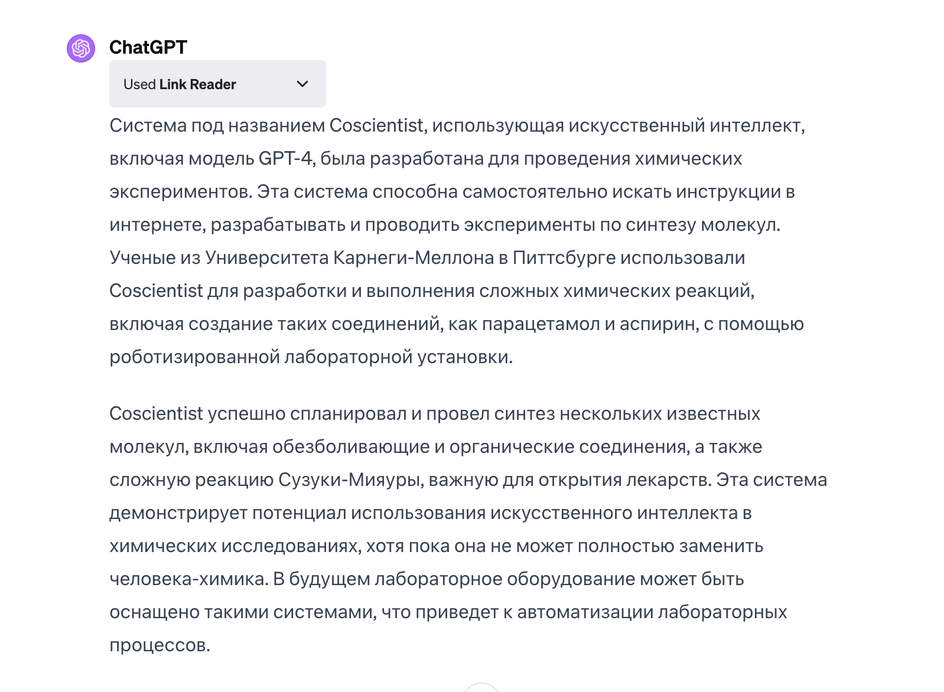
AI-Powered Coding Assistants: Essential Tools for Managing Tech Stack Evolution in 2025
For ML/DS/AI professionals with 5-10+ years of experience, staying current with rapidly evolving technology stacks is no longer just a challenge—it’s a continuous, high-stakes balancing act. The pace...
For ML/DS/AI professionals with 5-10+ years of experience, staying current with rapidly evolving technology stacks is no longer just a challenge—it’s a continuous, high-stakes balancing act. The pace of innovation, combined with increasingly complex tooling ecosystems, demands new strategies beyond traditional self-learning and manual adaptation. The 2025 landscape reveals a transformative shift: advanced AI-assisted coding tools have become indispensable collaborators, fundamentally reshaping how seasoned experts maintain productivity, reduce cognitive load, and future-proof their skill sets.
AI Coding Assistants as Strategic Enablers in Complex Development Environments
Leading AI tools like
Anthropic’s Claude Code
(Sonnet and Opus models),
OpenAI’s GPT-5 Mini
, and
Google DeepMind’s Gemini 2.5
have moved beyond novelty to become core enablers for managing tech stack complexity in 2025. These AI coding assistants integrate seamlessly into IDEs and developer terminals, providing real-time code generation, debugging, and refactoring assistance that accelerates workflow adaptation.
From a technology analyst perspective, this evolution is not merely about productivity gains. It represents a paradigm shift where AI not only automates routine coding tasks but also acts as an intelligent knowledge bridge, helping professionals quickly assimilate new languages, frameworks, and architectural patterns without exhaustive retraining.
Key capabilities such as extended context windows—up to 128k tokens in GPT-4 Turbo—allow these models to maintain comprehensive project context, documentation, and historical code changes in a single session. This eliminates the traditional friction of piecemeal learning and minimizes context switching, which has long been a productivity bottleneck for experienced engineers.
Technical Differentiation and Model Specialization for Varied Workflow Needs
Not all AI coding assistants are created equal, and the 2025 market reveals a clear trend toward specialized models tailored to distinct coding use cases:
- GPT-5 Mini excels in rapid iteration and scripting tasks, achieving the highest practical accuracy on LiveCodeBench (86.6%) with low latency (~33 seconds). Its cost-effectiveness ($0.05 input / $0.40 output per million tokens) makes it ideal for prototyping and exploratory coding.
Technical Implementation Considerations for AI-Assisted Workflows
- Context Management: Utilize models with extended context windows (e.g., 128k tokens in GPT-4 Turbo) to maintain project continuity across large codebases and documentation. This minimizes fragmentation and improves AI reasoning fidelity.
- API and Subscription Selection: Match API usage patterns with task demands—favor cost-efficient Sonnet or GPT-5 Mini for iterative coding, and reserve premium Opus or Gemini models for complex, mission-critical code. Leverage subscription tiers that align with team scale and usage frequency.
- Multi-Modal Integration: Prepare workflows to support AI inputs beyond text, including screenshots, diagrams, and logs, as these modalities become standard in advanced debugging and code review processes.
- Pipeline Automation: Embed AI agents within CI/CD pipelines for automated testing, linting, and refactoring, reducing manual intervention and accelerating release cycles.
Enterprises that master these integration points will gain significant competitive advantages in developer efficiency, software quality, and innovation velocity.
Market Dynamics and Future Trends Shaping AI-Assisted Development in 2025
The 2025 AI development ecosystem is characterized by:
- Hybrid AI-Human Collaboration: AI assistants handle repetitive and complex reasoning tasks, while human experts focus on strategic decision-making and creative problem solving.
- Multi-Model Ecosystems: Organizations adopt blended AI stacks to optimize for diverse coding scenarios instead of relying on a single tool.
- Localized AI Solutions: Regional AI models addressing language and regulatory nuances (e.g., YandexGPT in Russia) expand the global reach and customization of AI coding assistants.
- Advances in Explainability: Reasoning-centric models like Gemini 2.5 push the industry toward more interpretable AI outputs, critical in regulated sectors where auditability and correctness are paramount.
These trends suggest that the future of AI-assisted coding will be defined by flexibility, transparency, and contextual intelligence, enabling professionals to maintain agility amid relentless technological change.
Actionable Recommendations for ML/DS/AI Professionals and Organizations
Given the current landscape, ML/DS/AI professionals and their organizations should consider the following strategies to harness AI coding assistants effectively:
- Invest in AI Literacy: Develop team capabilities in prompt engineering and AI model selection to maximize returns from AI-assisted workflows.
- Adopt Multi-Model Approaches: Evaluate and deploy a portfolio of AI coding tools aligned with project complexity, balancing cost and performance.
- Integrate AI into DevOps Pipelines: Automate routine code maintenance and testing, freeing expert time for high-value innovation.
- Leverage Extended Context Models: Prioritize tools with large context windows to maintain codebase continuity and reduce error rates.
- Monitor Cost and Latency Metrics: Optimize API usage and subscription plans to control expenses without compromising developer experience.
- Plan for AI-Human Workflow Evolution: Redefine roles and responsibilities to emphasize AI oversight, quality assurance, and strategic design.
Conclusion: Embracing AI Assistants as Partners in Sustained Technical Relevance
Seasoned ML/DS/AI professionals in 2025 are not simply fatigued by continuous tech stack evolution—they are actively transforming their workflows through intelligent AI collaboration. Advanced coding assistants like Anthropic’s Claude Code, OpenAI’s GPT-5 Mini, and Google DeepMind’s Gemini 2.5 provide essential capabilities that reduce cognitive overload, increase coding accuracy, and accelerate adaptation to new technologies.
Businesses that acknowledge and invest in AI-assisted development will unlock higher developer productivity, lower operational costs, and faster innovation cycles. Conversely, organizations resistant to adopting these tools risk talent attrition and competitive disadvantage in an era where AI-human hybrids define the future of software engineering.
For experienced professionals, mastering AI-powered coding workflows and multi-model orchestration is no longer optional—it is a strategic imperative to sustain relevance and lead in the fast-evolving AI technology landscape of 2025 and beyond.
Related Articles
Microsoft named a Leader in IDC MarketScape for Unified AI Governance Platforms
Microsoft’s Unified AI Governance Platform tops IDC MarketScape as a leader. Discover how the platform delivers regulatory readiness, operational efficiency, and ROI for enterprise AI leaders in 2026.
The Impact of AI on Financial Services in 2025 : Strategic ...
AI Integration Drives New Value Chains in Finance: What Executives Need to Know in 2026 Meta description: In 2026, multimodal LLMs and edge inference are reshaping risk management, customer...

2025 ’s Biggest AI Deals, Ranked: SoftBank Will Acquire DigitalBridge...
SoftBank‑DigitalBridge Deal: A 2025 M&A Mirage or Market Signal? In the whirlwind of AI‑driven capital flows that defined 2025, headlines screamed about NVIDIA’s acquisition of a leading AI chip...