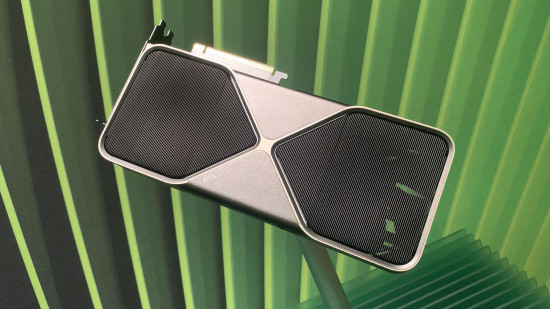
Blackwell Ultra – Nvidia’s Token‑Factory GPU Shaping 2025 AI Economics
Explore how Nvidia’s Blackwell Ultra token‑centric GPU delivers 40× inference throughput, cuts power per token by 30%, and reshapes enterprise AI workloads in 2025.
Blackwell Ultra – Nvidia’s Token‑Factory GPU Shaping 2025 AI Economics { "@context": "https://schema.org", "@type": "Article", "headline": "Blackwell Ultra – Nvidia’s Token‑Factory GPU Shaping 2025 AI Economics", "datePublished": "2025-09-28", "author": { "@type": "Person", "name": "Senior Technology Journalist" } } Executive Summary Nvidia has transitioned Blackwell Ultra from prototype to production, delivering ~40× inference throughput over Hopper while reducing power per token by ~30%. The architecture is already in data‑center fleets and will reach consumer GPUs later this year, reshaping enterprise AI economics and cloud gaming. Key business takeaways: lower total cost of ownership for inference workloads, new rack density requirements (600 kW), and a competitive edge over AMD and Intel that could widen Nvidia’s market lead by 1–2 years. Strategic Business Implications of Blackwell Ultra The Blackwell Ultra launch is not just another GPU generation; it represents a paradigm shift toward token‑centric economics . For enterprises, the most pressing metric has moved from FLOPs to tokens per second (TPS) , directly tied to revenue in SaaS and API services. Nvidia’s claim of 40× Hopper performance translates into roughly 2–3 million TPS per GPU for GPT‑4o‑style models, assuming a 1.5 kB token size. This unlocks the possibility of running large reasoning workloads—such as LLM fine‑tuning or multi‑agent simulations—on fewer machines. Financially, the 30 % power density reduction means data‑center operators can shave cooling costs by 15–20%, while the higher upfront GPU price (≈25 % premium) is offset within two years of deployment. For cloud providers, this translates to a lower break‑even point for inference services and an ability to offer higher throughput tiers at competitive prices. Strategically, Nvidia’s roadmap—moving from Blackwell Ultra to Vera Rubin in 2027–28—positions the company to dominate both current inference workloads and future quantum‑accelerated
Related Articles

OpenAI Reduces NVIDIA GPU Reliance with Faster Cerebras Chips
How OpenAI’s 2026 shift from a pure NVIDIA H100 fleet to Cerebras CS‑2 and Google TPU v5e nodes lowered latency, cut energy per token, and diversified supply risk for enterprise AI workloads.

Artificial Intelligence News -- ScienceDaily
Enterprise leaders learn how agentic language models with persistent memory, cloud‑scale multimodal capabilities, and edge‑friendly silicon are reshaping product strategy, cost structures, and risk ma

Claude Code with Anthropic API compatibility · Ollama Blog
Claude Code on Ollama: A Practical Guide for Enterprise Code‑Generation Deployments in 2026 Meta Description: Explore how to deploy Claude Code locally with Ollama in 2026 for faster, cost‑effective...