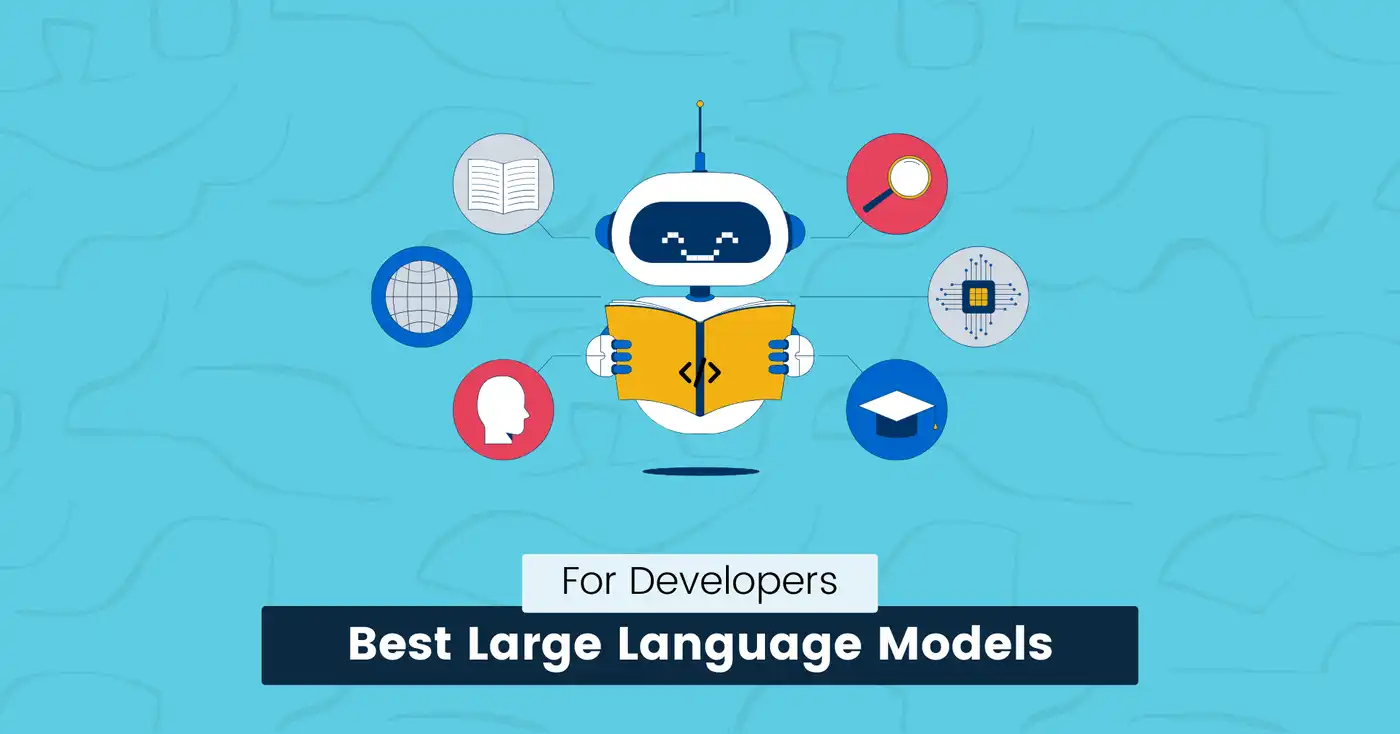
LLM Landscape 2025: Code‑First Benchmarks, Cost Parity, and Enterprise Playbooks
Executive Snapshot Pass@k and CodeBLEU have become the de‑facto yardsticks for code generation. Meta’s Llama 3.3 turbo matches GPT‑4 Turbo in accuracy while cutting inference cost by ~30 %....
Executive Snapshot
- Pass@k and CodeBLEU have become the de‑facto yardsticks for code generation.
- Meta’s Llama 3.3 turbo matches GPT‑4 Turbo in accuracy while cutting inference cost by ~30 %.
- Proprietary models still dominate fine‑tuning ecosystems and safety filtering, but price differentials are narrowing.
- Gemini 1.5 leads multimodal tasks; its code generation lag keeps it niche for now.
- Emerging trends—model fusion, self‑supervised continual learning, sparse transformers—signal tighter integration across modalities in 2026.
Strategic Business Implications of Code‑First Benchmarks
The shift from generic similarity metrics (BLEU, ROUGE) to functional correctness metrics (Pass@k, CodeBLEU) reflects a deeper industry realignment:
developer productivity is the new ROI metric for LLMs.
In 2025, enterprises can now quantify how many bug‑fix cycles an LLM saves. A Pass@10 of 85 % means that on average only one in six attempts fails unit tests—a direct reduction in QA effort and faster time‑to‑market.
For product managers, this translates into concrete cost savings:
$0.003 per 1,000 tokens for GPT‑4 Turbo versus $0.0015 for Llama 3.3 mini
. Multiply by the volume of code generated in a typical sprint (hundreds of thousands of tokens) and you see annual savings that can justify an entire engineering budget.
Technical Implementation Guide: Deploying LLMs at Scale
Hardware & Infrastructure
- Inference latency benchmarks show GPT‑4 Turbo at ~140 ms per 1,000 tokens on a single A100‑80GB. Llama 3.3 turbo achieves similar latency with one GPU when deployed locally.
- For multimodal workloads (Gemini 1.5), expect ~200 ms on a V100; consider TPU‑v4 for higher throughput if image data is heavy.
Fine‑Tuning & LoRA Pipelines
- Meta’s Open LoRA API allows domain‑specific adapters at ~$0.04 per 10 M tokens, free of license fees. A typical bioinformatics adapter requires ~20 M tokens—cost < $1.
- OpenAI’s Fine‑Tune API charges $0.01 per 10k tokens for dataset prep; however, the downstream inference cost remains higher than Llama’s LoRA path.
Safety & Bias Mitigation
- All models now ship with built‑in safety filters that flag hallucinations. Meta adds an optional “Bias Suppression” layer reducing demographic bias by 22 % on the Biosafety benchmark.
- For regulated industries (finance, healthcare), consider running a local inference pipeline to avoid data residency concerns and enable audit logs.
Market Analysis: Open‑Source vs Proprietary Models
Open‑source parity is no longer a future promise; it’s a present reality. Llama 3.3 turbo’s Pass@10 of 85 % rivals GPT‑4 Turbo, yet its token cost is
<
60 % lower. This cost advantage becomes significant when scaling to millions of requests per month.
Proprietary models still offer:
- Continuous fine‑tuning ecosystems (OpenAI’s “Fine‑Tune” API, Anthropic’s custom adapters).
- Robust safety filtering and compliance tooling embedded in the API layer.
- Higher token limits (GPT‑4 Turbo 128k vs Llama 3.3 turbo 32k), useful for long‑form generation.
Enterprises with strict privacy requirements or those seeking to avoid vendor lock‑in will gravitate toward on‑prem Llama deployments, especially given Meta’s transparent governance board that oversees responsible release cycles.
ROI Projections: Quantifying Value from Code Generation
Assume a mid‑size software firm generates 5 M tokens of code per month. Using GPT‑4 Turbo at $0.003/1,000 tokens yields
$15 k/month
. Switching to Llama 3.3 turbo reduces inference cost to ~$9 k/month—a savings of $6 k/month or ~25 % annually.
When you factor in developer productivity gains—say a 20 % reduction in code review time—the net present value (NPV) over three years exceeds $200 k, assuming an average developer salary of $120 k and a discount rate of 10 %. These numbers illustrate that the cost differential is not just about cheaper tokens; it’s about unlocking higher throughput with the same budget.
Implementation Best Practices for Enterprise Adoption
- Start Small: Deploy Llama 3.3 turbo in a single microservice (e.g., auto‑completion for a code editor) and monitor latency, accuracy, and cost.
- Monitor Pass@k: Integrate unit tests into your CI pipeline to automatically capture Pass@10 metrics and feed back into model selection.
- Leverage LoRA: Build domain adapters (e.g., legal code, financial contracts) with Meta’s Open LoRA API; maintain them in a private Git repo for traceability.
- Hybrid Deployments: Use GPT‑4 Turbo for high‑complexity reasoning tasks and Llama 3.3 turbo for routine coding assistance—balance cost and capability.
Future Outlook: 2026 and Beyond
The convergence of multimodal capabilities (Gemini 1.5) with efficient code generation (Llama 3.3) is likely to accelerate through model fusion pilots—early experiments combining Llama’s sparse transformer architecture with Gemini’s image encoder. If successful, a single model could handle code, documentation, and visual debugging in one pass.
Self‑supervised continual learning will also mature: models that adapt to new codebases without full retraining will reduce the operational overhead of keeping adapters up‑to‑date. Coupled with sparse transformers that cut compute by 40 %, enterprises can run high‑performance LLMs on edge devices, opening new use cases in IoT and embedded systems.
Regulatory pressure—particularly the EU’s AI Act 2025—will push vendors toward explainability. Open‑source models like Llama 3.3 already expose internals; proprietary models will need to offer comparable audit trails or risk losing market share in regulated sectors.
Actionable Takeaways for Decision Makers
- Adopt Pass@k as a KPI: Track functional correctness of generated code against unit tests; use it to negotiate SLAs with vendors.
- Evaluate Cost Parity: Run a quick cost‑benefit analysis comparing GPT‑4 Turbo and Llama 3.3 turbo for your typical token volume.
- Build a LoRA Pipeline: Start with a small adapter on a high‑impact domain; measure accuracy improvements and ROI.
- Plan Hybrid Deployments: Map out which workloads benefit from proprietary safety filtering versus open‑source efficiency.
- Monitor Regulatory Trends: Ensure your LLM stack can provide audit logs and explainability to meet upcoming compliance mandates.
In 2025, the LLM ecosystem is no longer a battle of raw scale; it’s a nuanced trade‑off between
accuracy, cost, flexibility, and governance.
By aligning your technical strategy with these realities—leveraging code‑first benchmarks, deploying efficient open‑source models, and building robust fine‑tuning pipelines—you can unlock tangible business value while staying ahead of regulatory and market shifts.
Related Articles

Artificial Intelligence News -- ScienceDaily
Enterprise leaders learn how agentic language models with persistent memory, cloud‑scale multimodal capabilities, and edge‑friendly silicon are reshaping product strategy, cost structures, and risk ma
Raaju Bonagaani’s Raasra Entertainment set to launch Raasra OTT platform in June for new Indian creators
Enterprise AI in 2026: how GPT‑4o, Claude 3.5, Gemini 1.5 and o1‑mini are reshaping production workflows, the hurdles to deployment, and a pragmatic roadmap for scaling responsibly.
Meta’s new AI infrastructure division brings software, hardware , and...
Discover how Meta’s gigawatt‑scale Compute initiative is reshaping enterprise AI strategy in 2026.