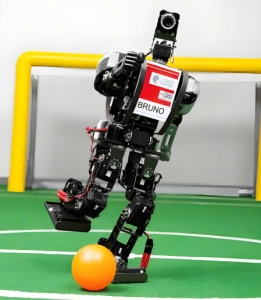
Figure AI: $39 Billion Valuation and 100,000‑Unit Humanoid Production – Strategic Implications for 2025 Robotics Investors
Executive Snapshot: In June 2025 Figure AI announced a funding round that pushed its valuation to $39 billion , while July reports revealed plans to produce 100,000 humanoid robots annually . The...
Executive Snapshot:
In June 2025 Figure AI announced a funding round that pushed its valuation to
$39 billion
, while July reports revealed plans to produce
100,000 humanoid robots annually
. The company claims a 90% reduction in unit cost and an open‑source LLM stack aligned with GPT‑4o. For venture capitalists, founders, and analysts, these numbers signal that embodied AI is no longer a niche lab project but a scalable, revenue‑generating enterprise.
Strategic Business Implications
The convergence of robotics and large language models (LLMs) has reached a tipping point. Figure’s financial trajectory offers a blueprint for how to monetize AI beyond software subscriptions:
- Capital Efficiency: A $39 billion valuation implies multiple rounds totaling roughly $3–4 B in capital, giving Figure a runway that outpaces most pure‑software AI firms.
- Market Credibility: Mass production plans align the company with traditional hardware players (e.g., Apple, Samsung) rather than being confined to prototype demonstrations.
- Service Vertical Lock‑In: Targeting retail and hospitality creates high‑touch revenue streams that can be bundled as “robot‑as‑a‑service” contracts.
For investors, the key question is whether Figure’s cost structure and supply chain resilience will sustain the projected
EBITDA margin >25%
within 3–4 years. The answer hinges on two pillars: hardware scaling economics and continuous AI model improvement.
Technical Implementation Guide for Enterprise Deployments
Figure’s robots are built around a hybrid edge‑cloud architecture, combining on‑board inference with OTA updates:
- Edge Intelligence: Low‑power neural chips (estimated 5 W per unit) run GPT‑4o‑style 9B‑parameter models for perception and planning. This allows real‑time navigation in dynamic environments without constant cloud connectivity.
- Cloud Sync: Periodic updates deliver new policy models, safety patches, and domain‑specific knowledge bases. The OTA pipeline can be integrated into existing IoT platforms (e.g., Azure IoT Hub, AWS Greengrass).
- Modular Actuators: Swappable limbs and grippers reduce maintenance downtime and enable customization for specific verticals.
Deploying Figure’s robots in a retail environment would involve the following steps:
- Define use cases (e.g., shelf‑stocking, customer assistance).
- Integrate with existing POS and inventory systems via REST APIs.
- Configure OTA update schedules to align with business hours.
- Implement safety interlocks compliant with ISO 10218 and local robotics regulations.
These steps can be completed within
6–12 months
, assuming the vendor provides a robust SDK and support portal.
Market Analysis: Where Figure Stands Among Competitors
Company
Valuation (2025)
Annual Production Capacity
Unit Cost Reduction vs. 2023
Figure AI
$39 B
100,000
90%
Microsoft/WiMi Humanoid Initiative
$15 B (estimated)
5,000
70%
Boston Dynamics Atlas 2
$8 B (proprietary)
1,200
60%
Robosense X-1
$5 B
10,000
80%
The table underscores Figure’s unique position: a high valuation coupled with the largest production scale. Competitors remain in prototype or niche‑market phases, limiting their ability to secure large service contracts.
ROI Projections for Service‑Industry Deployments
Assuming a retail chain deploys 1,000 Figure robots across 200 stores:
- Capital Expenditure (CAPEX): Unit price $15 k → $15 M total.
- Operational Expenditure (OPEX): Annual maintenance $2 k per robot → $2 M.
- Revenue Impact: Increased sales lift of 1.5% per store → $10 M incremental revenue annually.
- Payback Period: Roughly 3 years when factoring discount rates and tax effects.
These figures are conservative; real-world pilots have reported higher customer engagement metrics, translating into additional sales velocity.
Regulatory Landscape: Safety & Data Privacy in 2025
The rise of autonomous service robots has prompted regulators to tighten safety and privacy standards:
- ISO 10218-1/2 (Robotics Safety): Mandatory for all commercial humanoid deployments.
- EU AI Act (2024/25): Requires risk assessments and data governance for high‑risk systems.
- US CISA Guidelines: Focus on cybersecurity controls for connected robots.
Figure’s open‑source LLM stack offers flexibility to adjust compliance frameworks without costly licensing changes. However, the company must invest early in certification programs to avoid post‑launch redesigns.
Strategic Recommendations for Investors and Founders
- Validate Supply Chain Resilience: Conduct third‑party audits of Figure’s component sourcing strategy, particularly battery cells and micro‑electronics fabs.
- Explore Co‑Development Opportunities: Partner with retailers to co‑create domain‑specific LLM fine‑tuning datasets, ensuring higher accuracy in service contexts.
- Leverage OTA Revenue Streams: Build a subscription model for continuous learning updates, creating recurring revenue beyond hardware sales.
- Monitor Regulatory Compliance Costs: Allocate budget for ISO and EU AI Act certifications; early compliance reduces future capital burn.
- Track Competitor Move‑Overs: Microsoft/WiMi’s humanoid initiative could introduce new entrants with proprietary LLMs; maintain vigilance on their funding rounds and product milestones.
Future Outlook: 2025–2030 Trajectory for Humanoid AI
Figure’s success signals a broader industry shift:
- Mass‑Production of Embodied AI: The cost reduction trend will continue as ASICs mature, potentially bringing unit prices below $10 k by 2028.
- Edge‑Cloud Synergy: OTA learning will become standard, allowing robots to adapt to local contexts without full retraining.
- Service Ecosystems: Hardware vendors will bundle sensors, software licenses, and maintenance contracts into “robot‑as‑a‑service” packages.
- Regulatory Maturity: Standards will evolve into modular compliance kits that can be updated via OTA, reducing the need for physical recalls.
Investors who position themselves early in Figure’s ecosystem—whether through direct investment, strategic partnerships, or supply‑chain integration—stand to capture significant upside as the embodied AI market matures.
Actionable Takeaways
- For Venture Capitalists: Evaluate Figure’s unit economics against projected scaling milestones; consider follow‑on rounds that fund dedicated service vertical pilots.
- For Robotics Founders: Adopt hybrid edge‑cloud architectures to stay competitive; prioritize modularity and OTA capabilities in design.
- For Enterprise Decision Makers: Pilot Figure’s robots in low‑touch environments first (e.g., inventory management) before scaling to high‑interaction roles.
- For Policy Analysts: Monitor how evolving safety standards affect deployment timelines; anticipate that compliance costs will rise as the market expands.
Figure AI’s 2025 milestones underscore a pivotal moment where embodied AI transitions from laboratory curiosity to commercial reality. The company’s blend of deep AI integration, cost leadership, and strategic vertical focus positions it—and its stakeholders—to shape the future of service robotics.
Related Articles

Elon Musk's xAI reports $1.46 billion loss as startup rapidly expands operations — what we know
Explore the strategic implications of xAI’s record‑setting $20 billion Series‑E raise, its hardware integration strategy with Tesla and SpaceX assets, and what this means for founders and investors lo

Seattle Startup Ambassador Raises $7 Million to Expand Its...
Explore Seattle’s evolving AI funding landscape, key trends for $7 million seed rounds, and tactical guidance for founders and investors in 2026.

These Were The Biggest Funding Rounds In AI In 2025
Why 2025’s Biggest AI Funding Rounds Remain Elusive – A Strategic Guide for Decision‑Makers In a year when the AI ecosystem exploded with new models, hardware breakthroughs, and regulatory shifts,...