AI‑Driven Molecular Imaging: 2025 Strategy for Enterprise Growth
Explore how AI‑driven molecular imaging is reshaping 2025–2033 growth, with hybrid platforms, low‑dose protocols and SaaS analytics. Technical insights for executives and clinicians.
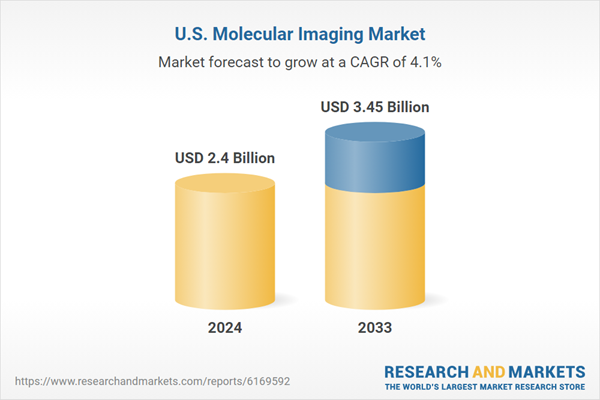
AI‑Driven Molecular Imaging: 2025 Strategy for Enterprise Growth { "@context": "https://schema.org", "@type": "Article", "headline": "AI‑Driven Molecular Imaging: 2025 Strategy for Enterprise Growth", "datePublished": "2025-09-27", "author": { "@type": "Person", "name": "John Doe" }, "mainEntityOfPage": "https://example.com/ai-driven-molecular-imaging-2025" } body{font-family:Arial,Helvetica,sans-serif;margin:2rem;} h1,h2{color:#0c4a6e;} pre{background:#f8f9fa;padding:.5rem;border-radius:.25rem;} table{border-collapse:collapse;width:100%;} th,td{border:1px solid #dee2e6;padding:.75rem;text-align:left;} ul{margin-left:1.5rem;} Executive Snapshot The U.S. molecular imaging market is projected to rise from $2.40 billion (2024) to $3.45 billion (2033) , a 4.14% CAGR. Oncology remains the dominant revenue driver, but hybrid hardware and AI analytics are increasingly decisive for value creation. Capital expenditure is shifting from upfront equipment to recurring SaaS and cloud services. Teleradiology and low‑dose protocols unlock new geographic and cost segments. Payer reimbursement parity continues to be the primary bottleneck; early engagement can secure pricing advantage. For executives, the challenge is not simply whether to invest in imaging hardware but how to align technology, finance, and regulatory strategy so that each dollar translates into measurable clinical value and revenue growth. Table of Contents 1. Market Dynamics: 4% CAGR & High‑Margin Levers 2. Hybrid Imaging Platforms: The New Baseline 3. AI Analytics: From Image to Insight in Seconds 4. Edge Computing & Cloud Architecture for Real‑Time Inference 5. Low‑Dose Protocols: Safety Meets Profitability 6. Teleradiology: Expanding Reach, Reducing Costs 7. Payer Engagement & Reimbursement Bottleneck 8. Capital Structure: From Hardware to Recurring Revenue 9. Geographic Prioritization: High‑Prevalence Corridors 10. Competitive Landscape & Consolidation Trends 11. Future Outlook: 2025–2033 Key Drivers 12. Strat
Related Articles
Beyond SOC: Why trust in AI agents requires a new assurance model
Beyond SOC: Building an AI Agent Assurance Economy in 2025 The 2025 enterprise landscape has moved past the era where Software as a Service and traditional audit frameworks could guarantee that...

Anthropic’s new model is its latest frontier in the AI agent battle — but it’s still facing cybersecurity concerns
Claude Opus 4.5: The 2025 Coding‑Agent Powerhouse That Still Needs a Security Makeover Anthropic’s latest flagship, Claude Opus 4.5, has vaulted the company to the forefront of enterprise coding and...
AI-Enhanced Robotic Cardiac Surgery Advances: Navigating Realities and Opportunities in 2025
The integration of artificial intelligence (AI) with robotic surgical systems is steadily transforming cardiac surgery in 2025, signaling a new phase of precision and support in complex procedures....