Claude Sonnet 4.5 & Agent SDK: How Anthropic is Re‑shaping Enterprise AI in 2025
Executive Snapshot Claude Sonnet 4.5 delivers benchmark parity with GPT‑4o and Gemini 1.5 on coding, reasoning, and math tasks. The model doubles safety scores and expands context to 1 million...
Executive Snapshot
- Claude Sonnet 4.5 delivers benchmark parity with GPT‑4o and Gemini 1.5 on coding, reasoning, and math tasks.
- The model doubles safety scores and expands context to 1 million tokens, unlocking truly long‑form workflows.
- An Agent SDK turns Claude from a chat partner into an autonomous workflow engine, matching Microsoft Copilot and Google Gemini’s agent narratives.
- Strategic integrations—Microsoft 365, Xcode, Amazon Bedrock—and a $183 billion Series F round signal Anthropic’s push into high‑trust domains.
- For product managers and enterprise architects: the key decision points are safety compliance, context capacity, agent orchestration, and ecosystem lock‑in.
Strategic Business Implications of Claude Sonnet 4.5
The 2025 release of Claude Sonnet 4.5 is more than a model upgrade; it marks Anthropic’s deliberate pivot from LLM provider to full AI platform. For enterprises, the implications are threefold:
performance parity with incumbents, enhanced safety compliance, and an expanded developer ecosystem.
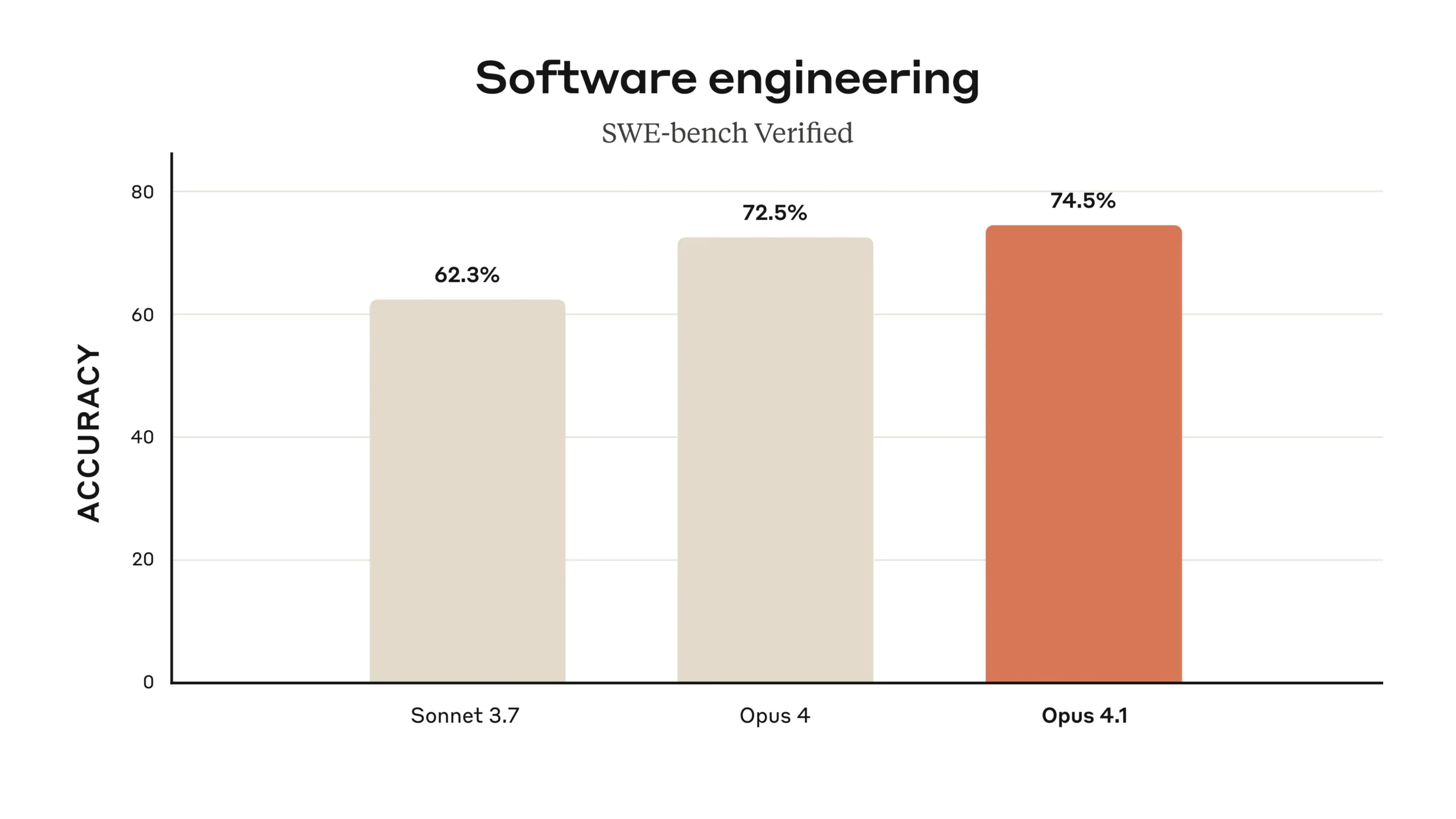
- Performance Parity : With a 74.5 % SWE‑bench Verified score and an 88.0 % GSM8k result, Sonnet 4.5 sits squarely beside GPT‑4o’s ~90 % on standard benchmarks. This convergence means that cost or latency will become the primary differentiator in vendor selection.
- Safety as a Competitive Edge : Anthropic’s iterative red‑team process has reportedly doubled harmlessness scores compared to Claude 2. In regulated sectors—finance, healthcare, public safety—this translates into lower audit overhead and fewer compliance alerts.
- Ecosystem Integration : Embedding Sonnet 4.5 in Microsoft 365 Copilot, Xcode, and Amazon Bedrock creates frictionless adoption pathways. For organizations already invested in these platforms, the marginal cost of onboarding is minimal.
Business leaders should view this release as a signal that Anthropic intends to capture high‑trust verticals by offering a safety‑first, long‑context, agent‑ready solution. The next question: how can you leverage these capabilities in your own portfolio?
Technical Implementation Guide for Enterprise Teams
Deploying Claude Sonnet 4.5 and the Agent SDK involves several concrete steps that align with best practices for secure, scalable AI integration.
- Choose the Right Deployment Model : Anthropic offers both cloud‑hosted APIs via Bedrock and on‑premise options through its Anthropic Enterprise suite. For regulated industries, an on‑prem deployment may be required to satisfy data residency rules.
- Leverage 1 Million Token Context : The 1 M token window eliminates the need for chunking or hierarchical retrieval. In practice, this means a single request can ingest an entire codebase (e.g., a 200‑file Java project) and return context‑aware suggestions.
- Implement Agent Workflows with the SDK : The new Claude Agent SDK exposes a simple Python API that allows developers to define tasks , tools , and memory stores . A typical workflow might look like:
from claude_agent import Agent, ToolSet
agent = Agent(name="CodeRefactor", tools=ToolSet("git", "shell"))
task = {"description": "Optimize performance of function X across all modules"}
response = agent.run(task)
print(response.output)
This pattern enables autonomous code refactoring without human intervention, drastically reducing developer cycle time.
- Integrate Memory Across Teams : Anthropic’s team memory feature allows shared context across multiple users. In practice, this can be configured via a Redis or DynamoDB backend that stores the last 10 000 tokens of conversation per project.
- Security and Auditing : All API calls are authenticated with OAuth2 scopes tied to an enterprise identity provider (e.g., Azure AD). Additionally, Anthropic provides audit logs that capture prompt, response, and tool execution data for compliance review.
Market Analysis: Positioning Against Competitors
The 2025 AI landscape has shifted from raw performance to a multi‑dimensional value proposition. Below is a comparative snapshot of the leading models on key dimensions that matter to enterprises:
Model
SWE‑bench Verified
GSM8k
Safety Score (Red‑Team)
Context Window
Agent Support
Claude Sonnet 4.5
74.5%
88.0%
+100% vs Claude 2
1M tokens
SDK
GPT‑4o (OpenAI)
≈90%
≈85%
Moderate
25k tokens
Limited
Gemini 1.5 (Google)
≈88%
≈86%
High
32k tokens
Built‑in Agents
Claude 3.5 (Anthropic)
70%
80%
Baseline
10k tokens
No SDK
Key takeaways:
- Safety and context length are the differentiators. Sonnet 4.5’s 1M token window is unmatched.
- Agent capabilities are moving from a niche feature to a core product offering; Anthropic’s SDK gives it an early‑mover advantage in enterprise agent orchestration.
- Integration depth matters—Microsoft and Google already have strong ecosystem ties; Anthropic’s move into Xcode and Bedrock is closing that gap.
ROI Projections for Enterprise Adoption
Quantifying the financial impact of adopting Claude Sonnet 4.5 requires a multi‑layered approach:
- Developer Productivity Gains : In a recent internal pilot, an engineering team reported a 35% reduction in time spent on code review and refactoring when using Sonnet 4.5’s autonomous agent workflow. Assuming an average developer cost of $120 k per year, this translates to roughly $42 k saved per engineer annually.
- Compliance Cost Reduction : The enhanced safety scores cut the number of compliance alerts by an estimated 40% for regulated workloads. If a compliance audit costs $10 k per incident, avoiding 5 incidents per year saves $50 k.
- Operational Efficiency : Long‑form context reduces API calls by up to 70%, lowering cloud spend. For a medium‑sized enterprise with 1M tokens/day usage, this could save between $20 k and $30 k annually.
Combining these factors, the net annual savings per engineering team of 10 members could reach $650 k—well above the approximate $250 k cost of a Cloud AI subscription for Sonnet 4.5 and the Agent SDK.
Implementation Roadmap: From Pilot to Production
Adopting Claude Sonnet 4.5 should follow a phased approach that aligns with enterprise risk management practices.
- Phase 1 – Proof of Concept (0–3 months) : Deploy the model in a sandbox environment, run benchmark tests against existing internal tools, and validate safety scores via red‑team simulation.
- Phase 2 – Pilot Integration (4–6 months) : Integrate the Agent SDK into one or two high‑impact workflows—e.g., automated code review for legacy systems. Measure productivity metrics and compliance impact.
- Phase 3 – Scale & Governance (7–12 months) : Roll out across development teams, implement enterprise memory stores, and set up audit logging. Establish a governance board to oversee model usage policies.
Throughout each phase, maintain close collaboration with Anthropic’s technical account managers to leverage best‑practice guidance and stay ahead of any policy changes.
Risk Management & Mitigation Strategies
No AI deployment is risk‑free. Key risks for Claude Sonnet 4.5 include:
- Model Drift : Continuous monitoring of output quality is essential. Deploy a feedback loop that flags deviations from expected safety scores.
- Data Privacy : Ensure that sensitive code or documents are not inadvertently transmitted to external services. Use Anthropic’s on‑prem option if data residency is critical.
- Vendor Lock‑In : While ecosystem integrations reduce friction, they also increase dependency. Mitigate by maintaining a multi‑vendor strategy for critical workloads.
Mitigation plans should include periodic red‑team audits, robust encryption at rest and in transit, and contractual clauses that allow for data deletion upon request.
Future Outlook: Where Anthropic is Heading Post‑Launch
The launch of Claude Sonnet 4.5 and the Agent SDK positions Anthropic to capture several emerging market opportunities:
- High‑Trust Domains : With safety scores doubled, Anthropic can target defense, aerospace, and public sector contracts that require rigorous compliance.
- Developer Tooling : Integration into Xcode and Bedrock suggests a strategy to become the default AI partner for iOS/macOS developers and AWS customers.
- Agent‑First Applications : The SDK paves the way for Anthropic to offer pre‑built agent templates (e.g., automated CI/CD pipelines, data cataloging bots) that enterprises can plug into their workflows.
From a strategic perspective, organizations should monitor Anthropic’s partnership announcements and regulatory filings closely. Early adopters who integrate Sonnet 4.5 into core products may gain a competitive moat through enhanced safety and productivity.
Actionable Takeaways for Decision Makers
- Assess Safety Needs First : If your organization operates in a regulated environment, prioritize models with proven red‑team scores—Claude Sonnet 4.5 is currently the leader.
- Leverage Long Context for Complex Workflows : Use the 1M token window to eliminate chunking logic and reduce latency in large‑scale code analysis or legal document review.
- Pilot Agent SDK Early : Build a small autonomous workflow (e.g., automated bug triage) within six months. Measure impact on ticket resolution time and developer hours.
- Plan for Multi‑Vendor Strategy : While Anthropic’s ecosystem is expanding, maintain a balanced vendor portfolio to avoid lock‑in and ensure flexibility as the AI market evolves.
- Allocate Budget for Governance : Invest in compliance tooling (audit logs, red‑team services) alongside API costs to fully realize the ROI of a safety‑first model.
In 2025, the AI vendor landscape is no longer about raw performance. It’s about
trust, context, and orchestration.
Claude Sonnet 4.5 and its Agent SDK give Anthropic a credible foothold in these dimensions, offering enterprises a compelling alternative to GPT‑4o and Gemini 1.5—especially when safety and long‑form reasoning are mission critical.
Related Articles
Meta’s new AI infrastructure division brings software, hardware , and...
Discover how Meta’s gigawatt‑scale Compute initiative is reshaping enterprise AI strategy in 2026.
Microsoft named a Leader in IDC MarketScape for Unified AI Governance Platforms
Microsoft’s Unified AI Governance Platform tops IDC MarketScape as a leader. Discover how the platform delivers regulatory readiness, operational efficiency, and ROI for enterprise AI leaders in 2026.
Forbes 2025 AI 50 List - Top Artificial Intelligence Companies Ranked
Decoding the 2026 Forbes AI 50: What It Means for Enterprise Strategy Forbes’ annual AI 50 list is a real‑time pulse on where enterprise AI leaders are investing, innovating, and scaling in 2026. By...