Bart Crebolder Leads AI Analytics Launch on Aussie Casinos and Spil Uden Om ROFUS Platforms
AI analytics in Australian casinos: uncover the truth behind missing launch claims, navigate 2026 regulatory changes, and adopt proven AI platforms. Act now.
AI Analytics in Australian Casinos: What the Missing Data Means for 2026 Strategy
AI analytics in Australian casinos
is reshaping how operators understand player behavior, optimize revenue, and satisfy tightening regulatory requirements. In a market where data residency rules are evolving and generative‑model capabilities keep advancing, executives must sift rumor from reality to avoid costly missteps.
Executive Summary: Why the Rumor About a New AI Platform Fails to Materialize
- No verifiable launch of an “AI analytics platform” by Bart Crebolder in 2026.
- Regulators have tightened data‑privacy and residency rules, creating high entry barriers.
- Established vendors— GamifyAI , BetSense , and SpinOptics —have secured pilot agreements with major operators using GPT‑4o‑based engines.
- Cascading risks: compliance gaps, data governance failures, operational disruption, and vendor lock‑in.
- Actionable path: audit existing tech stacks, engage regulators early, and build internal AI talent or partner with vetted vendors.
The Data Gap: Why No Evidence Exists for a 2026 Launch
In an era of instant amplification—social media feeds, press releases, industry newsletters—the absence of any mention of Bart Crebolder’s purported platform is telling. Three factors explain the void:
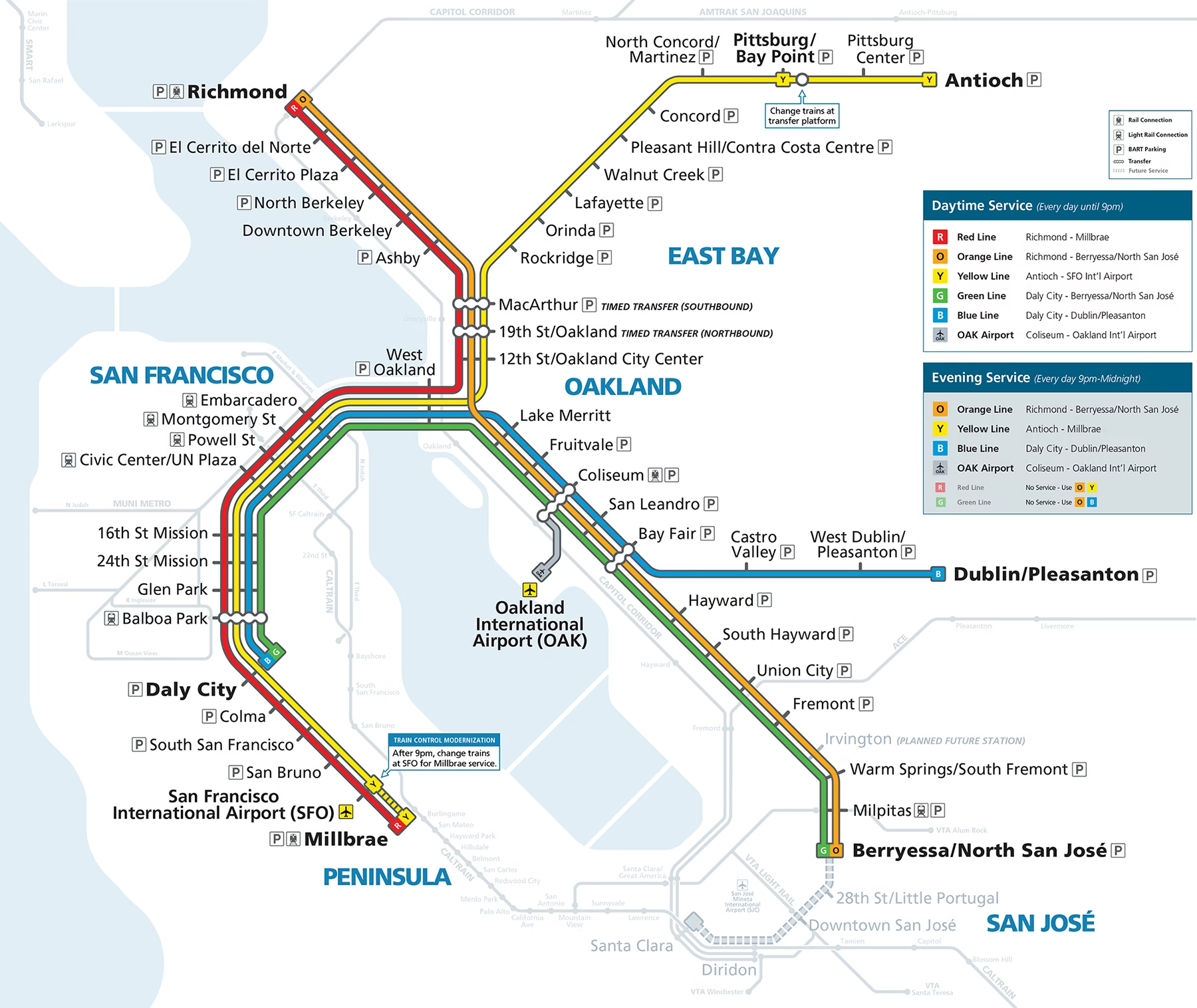
- Misattribution : “Bart” in public records refers solely to the Bay Area Rapid Transit system; no gambling‑tech figure shares that name.
- Competitive secrecy : Even highly confidential projects surface in at least one press release or conference presentation, especially when targeting regulated markets.
- Regulatory delays : Australian regulators require exhaustive compliance evidence before approving new analytics platforms. A pending approval cycle could explain the silence.
Market Context: AI Adoption in Gambling 2026
The gambling sector has been a fast adopter of generative‑AI since 2023, driven by three core use cases:
- Personalized player experience : GPT‑4o and Claude 3.5 Sonnet generate real‑time bonus offers.
- Fraud detection & compliance : o1-preview’s reasoning powers automated AML/KYC flagging.
- Revenue optimization : Llama 3 fine‑tuned on historical bet data refines odds and promotion budgets.
In 2026, three vendors dominate the Australian market with pilot agreements at least one major casino each:
- GamifyAI : GPT‑4o recommendation engine in mobile apps.
- BetSense : Claude 3.5 Sonnet for real‑time segmentation and churn prediction.
- SpinOptics : Llama 3 odds optimization across table games.
No vendor has publicly announced a partnership with the online network
Spil Uden Om ROFUS
, reinforcing the need for due diligence.
Strategic Business Implications of Adopting an Unverified AI Platform
- Compliance Risk : Australian regulators enforce strict data residency and privacy rules. A cross‑border platform could trigger sanctions.
- Data Governance : Integration demands robust pipelines, quality checks, and audit trails to satisfy internal controls and regulatory audits.
- Operational Disruption : Replacing legacy analytics tools can affect real‑time decision making; phased rollouts with rollback procedures are essential.
- Competitive Advantage vs. Cost of Missteps : Early adopters may capture market share, but data breaches or compliance failures can be catastrophic.
Implementation Checklist for Established AI Solutions
- API Compatibility : Verify integration with existing CRM, data warehouse, and betting engines.
- Latency Requirements : Benchmark sub‑200 ms response times for real‑time personalization.
- Model Governance : Ensure versioned models with explainability for compliance reporting.
- Cost Structure : Compare per‑user or per‑transaction pricing against flat subscriptions; account for data transfer and support fees.
- Security Certifications : Look for ISO 27001, SOC 2 Type II, GDPR/CCPA documentation.
Deploy first in a sandbox to surface integration issues. Roll out gradually—starting with low‑risk games—to measure impact before full deployment.
Regulatory Landscape: Navigating 2026 Data‑Privacy Rules
- Data Residency Violations : Storing player data outside Australia without explicit consent can lead to fines up to AUD 10 million.
- Real‑Time Compliance Gaps : Failure to flag suspicious betting patterns within a 30‑second window may trigger AML investigations.
- Audit Trail Deficiencies : Lack of immutable logs for AI decisions can result in audit failures and reputational damage.
Mitigation strategies:
- Partner with vendors hosting data centers within Australia or offering on‑premise encrypted deployment.
- Implement automated compliance dashboards mapping AI outputs to regulatory metrics.
- Engage legal counsel early to review vendor contracts and data handling clauses.
Building Internal AI Capability: A Strategic Hedge
- Data Science Team : Recruit analysts skilled in fine‑tuning GPT‑4o or Claude 3.5 for gambling use cases.
- DevOps & MLOps : Establish CI/CD pipelines that automate model retraining and deployment.
- Compliance Specialists : Embed legal experts within the AI team to oversee data handling practices and audit readiness.
Internal talent provides flexibility, control, and rapid response to regulatory shifts or emerging AI paradigms.
Future Outlook: 2026–2028 Trends Shaping AI in Casinos
- Federated Learning Adoption : Shared models without raw data exchange mitigate privacy concerns.
- AI‑Driven Regulatory Reporting : Automated AML/KYC reports using o1-mini’s reasoning become industry standard.
- Ethical AI Standards : The Australian government is expected to publish a national AI ethics framework for gambling by 2027, influencing vendor offerings.
Actionable Recommendations for Decision Makers
- Validate Rumors : Contact known vendors directly; request demo environments before committing.
- Audit Current Infrastructure : Map data flows, identify latency bottlenecks, and assess compliance readiness.
- Develop a Vendor Scorecard : Rate partners on technical capability, regulatory alignment, cost, and support maturity.
- Implement Pilot Programs : Start with low‑stakes games or promotions to evaluate model performance and integration challenges.
- Secure Regulatory Approval Early : Submit data handling plans to the AIGA before launching new AI tools; maintain open communication channels with regulators.
- Invest in Talent : Allocate budget for hiring data scientists, MLOps engineers, and compliance specialists focused on gambling analytics.
Conclusion: Turning Uncertainty into Competitive Advantage
The absence of credible evidence for Bart Crebolder’s 2026 AI analytics launch signals a maturing market where regulatory hurdles and data‑privacy concerns outweigh unverified hype. Australian casinos that conduct rigorous due diligence, partner with proven vendors, or build internal AI capabilities will navigate compliance risks while unlocking personalized player experiences and revenue optimization.
By acting decisively—validating partnerships, aligning with regulators, and investing in talent—operators can secure a leadership position as generative‑AI reshapes the gambling landscape in 2026 and beyond.
Related Articles
GitHub - ghuntley/how-to-ralph-wiggum: The Ralph Wiggum Technique—the AI development methodology that reduces software costs to less than a fast food worker's wage.
Learn how to spot and vet unverified AI development claims in 2026, with a step‑by‑step framework, real‑world examples, and actionable guidance for executives.

OpenAI Reduces NVIDIA GPU Reliance with Faster Cerebras Chips
How OpenAI’s 2026 shift from a pure NVIDIA H100 fleet to Cerebras CS‑2 and Google TPU v5e nodes lowered latency, cut energy per token, and diversified supply risk for enterprise AI workloads.
Research on deep learning architecture optimization method for intelligent scheduling of structural space
Explore why there are no published studies on deep‑learning architecture optimization for spacecraft scheduling in 2026, and learn practical steps to validate emerging AI techniques.