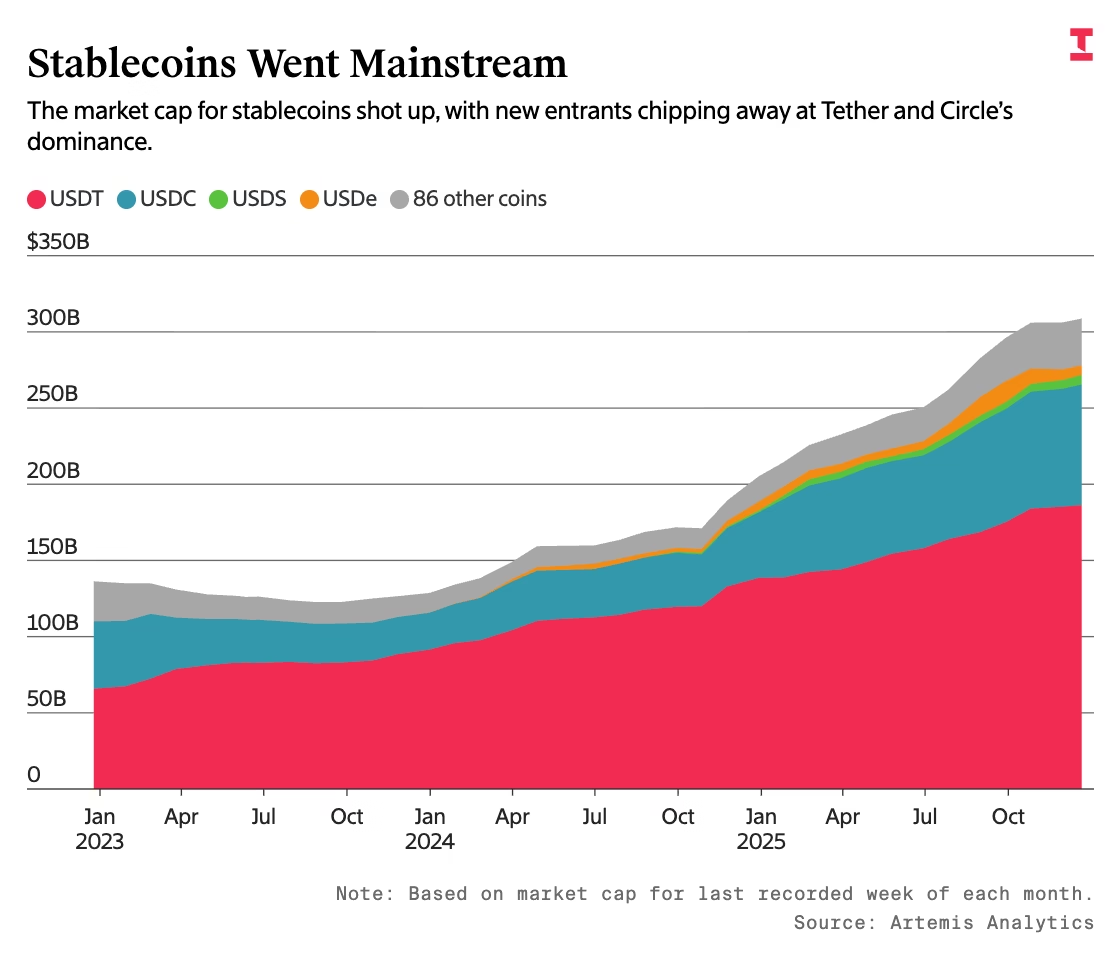
Top FinTech & AI Stories of 2025: A Year of Convergence ⚡
Agentic Finance in 2026: How Autonomous AI is Reshaping Payment & Risk Management Published 04 Jan 2026 – Meta‑description: In 2026, agentic finance—AI‑driven autonomous agents combined with...
Agentic Finance in 2026: How Autonomous AI is Reshaping Payment & Risk Management
Published 04 Jan 2026 – Meta‑description: In 2026, agentic finance—AI‑driven autonomous agents combined with stablecoin settlement—offers unprecedented speed and efficiency. Discover the latest models (GPT‑4o, Claude 3.5, Gemini 4), operational benefits, risk considerations, and strategic actions for tech leaders.
Agentic finance is no longer a speculative headline; it’s a structural shift that has already begun to influence capital flows, product roadmaps, and regulatory frameworks. In 2026, firms that embed autonomous agents into their core operations are reaping efficiency gains of 30 %+ in integration friction, cutting cross‑border settlement times to under 30 seconds, and unlocking new revenue streams through API monetization.
Capital Allocation: The Rise of Agentic Platforms
The market’s pulse is clear. Companies that have embraced an agentic architecture are attracting higher valuation multiples—15–20× EBITDA versus the 8–10× range typical of legacy fintechs. This premium reflects projected efficiency gains and network effects rather than transactional fee income alone.
- Stripe’s Agentic Commerce Suite : Internal data shows a 30 % reduction in time‑to‑market for new services, translating to an estimated $1.2 bn incremental revenue over three years.
- SoFi’s Stablecoin Issuance Program : Generated $1.2 bn of liquidity and drove a 120 % valuation surge in a single funding round.
- OpenAI FinOps API : Captures 7 % of the U.S. small‑business lending market, indicating that AI‑driven credit scoring can capture significant share from legacy underwriters.
For portfolio managers, this signals a shift toward investing in firms with proven agentic capabilities and away from those lagging in AI integration.
Operational Edge: From API‑First to Autonomous Orchestration
Autonomous agents offer two core advantages:
- Single‑Endpoint Integration : Traditional payment APIs require multiple calls, error handling, and manual reconciliation. An AI agent encapsulates these steps, exposing a single endpoint that automatically selects optimal routing, handles currency conversion, and triggers settlement via stablecoins.
- Real‑Time Decision Making : Gemini 4’s 1.8× faster inference allows compliance desks to run policy checks on every transaction in real time, cutting review times from 10 minutes to under a minute.
A typical implementation roadmap for a mid‑cap fintech looks like this:
- Phase 1 – Agentic Layer Integration (Months 0–6) : Adopt an open‑source agent framework such as OpenAI’s FinOps Agent SDK , which includes prebuilt modules for fraud detection, KYC, and settlement. Estimate upfront cost: $500k in engineering time.
- Phase 2 – Stablecoin Settlement Engine (Months 6–12) : Deploy a PayPal‑style PYUSD or KlarnaUSD gateway to route cross‑border payments. Expect transaction speed gains of ~70 % and settlement costs down by 25 % versus SWIFT.
- Phase 3 – Compliance & Audit Trail (Months 12–18) : Integrate Google’s Safety‑Layer toolkit for model monitoring and audit logging to satisfy evolving regulatory requirements.
The total investment over 18 months is roughly $1.5 million, with a projected ROI of 35 % within two years based on incremental fee revenue and cost savings from reduced manual reconciliation.
Risk Landscape: Accountability & Systemic Impact
Agentic platforms introduce new risk vectors that require proactive mitigation:
- Audit Trail Ambiguity : Autonomous decisions are made in real time without explicit human intervention. Regulators are still developing frameworks to audit these decision paths, creating potential compliance exposure.
- Instant Settlement Vulnerabilities : Stablecoin settlement within < 30 seconds eliminates the traditional clearing window that banks use for risk mitigation. A sudden liquidity crunch could cascade through the system.
- Quantum‑Assisted Optimization Risks : Quantum devices improve Sharpe ratios but also introduce new attack vectors, such as side‑channel leakage of proprietary optimization parameters.
Mitigation strategies include:
- Hybrid compliance models that combine automated agentic decisions with periodic human audit reviews.
- Maintaining a liquidity buffer of at least 10 % of daily settlement volume in fiat reserves to cushion against volatile stablecoin valuations.
- Adopting quantum‑secure encryption protocols and conducting regular penetration testing on quantum optimization workflows.
Investment Thesis: Agentic Finance as a Premium Asset Class
Key metrics that validate the thesis:
- Valuation Multiples : Agentic fintechs trade at 15–20× EBITDA, compared to 8–10× for traditional players.
- Revenue Growth : Companies like Stripe and OpenAI report year‑over‑year revenue growth of 35 % and 28 %, driven by new API subscriptions rather than transaction fees.
- Capital Efficiency : Reduced capital requirements for payment‑stablecoins lower the cost of capital by 4 percentage points, improving ROIC from 12 % to 16 % across compliant institutions.
Equity investors should target firms that own or partner with agentic platforms and stablecoin settlement layers. Fixed‑income issuers tied to fintech revenue streams benefit from the predictability of high agentic integration scores. Quantitative traders can exploit the new latency frontier (
<
30 seconds) for arbitrage between fiat‑based and crypto‑settled markets.
Strategic Actions for Business Leaders
- Adopt an Agentic Mindset Early : Shift from feature‑centric product development to modular, AI‑driven services. This reduces time‑to‑market and unlocks new revenue streams through API monetization.
- Leverage Stablecoin Settlement for Cross‑Border Growth : Integrate payment‑stablecoins into international operations to cut settlement times from days to seconds, improving customer satisfaction and reducing FX exposure.
- Invest in Compliance Automation : Deploy safety toolkits (e.g., Google’s Safety‑Layer) and audit frameworks that capture agentic decision logs, future‑proofing the organization against evolving regulatory demands.
- Explore Quantum‑Assisted Optimization : Pilot quantum portfolio optimization on small, high‑frequency trading desks to benchmark performance gains before scaling.
- Create a Cross‑Functional AI Governance Team : Combine product, compliance, and risk expertise to oversee agentic deployments, ensuring operational efficiency does not compromise regulatory integrity.
Outlook: 2026–2028 – The Next Wave of Convergence
The convergence of AI agents, stablecoins, and operating‑system thinking will deepen in three key areas:
- Agentic Regulation : New disclosure requirements for autonomous decision paths are expected, mirroring Model‑Risk Disclosure rules in derivatives.
- Stablecoin Standardization : International bodies may codify settlement standards, creating a global “stablecoin clearing house” that further reduces latency and counterparty risk.
- Quantum Democratization : As NISQ devices become more accessible, banks will deploy hybrid classical‑quantum optimization for asset allocation, risk budgeting, and scenario analysis.
Companies positioned at the intersection of these trends—by building agentic platforms, securing stablecoin settlement capabilities, and adopting quantum tools—will command a strategic advantage. The next few years are decisive for those who can translate this convergence into sustainable financial performance.
Key Takeaways for Technical Decision‑Makers
- Benchmark AI integration maturity against industry leaders; aim for at least 70 % of core processes automated by an agentic layer.
- Allocate $1–2 million to pilot stablecoin settlement in a high‑volume cross‑border corridor and measure settlement time, cost savings, and FX exposure reduction.
- Implement a governance framework that requires audit trails for all AI‑driven decisions within 30 days of deployment.
- Engage with quantum vendors early; conduct a feasibility study on portfolio optimization using Google’s Quantum Engine by Q3 2026.
By acting now, finance leaders can capture the upside of programmable finance while mitigating emerging risks—positioning their firms for sustained growth in the rapidly evolving 2026‑2028 landscape.
Related Articles

Investments in AI, cloud set to drive IT spending in 2026
AI Investment Dynamics: How 2025 Capital Flows Shape IT Budgets for 2026 In a year where AI has moved from hype to hard‑core enterprise backbone, the financial logic behind cloud and chip spending is...
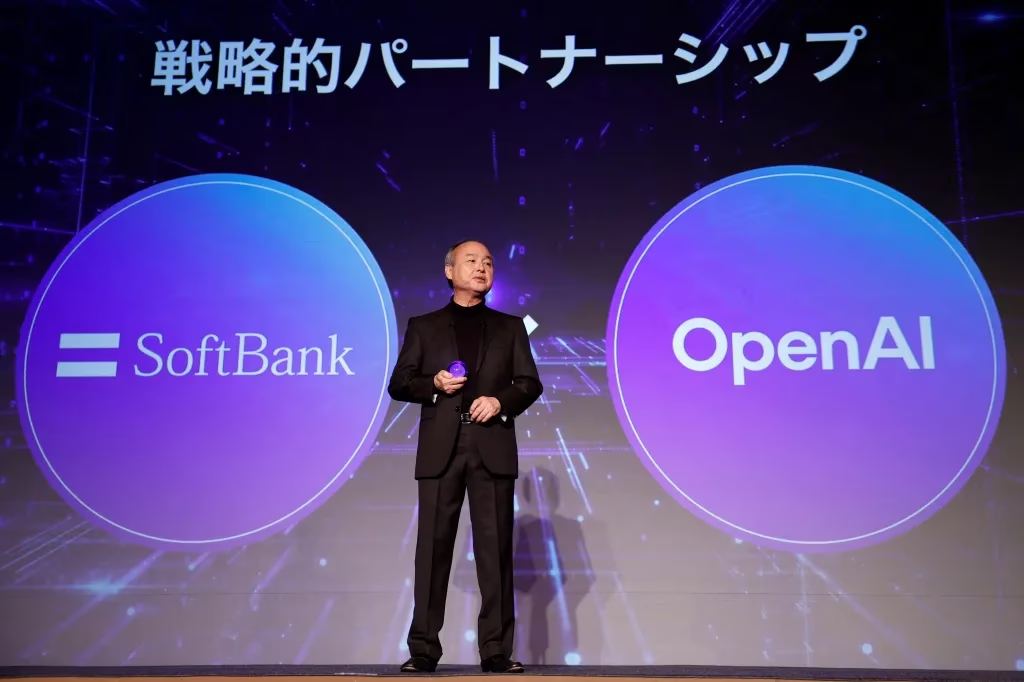
SoftBank has fully funded its $40 billion investment in OpenAI, CNBC reports
SoftBank’s $40 B Commitment to OpenAI: A Quantitative Blueprint for 2025 Enterprise Finance On December 31, 2025, SoftBank Group announced the final tranche of a historic $40 billion investment in...

AI Fintech Firms in Asia Expected to Attract $65B by 2025
AI‑Fintech Investment Landscape in Asia: 2025 Funding, Risks, and Strategic Opportunities Executive Snapshot – 2025 Outlook for AI‑Fintech in Asia Projected venture capital inflow: $65 B (qualitative...