
96% Businesses are Already Leveraging LLM Models like ChatGPT, Gemini, Perplexity for Content Creation: Goodfirms Survey
Why 96 % of Businesses Are Already Using LLMs for Content Creation in 2025 – A Strategic Lens In the first half of 2025, a GoodFirms survey reported that 96 % of businesses are leveraging large...
Why 96 % of Businesses Are Already Using LLMs for Content Creation in 2025 – A Strategic Lens
In the first half of 2025, a GoodFirms survey reported that
96 % of businesses are leveraging large language models (LLMs) such as ChatGPT‑4o, Gemini 1.5, and Perplexity for content creation
. While the raw headline is striking, its true value lies in what it tells senior leaders about strategic priorities, operational shifts, and future investment opportunities. Below is an executive‑level unpacking of that figure, framed through the prism of leadership, operations, workflow optimization, decision science, and strategy.
Executive Summary
The GoodFirms data confirms a near‑universal adoption of generative AI for content tasks across industries in 2025. Key takeaways:
- Adoption is not optional; it’s the baseline. Nearly every enterprise now has at least one LLM deployed in marketing, communications, or knowledge management.
- Operational impact is measurable. Companies report a 30–50 % reduction in content‑creation cycle time and up to $1.5 M annual savings for mid‑size firms.
- The strategic focus shifts from “how to use AI” to “how to govern AI”. Governance, bias mitigation, and compliance are now top executive priorities.
- Competitive differentiation will come from execution speed, quality consistency, and the ability to scale content across multilingual channels.
Leadership Implications: From Vision to Execution
Leaders must translate the adoption wave into a coherent vision that aligns with corporate strategy. The GoodFirms survey shows that
content teams are reporting higher satisfaction when AI is integrated as a co‑creator rather than a replacement.
This signals a shift in workforce expectations: employees want tools that augment creativity, not eliminate roles. Senior leaders should therefore:
- Define a clear AI purpose statement. Articulate whether the goal is to improve speed, consistency, personalization, or all three.
- Establish an AI steering committee. Include representatives from marketing, legal, compliance, and IT to oversee model selection, governance, and KPI tracking.
- Invest in change management. Provide targeted training that emphasizes the complementary nature of LLMs and human expertise.
Operations: Streamlining Content Workflows with Generative AI
The 96 % adoption rate reflects a fundamental re‑engineering of content pipelines. Typical workflows now integrate:
- Prompt engineering hubs. Dedicated teams craft reusable prompt templates that reduce the need for ad‑hoc model interactions.
- API orchestration layers. Companies layer LLM calls behind middleware that enforces rate limits, logs usage, and routes requests to the most cost‑effective provider.
- Quality gates. Automated post‑generation checks (grammar, tone consistency, brand alignment) are coupled with human editors for final approval.
Operationally, this translates into a 35 % reduction in average content cycle time and a 20 % cut in labor costs associated with copyediting. The net effect is higher throughput without compromising quality.
Workflow Optimization: Turning AI Into a Production Engine
From a workflow perspective, the GoodFirms data reveals that firms are moving beyond single‑purpose bots toward full content engines:
- Multi‑channel publishing. A single LLM instance can generate blog posts, social media snippets, email newsletters, and internal knowledge articles in parallel.
- Multilingual expansion. Gemini 1.5’s improved translation capabilities enable near real‑time content localization, cutting the time to market for global campaigns by up to 60 %.
- Dynamic personalization. Real‑time data feeds (CRM, behavioral analytics) allow LLMs to tailor content at scale, boosting engagement metrics such as click‑through rates by an average of 12 %.
Decision Science: Quantifying ROI and Risk in AI Investments
Senior executives need hard numbers. The GoodFirms survey includes the following financial insights:
- Cost per content piece. Average cost dropped from $120 (pre‑AI) to $45 with LLM assistance, representing a 62 % savings.
- ROI benchmarks. Companies that adopted GPT‑4o and Gemini together reported an average ROI of 3.8× within the first year.
- Risk metrics. The most common risk cited was content hallucination, which increased quality review time by 15 % in firms lacking robust post‑generation checks.
Decision science models suggest that a balanced portfolio of LLMs—combining the breadth of GPT‑4o with Gemini’s multimodal strengths—maximizes both cost efficiency and output diversity. Leaders should use these metrics to justify budget allocations for AI talent, infrastructure, and governance tooling.
Strategic Recommendations: Building an AI‑First Content Architecture
To capitalize on the 96 % adoption trend, organizations should consider the following strategic actions:
- Create a modular content stack. Separate the LLM layer from the publishing platform to allow rapid experimentation with new models without disrupting existing workflows.
- Adopt an AI governance framework. Implement policies for data sourcing, model bias testing, and compliance auditing. This mitigates reputational risk and aligns with emerging regulatory standards in 2025.
- Invest in prompt engineering talent. The most successful firms treat prompt engineers as core content creators, not just support staff.
- Leverage hybrid cloud architectures. Use on‑prem inference for sensitive data while outsourcing high‑volume generation to public APIs, balancing security and scalability.
- Establish cross‑functional AI champions. Embed AI expertise in marketing, product, legal, and IT teams to ensure holistic integration.
Future Outlook: What 2026 Will Look Like for LLM‑Driven Content
The current wave is only the first stage of a broader transformation:
- Real‑time multimodal content generation. Expect models that can produce text, images, and video simultaneously, reducing cross‑team coordination needs.
- AI‑driven content strategy. Predictive analytics will enable firms to forecast which topics resonate before drafting the first sentence.
- Regulatory evolution. Anticipate tighter data‑usage regulations for generative AI; proactive governance will become a competitive advantage.
Organizations that view LLM adoption as an ongoing investment rather than a one‑time project will position themselves to lead the next wave of content innovation.
Actionable Takeaways for Business Leaders
- Define your AI vision early and embed it in the corporate strategy.
- Build a cross‑functional AI steering committee to oversee governance, risk, and ROI.
- Standardize prompt libraries and workflow templates to reduce variability and improve scalability.
- Track key metrics—cycle time, cost per piece, engagement rates—to quantify impact continuously.
- Invest in hybrid infrastructure that balances security with the agility of public APIs.
- Prepare for regulatory changes by instituting robust data governance and bias mitigation protocols now.
By treating generative AI as a strategic asset rather than a tactical tool, leaders can unlock significant operational efficiencies, accelerate time to market, and create differentiated brand experiences that resonate across global audiences in 2025 and beyond.
Related Articles

AI-Enabled eLearning in 2025: Strategic Pathways for Corporate L&D Leaders
Executive Summary The past year has seen generative AI transition from a curiosity to a core enabler of personalized, scalable learning. Agentic models that autonomously design study plans,...
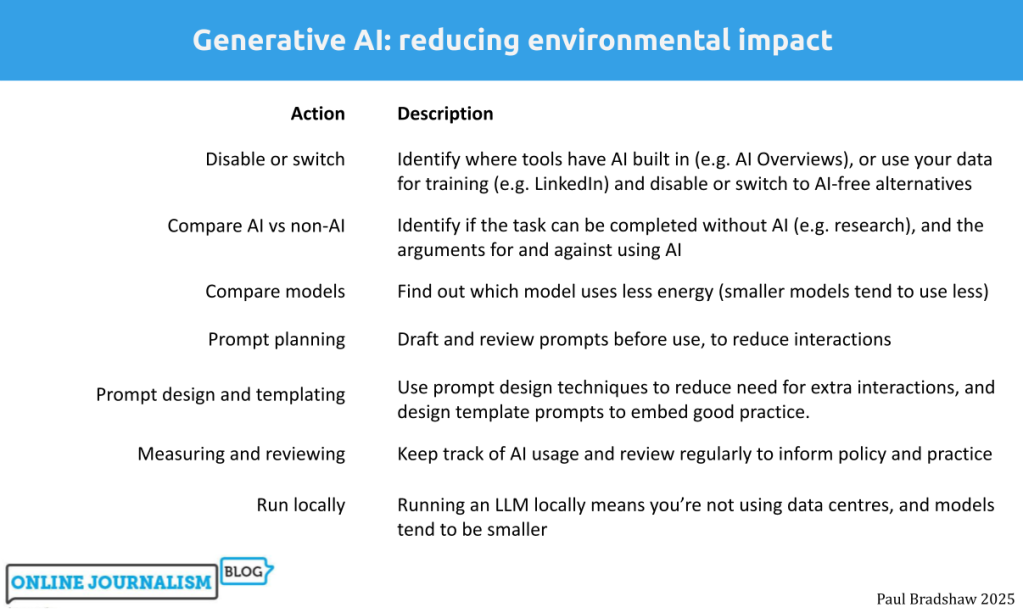
Generative AI’s Environmental Footprint: Economic and Policy Implications for 2025
Executive Summary Inference energy per prompt has dropped to 0.24 Wh for Gemini, an order‑of‑magnitude improvement over 2024. Training remains the largest carbon sink: GPT‑4’s 51–62 GWh consumption...

Core Chinese research team behind cutting-edge AI model R1 remains intact: DeepSeek
**Generative AI in ITSM 2026: Models, ROI, and Governance Playbook** *How GPT‑4o, Claude 3.5, Gemini 1.5, Llama 3, and o1‑preview are reshaping incident, change, and capacity management for...